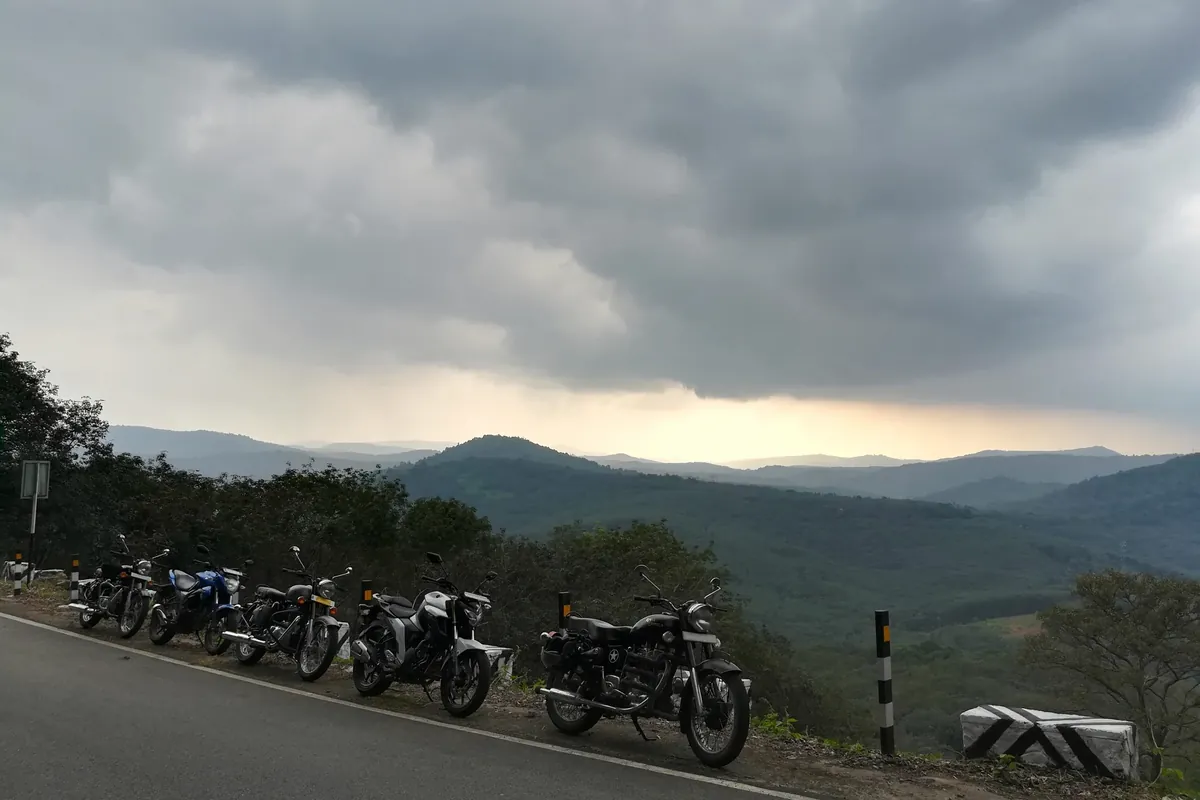
Preparation starts a week before departure, not at the petrol station. A service, a loaded test ride and a realistic route plan prevent most roadside problems.
Service the bike
Check tyres, brakes, chain or CVT, fluids, filters and battery. Replace anything that will reach its limit during the trip. A service before departure is cheaper than a repair on the road.
Check the date codes on tyres and the condition of the brake fluid. Heat and load are harder on both.
Mount the luggage
Keep weight low and forward. Check that bags cannot move, touch the exhaust or cover the lights. Test the loaded bike at walking speed and at normal speed.
Do not exceed the bike's load limit. A passenger plus luggage plus a top box adds up quickly.
Pack tools and spares
Carry only the tools you can use: puncture repair, fuses, bulbs, cable ties, a power bank and a basic tool kit. Know how to use them before the trip.
A tyre plug kit and a small compressor are worth more than a large box of sockets.
Plan the route and the rider
Plan fuel stops, rest days and alternatives. Heat, rain and mountain roads change the pace. Carry water and rain gear.
A loaded test ride is the final check. If something feels wrong, fix it before departure.
Checklist
- Tyres, brakes and drivetrain.
- Fluids, filters and battery.
- Luggage mounting and load limit.
- Tool kit and puncture repair.
- Rain gear and hydration.
- Route, fuel and rest stops.
- Loaded test ride.
Questions
What is the most important pre-trip check?
Tyres and brakes. They decide whether you can stop and steer.
Can I tour on a scooter?
Yes, with realistic planning. Small wheels and limited luggage capacity require shorter days and careful loading.
How much luggage is too much?
When it changes handling, blocks controls or exceeds the load limit. Keep weight low and forward.
