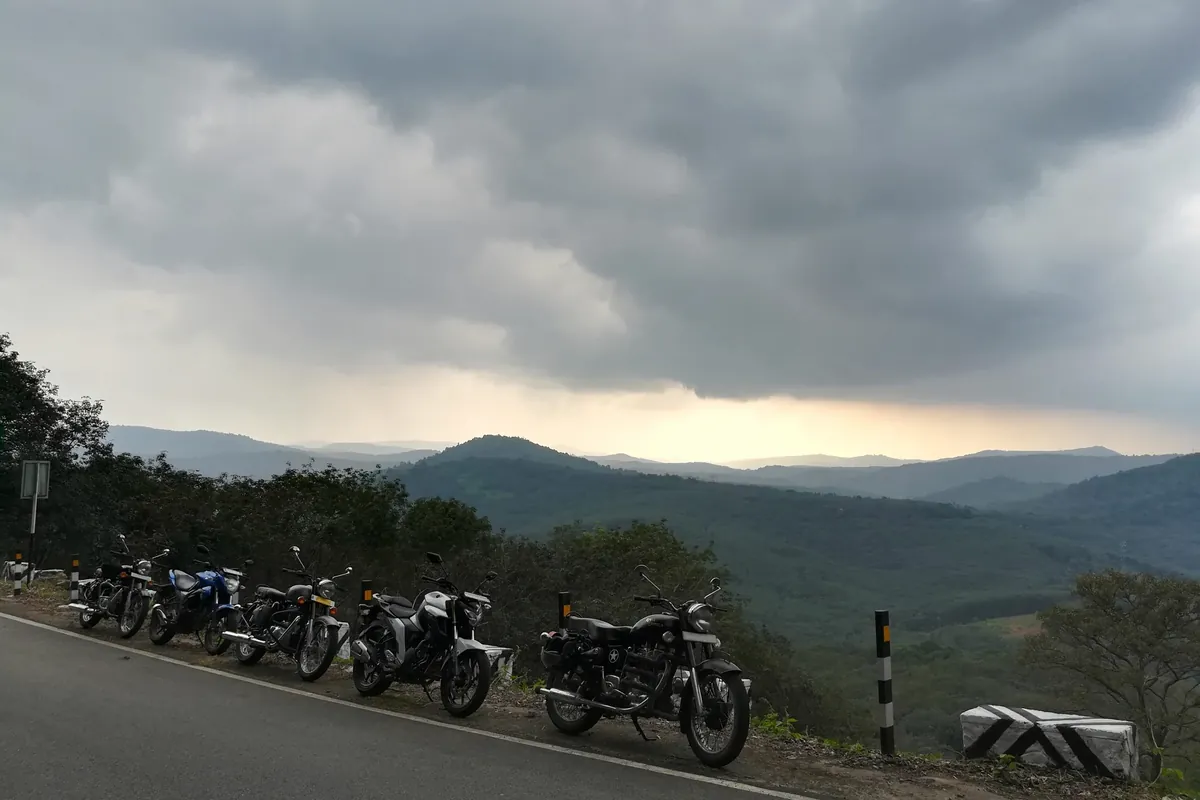
The step from 125 to 150 is small on paper and noticeable on the road, but not always in the way buyers expect. The larger engine gives more reserve for a passenger, a hill or a fast road, and it often comes with a bigger frame, better brakes and more equipment. The cost is weight, fuel and consumables. The right choice depends on the route and the load, not on the number alone.
What usually changes with capacity
| Factor | 125 class | 150 class |
|---|---|---|
| Weight | Lighter, easier to park | Heavier, more stable at speed |
| Traffic | Agile and economical | More reserve, slightly less nimble |
| Passenger | Adequate for short trips | More comfortable and stable |
| Hills | Works harder with a load | Holds speed with less effort |
| Fuel | Usually lower consumption | Slightly higher, especially in traffic |
| Equipment | Basic brakes and suspension | Often disc brakes, better tyres, ABS variants |
| Consumables | Cheaper tyres and parts | Larger tyres, higher prices |
Capacity is not the same as size
A 150 cc scooter is not just a 125 with a bigger engine. It usually has a longer frame, a wider seat, larger wheels and better brakes. That is why the step feels bigger than the displacement suggests. The extra capacity comes with a more substantial machine.
For a rider who is tall or regularly carries a passenger, that extra size is the real benefit. For a small rider on short city trips, it can be a disadvantage in parking and at low speed.
Where 150 helps most
The extra capacity shows up on arterial roads, long climbs and two-up riding. The engine holds speed with less throttle, which makes overtaking calmer and reduces the sense of being at the limit. The larger chassis is more stable in wind and over broken surfaces.
If your commute includes a fast section or a hill with a passenger, a 150 is often the more relaxed choice. It is not faster in traffic, but it is less strained.
Where 125 wins
A 125 is lighter, cheaper to buy and usually cheaper to run. It is easier to push out of a parking space, easier to U-turn and less intimidating for a new rider. For short city trips and solo riding, it is often all the motorcycle you need.
The 125 also tends to have cheaper tyres and simpler equipment. If your budget is tight, that difference matters more than the reserve you rarely use.
Fuel and running costs
A 125 usually uses less fuel, but the gap narrows when it is worked hard with a passenger or on a hill. A 150 at an easy pace can be close to a 125 at full throttle, and it may be more comfortable while doing it.
Tyres, belts and brake parts are often more expensive on a 150 because the sizes are larger. Check the fitted price of a set of tyres for both before you decide.
Insurance, tax and resale
Insurance and tax can differ with the vehicle's value and class, but the gap is often smaller than the purchase-price difference. Resale value depends more on the model's popularity and condition than on the displacement.
A popular 150 can hold value better than a basic 125, especially if it has ABS and a good service history. A neglected 150 loses value faster than a clean 125.
How to decide
Write down your longest regular trip, whether you carry a passenger and whether the route has hills. If the answer is short, solo and flat, a 125 is the rational choice. If it is longer, loaded or hilly, a 150 earns its extra cost.
Then sit on both. The physically larger bike may be more comfortable, or it may be too tall. Fit and confidence beat a capacity figure.
The bottom line
A 125 for short, solo, flat city trips; a 150 for distance, passengers and hills. Choose the smaller bike if it does the job comfortably, and the larger one if the route asks for it.IndoBikes workshop
Checklist
- Your longest regular trip is measured
- You know whether you carry a passenger
- The route includes hills or fast roads
- You can flat-foot both candidates
- The fitted tyre price is compared
- Fuel use is estimated for your distance
- Insurance and tax are compared
- You have ridden both in traffic
Questions
Is a 150 much faster than a 125?
It has more reserve, especially with a passenger or on a hill, but the difference in traffic is small. The larger chassis and brakes often matter more than outright speed.
Is a 125 enough for two people?
For short city trips within the load limit, yes. For regular two-up riding on faster roads, a 150 is more comfortable and stable.
Does a 150 use a lot more fuel?
It usually uses slightly more, but the gap narrows when the 125 is worked hard. Riding style and maintenance matter as much as capacity.
Which is better for a beginner?
A 125 is often easier to manage because it is lighter. A 150 can be suitable if you can handle the weight and size confidently.
