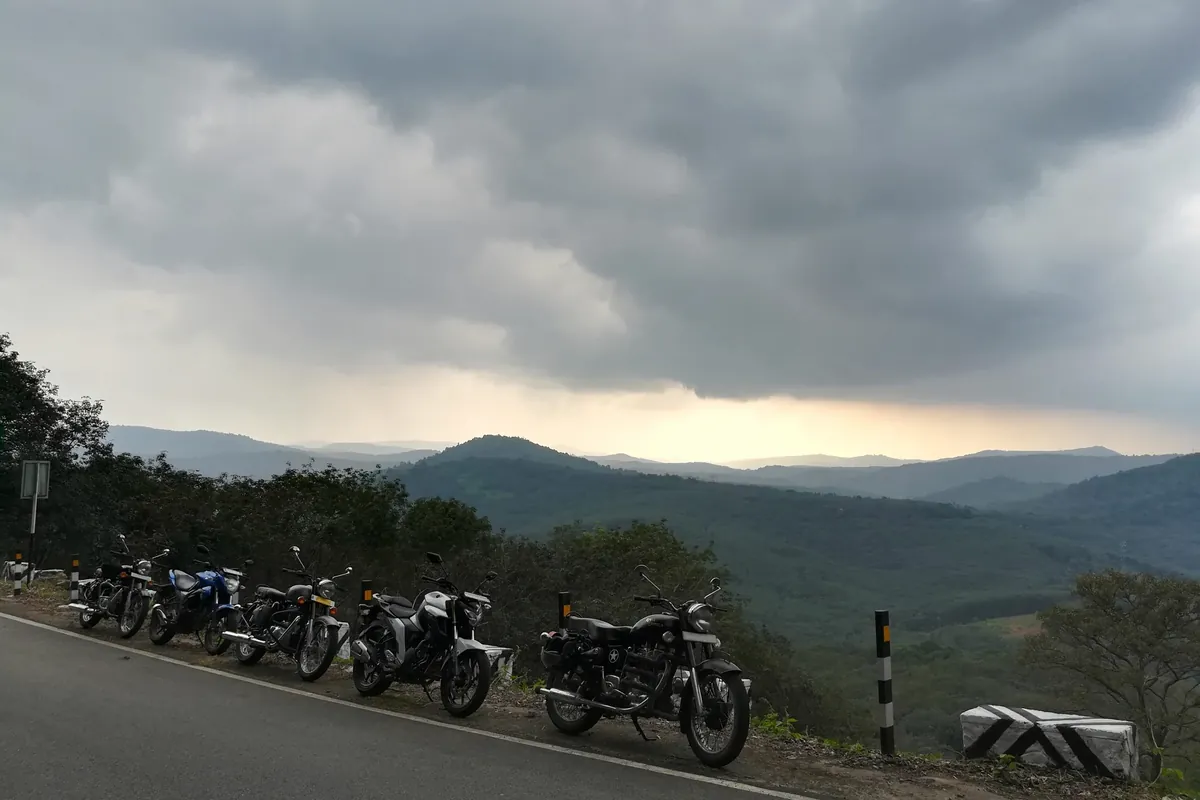
Mountain roads combine gradient, tight bends and limited visibility. The technique is not complex, but it requires discipline: brake before the corner, look through it and use the throttle gently.
Brake before the corner
Most cornering errors start with braking too late. Reduce speed before turn-in, then maintain or gently add throttle through the bend. Braking at lean reduces grip.
On a downhill, engine braking and both brakes share the load. Do not drag the front brake through the whole corner.
Use a safe line
Enter wide enough to see, apex late and exit wide where the road allows. On a blind bend, stay on your side and assume a vehicle is coming.
Do not cross the centre line. A mountain road is not a racetrack.
Look through the bend
Turn your head and look at where you want to go. The bike follows your eyes more than you expect.
Scan the road surface for gravel, wet patches, leaves and animals. A mountain road changes quickly.
Overtake with patience
Overtake only where you can see the road ahead and the vehicle has space. A short straight is not an invitation.
If a local vehicle is faster, let it go. Matching someone else's pace is how riders crash.
Checklist
- Speed set before turn-in.
- Front and rear brakes used smoothly.
- Line that respects the centre line.
- Vision through the bend.
- Road surface and animals.
- Downhill engine braking.
- Overtaking only with clear sight.
Questions
Should I use the rear brake in corners?
Use both brakes before the corner. Trail braking is an advanced technique; on the road, smooth and early is safer.
How do I handle a blind bend?
Slow down, stay on your side and be ready to stop. Assume there is a vehicle around the corner.
Why does the bike run wide?
Usually too much speed at turn-in, a late line or a tyre/suspension issue. Fix the speed first.