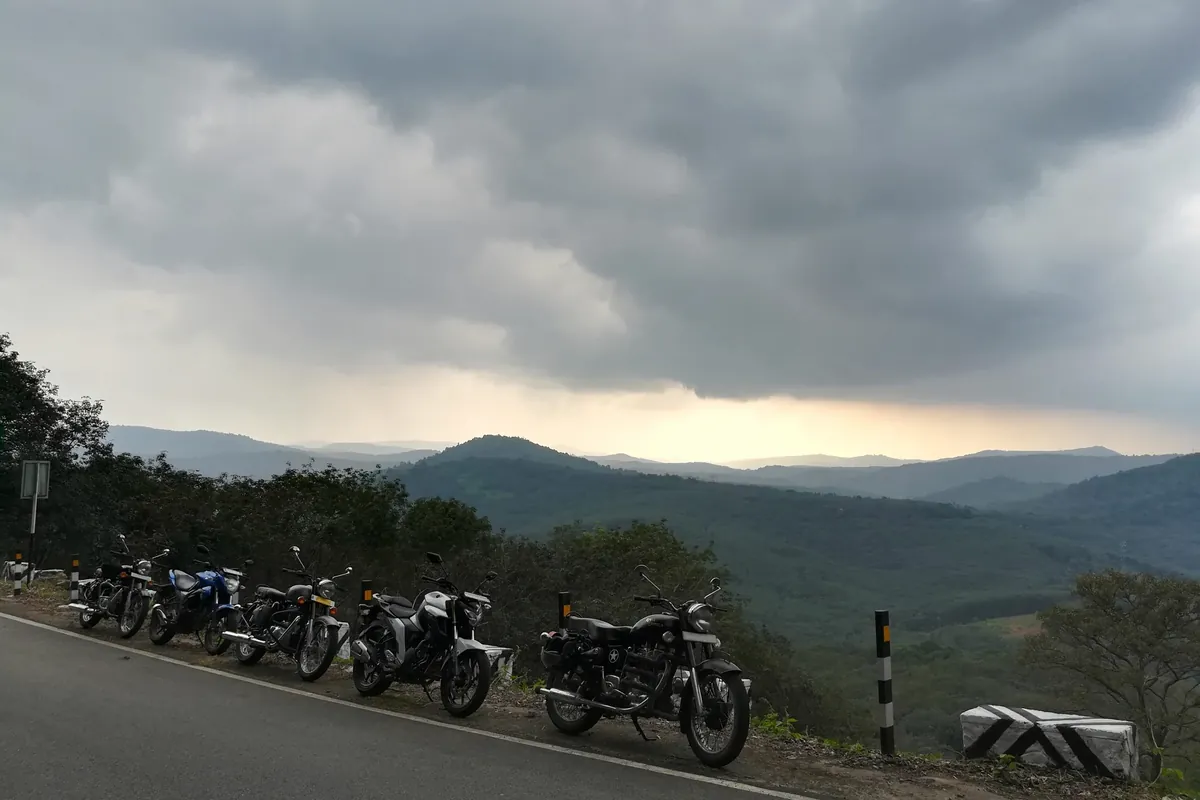
Tropical rain can arrive suddenly and turn a familiar road into a different surface. Wet paint, metal covers, oil and leaves are the hazards to respect.
Prepare the bike and gear
Check tyre tread and pressure. Good tread clears water; low pressure can make the tyre feel vague. Rain gear that flaps or blocks vision is a distraction.
A pinlock or anti-fog treatment keeps the visor clear. Gloves with grip matter more than style.
Smooth every input
Brake earlier and more gently. Use both brakes and avoid sudden changes of lean. Roll on the throttle smoothly; a sudden input can break traction.
Look further ahead and increase the following distance. A wet road needs more time, not more skill.
Respect the surface
Paint lines, metal covers, manhole covers, oil and wet leaves are slippery. Cross them upright and gently.
Standing water can hide potholes. If you cannot see the depth, slow down.
Manage visibility
Use low beam in rain and avoid relying on a dark visor. A bright jacket helps drivers see you. Do not follow a vehicle closely; spray reduces vision.
If the rain is too heavy, stop somewhere safe. Riding blind is not bravery.
Checklist
- Tyre tread, pressure and age.
- Rain gear and visor clarity.
- Earlier, gentler braking.
- Increased following distance.
- Slippery surfaces: paint, metal, oil, leaves.
- Low beam and visibility.
- A safe place to stop if needed.
Questions
Should I reduce tyre pressure in the rain?
No. Use the recommended pressure. Lower pressure can make the tyre vague and increase heat.
Are dual-sport tyres good in rain?
It depends on the compound and tread. A road-oriented tyre usually grips better on wet tarmac than a knobby.
How do I stop safely in heavy rain?
Slow down, use both brakes gently and avoid sudden steering. If visibility is too poor, stop off the road.