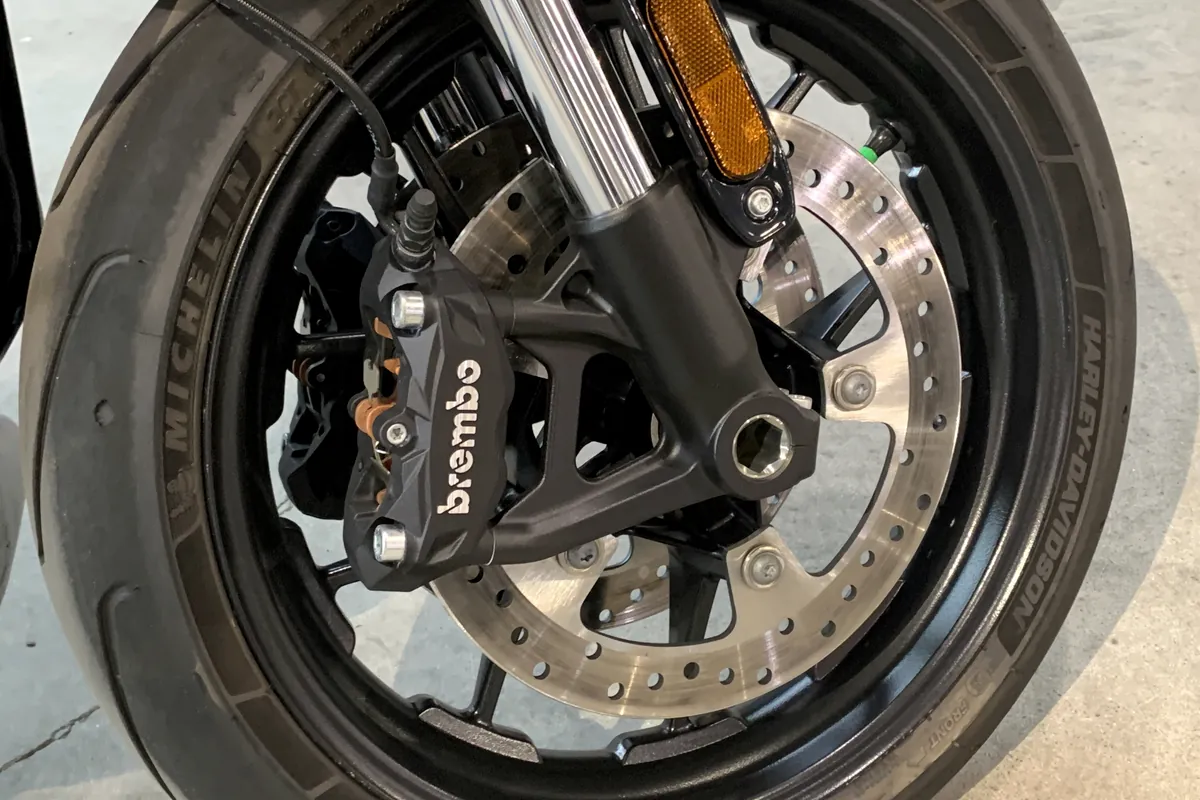
Check pressures cold, before a ride, with a gauge you trust. A forecourt gauge that has been dropped is not a reference. The manual gives the baseline; load and conditions change the target.
Check cold
Tyres heat up as you ride, so a hot reading is higher. Check before moving, or accept that the reading is only comparable with another hot reading.
In a tropical climate, surface heat and sun exposure also raise pressure. Shade the bike before checking if you can.
Use the right gauge
A dedicated tyre-pressure gauge is more reliable than a forecourt inflator. Check it against another gauge occasionally.
Valve caps keep dirt out. A missing cap is a slow leak waiting to happen.
Set for the load
Solo, passenger and luggage pressures differ. Use the manual's figures and adjust within the recommended range. More load usually needs more pressure, but not more than the tyre or rim allows.
Do not reduce pressure for grip on the road. A soft tyre overheats and wears.
Watch for leaks
A tyre that loses pressure repeatedly needs a puncture repair or a new valve. Check the bead and the valve with soapy water.
A slow leak is a safety issue, not a maintenance nuisance.
Checklist
- Cold pressures front and rear.
- Gauge accuracy.
- Valve caps and valve condition.
- Load-specific pressures.
- Tread and sidewall condition.
- Slow leaks and bead seating.
- Pressure change after a long ride.
Questions
Should I check pressure when hot?
Use cold pressures as the reference. A hot reading is useful only if you know the cold baseline.
Can I use the pressure on the tyre sidewall?
That is usually a maximum, not a recommendation. Use the vehicle manual for the correct pressure.
Why does pressure drop over time?
Rubber and valves permeate air slowly. A consistent loss may be normal; a sudden or repeated loss is a leak.
