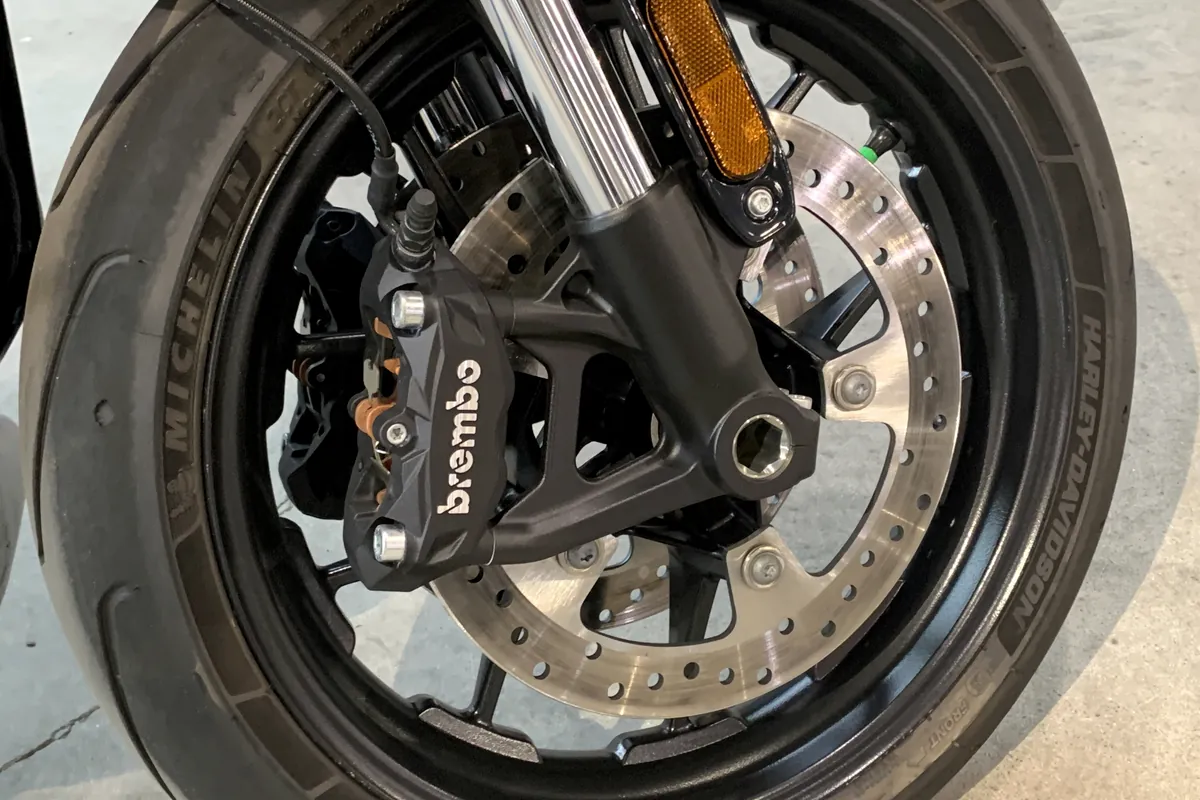
Tyres are the only contact with the road. Size, load rating, compound and age all matter, and the cheapest tyre is rarely the best value over its life.
Match the specification
Use the size, load index and speed rating in the manual or on the tyre label. A wider tyre on the wrong rim can distort the profile and reduce grip.
Check clearance at full suspension travel and around the mudguard. A tyre that fits at rest can rub when loaded.
Choose the compound for the use
A touring tyre lasts longer and works in rain; a sport tyre grips more but wears faster. A dual-sport tyre trades road noise and wear for off-road traction.
Be honest about your riding. Most riders benefit from a road-oriented tyre with good wet performance.
Check the date code
Tyres age even when unused. The date code tells you when the tyre was made. A tyre that has spent years in heat and sun may be hard and unsafe.
Inspect for cracks, flat spots and a deformed carcass before fitting.
Fit, balance and bed in
Mounting and balancing matter as much as the tyre. A wheel that is not balanced can cause a vibration or uneven wear.
New tyres need a gentle bed-in period. Avoid hard acceleration and braking at lean for the first 100 km.
Checklist
- Correct size, load and speed rating.
- Rim width and clearance.
- Compound and tread for the real use.
- Date code and storage history.
- Front and rear matching.
- Balancing and valve condition.
- Bed-in advice.
Questions
Do I need to replace both tyres at once?
Not always, but matching age and type helps. If one tyre is old or mismatched, replace as a pair when possible.
Can I use a wider tyre?
Only if the rim and clearance support it. A wider tyre on the wrong rim can reduce grip and change handling.
How old is too old?
Check the date code and inspect for cracks. Rubber hardens with age; a tyre can be unsafe with plenty of tread.
