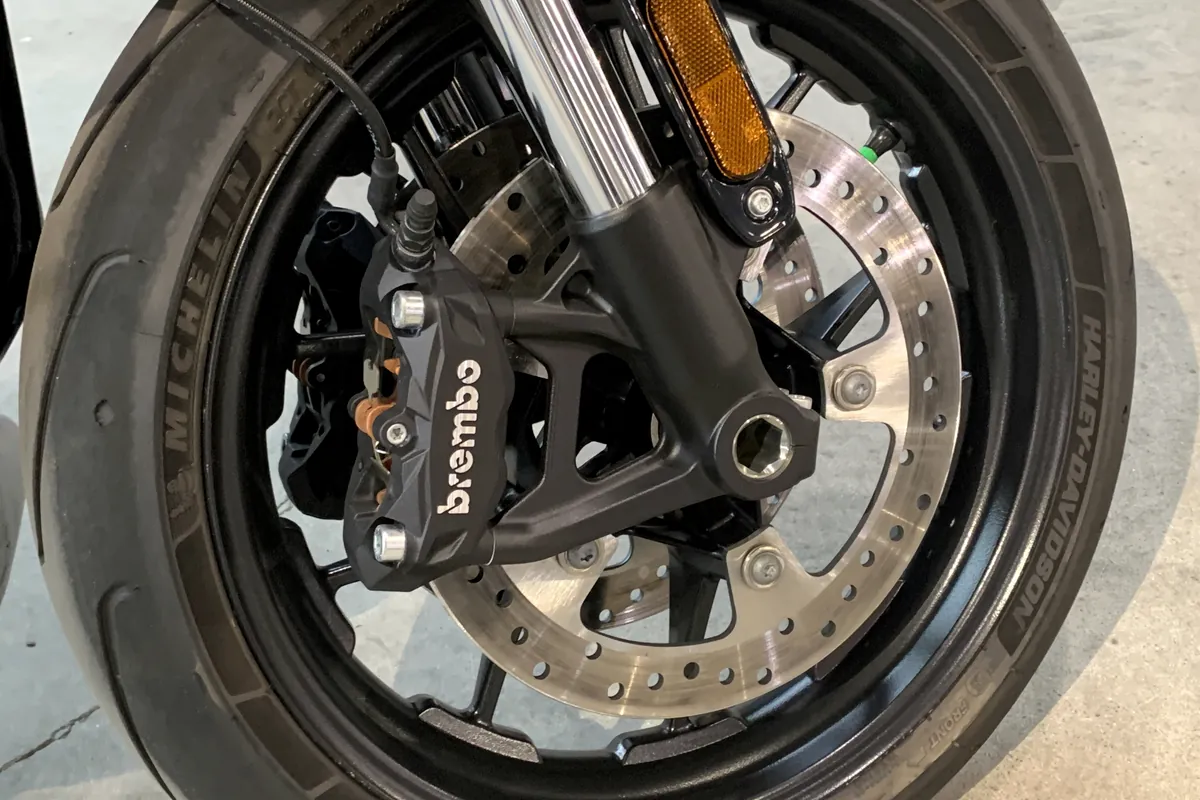
Fit the specified size and a compound that suits your riding, check the date code, balance the wheel and set cold pressures for the load. Replace tires that are cracked, squared off or old, regardless of tread depth.
What this job covers
Fit the specified size and a compound that suits your riding, check the date code, balance the wheel and set cold pressures for the load. Replace tires that are cracked, squared off or old, regardless of tread depth.
Signs you need it
The tires are cracked, hard or squared off. The bike falls into corners or feels unstable. You are changing wheel size or riding more in rain. A tire keeps losing pressure. The front and rear are mismatched in age or type.
The process
Check the bike: Size, rim width, clearance and ABS sensors are confirmed before tires are ordered.
Choose the tire: The use, load, weather and pace decide the compound and pattern. A race tire on a commuter is a compromise, not an upgrade.
Fit and balance: The wheel is removed, the tire mounted without damaging the bead or rim, and the wheel balanced.
Set pressure: Cold pressures are set for the rider, passenger and luggage. The manual is the baseline.
Inspect brakes and bearings: A tire change is the right time to check pads, discs and wheel bearings.
Scrub in: New tires are ridden gently for the first 100 km, with no hard acceleration or braking at lean.
What is included
Correct size and load rating Date-code and condition check Proper mounting and balancing Cold pressure set for your load Brake and bearing inspection while the wheel is off A note on wear and replacement timing
What affects the scope
Tire availability and production date Wheel and rim condition ABS sensor clearance Riding conditions and load
How to prepare
Tell us how you ride and whether you carry a passenger or luggage. Bring the bike if the wheels have ABS sensors or unusual axles. Do not buy tires by diameter alone; rim width and clearance matter.
Checklist
- Tire size, load and speed rating
- Compound and tread pattern selection
- Date-code and condition checks
- Wheel removal, fitting and balancing
- Cold tire pressure for load
- Run-in and scrubbing-in guidance
Questions
Do I need to replace both tires at once?
Not always, but matching age and type helps. If one tire is old or mismatched, the bike can feel inconsistent. Replace as a pair when the budget allows.
Can I use a wider tire?
Only if the rim and clearance support it. A wider tire on the wrong rim can distort the profile and reduce grip. It also changes handling and speedometer accuracy.
How old is too old?
Rubber hardens with age. Check the date code and inspect for cracks. A tire that has spent years in heat and sun should be replaced even if the tread looks good.