Most Indonesian buyers choose between an automatic scooter and a manual motorcycle, usually an underbone. The scooter is easier in traffic and has storage; the manual is lighter, cheaper on some consumables and gives the rider direct control of the gear. Neither is better in general. The route, the load and the rider's experience decide.
Head to head
| Factor | Automatic scooter | Manual motorcycle |
|---|---|---|
| Traffic | No clutch, easy at walking pace | Clutch and gear work in stop-go traffic |
| Hills | CVT manages the ratio; engine braking is limited | Gear choice gives control on climbs and descents |
| Storage | Under-seat space on most models | Usually none; add a rack or bag |
| Consumables | Belt and rollers; no chain | Chain and sprockets; clutch plates |
| Weather | Leg shield and bodywork protect the rider | Less protection; easier to dry |
| Learning | Simple to start riding | Teaches throttle, clutch and gear coordination |
| Weight | Often heavier than a small underbone | Light and narrow |
How the two layouts change the ride
On a scooter, the engine and CVT sit on the swingarm and drive the rear wheel through a belt. There is no gear to select, so the rider's attention goes to the road and the brakes. The step-through frame makes mounting easy and the bodywork keeps spray off your legs.
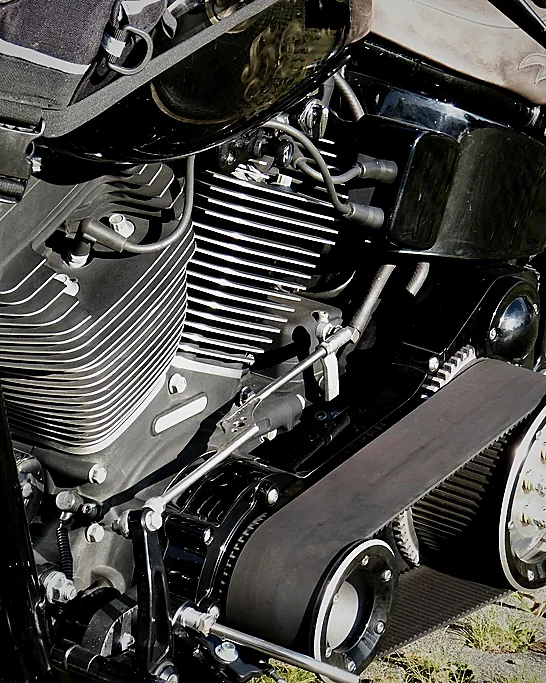
On a manual motorcycle, the engine is in the frame and the rear wheel is driven by a chain through a gearbox. The rider selects the gear and controls the clutch. That adds work in traffic but gives direct control on a climb, a descent or a loose surface.
Traffic and heat
In dense city traffic, the scooter's lack of a clutch is a real advantage. The CVT does the work while the rider manages the throttle and brakes. The trade-off is heat in the belt and clutch as the bike creeps forward, which is normal but makes clean cooling passages and the correct belt important.
A manual bike lets you select neutral at a long light, which reduces clutch heat and hand fatigue. In slow traffic, however, you will slip the clutch repeatedly, and a poorly adjusted cable or a worn clutch makes that unpleasant.
Hills and engine braking
A manual gearbox is easier to control on a long descent: select a lower gear and let the engine hold the speed, saving the brakes. A CVT has some engine braking, but it is less direct and can feel like the bike is freewheeling on a steep grade.
On a climb, a manual lets you hold a gear that keeps the engine in its useful range. A CVT will find a ratio, but a small engine with a passenger may sit at high revs. Neither is unsafe; they demand different techniques.
Maintenance and consumables
A scooter needs a belt and roller service at intervals and clean CVT cooling. A manual bike needs chain adjustment and lubrication, and eventually a chain and sprocket set. Both need oil, filters, brake fluid and tyres.
Which is cheaper depends on the model and the interval. A belt service can cost more than a chain replacement but happens less often. Ask your local workshop for the price of both jobs on the specific models you are considering.
Load and carrying
Scooters usually win on daily carrying: under-seat storage, a flat floorboard and a hook for a bag. A manual underbone needs a rack or a backpack. For delivery work, a scooter with a proper rack is the common choice.
A manual bike with a frame-mounted rack can carry heavier loads more safely than a scooter with a bodywork-mounted bracket. If you carry irregular cargo, check how the rack attaches before you buy.
Which rider should choose which
Choose a scooter if your riding is mostly urban, you value storage and weather protection, and you want the simplest possible operation. Choose a manual if your route includes hills, broken surfaces or longer distances, or if you want to learn clutch control for future motorcycles.
A new rider can learn on either. The scooter removes one task; the manual adds one skill. Neither makes you a better or worse rider. Practice and instruction do.
The bottom line
Scooter for traffic, storage and simplicity; manual for hills, control and lower mechanical complexity. Match it to the route you ride most, not the one you imagine.IndoBikes workshop
Checklist
- Your route includes traffic, hills or both
- You need storage or will fit a rack
- You can service the belt or chain locally
- The bike is light enough to park and push
- You have ridden both types before deciding
- The passenger and load fit the seat
- You know the consumable costs for each
- The insurance and tax are comparable
Questions
Is a scooter easier to ride than a manual?
Yes for most beginners, because there is no clutch or gear to manage. A manual is not difficult, but it adds a skill that needs practice in traffic.
Which is better for hills?
A manual gives more direct control through gear selection and engine braking. A scooter can climb fine, but it relies more on the brakes on a descent.
Are scooters more expensive to maintain?
Not necessarily. A belt service can cost more than a chain replacement but is less frequent. Compare the actual intervals and prices for the models you are considering.
Can I tour on a scooter?
Yes on paved roads with light luggage. Small wheels and limited suspension make long days harder than on a motorcycle with larger wheels.