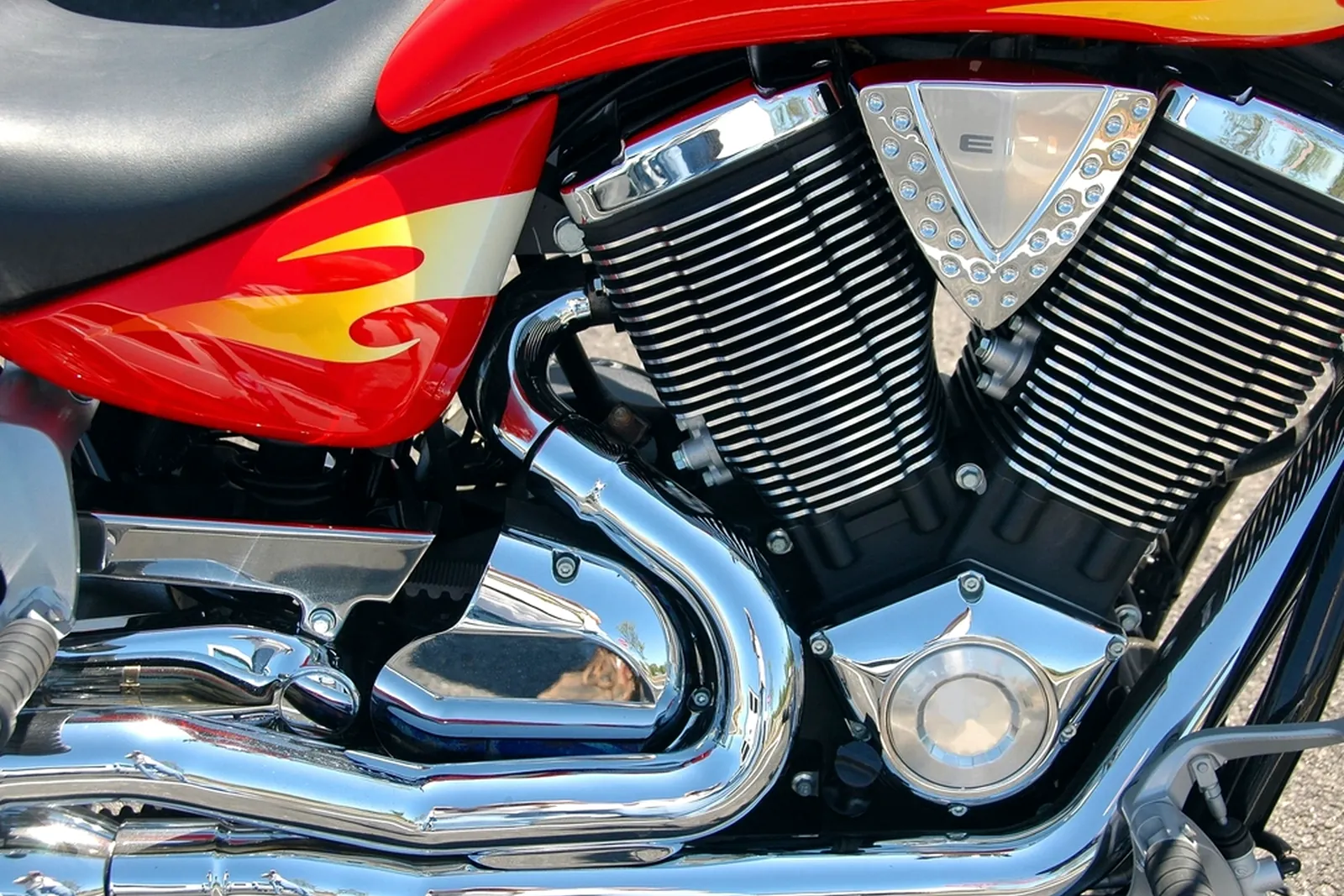
The Suzuki Satria F150 is a sport underbone: a step-through motorcycle with a manual gearbox, a liquid-cooled four-valve engine and a compact chassis. It is lighter than a conventional sport bike and more engaging than a scooter.
The Satria's engine is tuned for a lively top end, and the six-speed gearbox lets the rider use it. The underbone layout keeps the weight low and the bike narrow, which suits traffic. The trade-offs are a firm ride, limited wind protection and a clutch and chain that need regular attention.
At a glance
- Engine layout
- 147.3 cc liquid-cooled DOHC four-valve single
- Fuel system
- Fuel injection
- Transmission
- Six-speed manual
- Final drive
- Chain
- Cooling
- Liquid
Engine and fuel system
The 147.3 cc four-valve engine uses a double-overhead-cam head and liquid cooling. It is tuned for a sporty top end while retaining enough low-speed torque for traffic. The engine is reliable when the oil, coolant and valve clearance are correct.
Liquid cooling adds maintenance points: coolant level, hoses, the water pump and the radiator. Check the coolant cold and keep the radiator clear. A temperature warning means stop; an underbone engine is compact and can heat quickly. Fuel is delivered by electronic injection, so the pump prime, battery voltage and intake condition belong in any hard-start diagnosis.
Transmission and final drive
The six-speed gearbox and chain final drive give precise control. The clutch is part of the rider's routine: free play, cable condition and smooth engagement. A dragging clutch makes neutral hard to select and can overheat the plates.
The chassis is light and agile. The suspension is firm and the brakes are adequate when maintained. Tyre pressure and quality matter; a small underbone with worn tyres is unstable under braking. Check the chain often because the engine's power is concentrated in a narrow band.
Advantages and disadvantages
Advantages
- Light, compact and agile in traffic.
- Lively four-valve engine with a six-speed gearbox.
- Liquid cooling handles hard use.
- Strong parts and workshop support.
- Distinctive sport-underbone character.
Disadvantages
- Firm suspension on poor roads.
- Limited wind protection.
- Clutch and chain need regular attention.
- Pillion comfort is limited.
Maintenance recommendations
The list below is a working routine, not a substitute for the service schedule. Intervals depend on the model year, the version and how the machine is used.
- Change engine oil on schedule and check the level.
- Check coolant cold and keep the radiator clear.
- Maintain the chain and inspect the sprockets.
- Check clutch free play and cable condition.
- Inspect valve clearance at the specified interval.
- Service the air filter and spark plug.
- Check brake pads, fluid and tyre pressures.
Common problems, where supported
These are the faults that repeat on this layout or class of machine. They are diagnostic starting points, not a prediction that every example will fail.
Clutch slip or drag
Cable adjustment, worn plates or the wrong oil can cause it. Check free play first, then measure the plates if the problem persists.
Chain wear
A dry or misadjusted chain wears quickly and can damage the sprockets. Measure elongation and replace chain and sprockets as a set.
Overheating
A blocked radiator, a fan fault or low coolant can raise temperature. Stop and let the engine cool before checking anything.
Customization
Changes should preserve the machine's geometry, load capacity and charging margin. Reversible work keeps the resale value and makes the next service easier.
- A slip-on exhaust is the simplest change; a full system needs a fuelling check.
- A seat reshape and bar change can improve comfort.
- Suspension work should match the rider's weight and the road.
- Brake upgrades should be matched to tyre grip and fork support.
Where the workshop fits
These are the services most often relevant to a suzuki satria f150. Start with the symptom or the service interval, then choose the job.