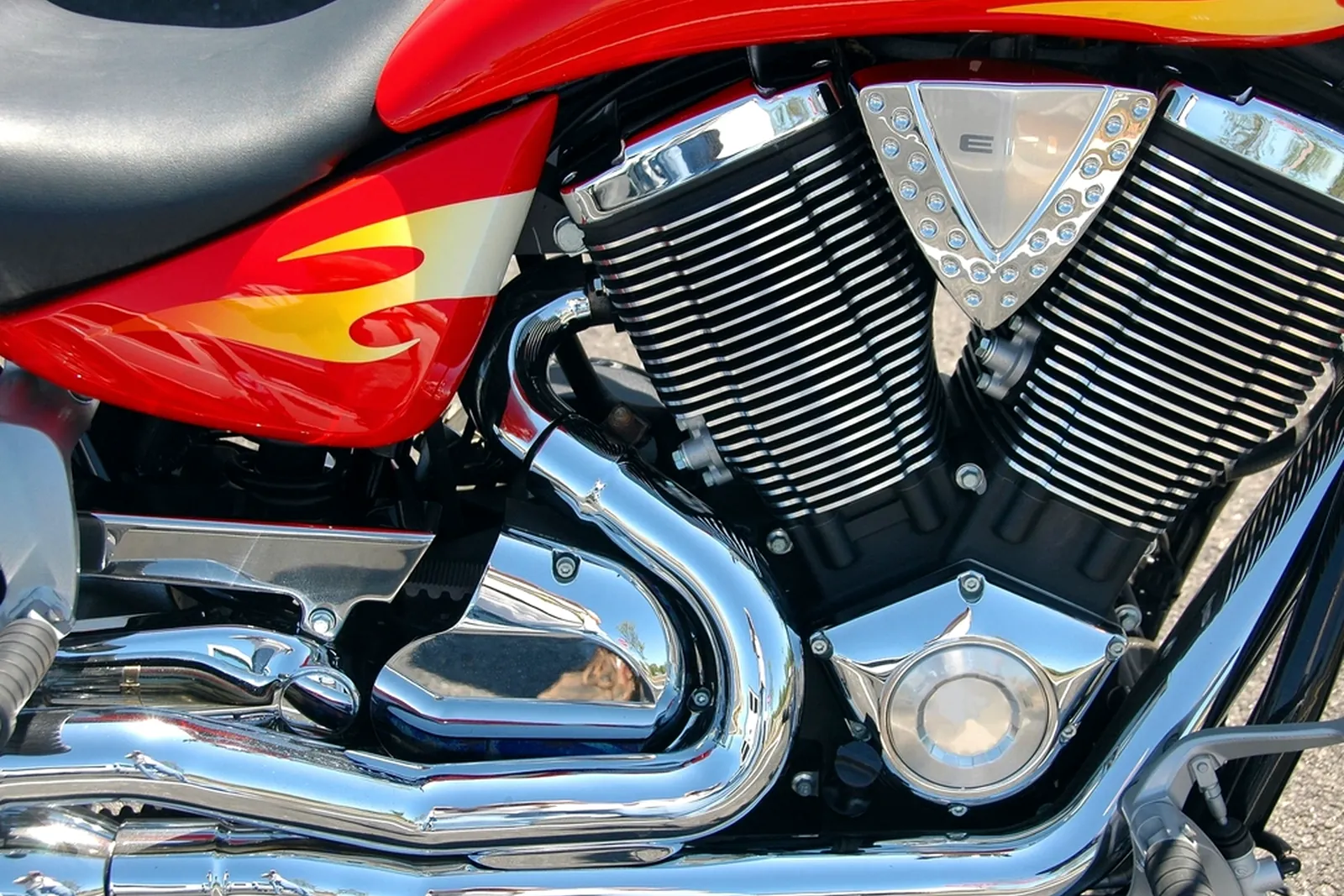
An exhaust is one of the first upgrades riders consider, and one of the easiest to get wrong. A pipe that sounds good but runs lean, melts a turn signal or fails inspection is not an upgrade. The useful questions are compatibility, clearance, gas flow and noise.
Slip-on, full system and materials
A slip-on replaces the muffler and leaves the standard header. It is the least invasive option, often saves weight and changes the sound. A full system replaces the header and the muffler and has a greater effect on gas flow, weight distribution and access for maintenance.
Stainless steel is durable and common; titanium is lighter and more expensive; carbon fibre is light but can degrade with heat and UV. The material matters less than the construction, the mounting and the fit. A well-made stainless system outlasts a poorly made exotic one.
Compatibility and clearance
Check the mounting points, the diameter and the angle before buying. A system designed for one model or year may not fit another. Confirm clearance for the rider's leg, the passenger peg, the luggage, the centre stand and the swingarm through the full suspension travel.
If the bike has an oxygen sensor, the new system needs a boss in the correct location. A sensor moved too far downstream or left out can cause a fault code and poor fuelling. A catalytic converter may be part of the standard system; removing it can be illegal and can affect emissions testing.
Fuelling and backpressure
A modern fuel-injected engine measures airflow and adjusts fuel within a range, but a major exhaust or intake change can exceed that range. A lean condition raises combustion temperature and can damage valves. A flat spot, excessive heat, popping on deceleration or a check-engine light are reasons to have the fuelling checked.
Backpressure is not a mystical force; it is part of the system's tuning. A pipe that is too open can hurt low-speed torque and make the bike unpleasant in traffic. A manufacturer's full system with a matching map is usually a safer combination than a random pipe.
Noise, legality and neighbours
Noise rules vary by region and are enforced at inspection or by police. A loud exhaust can fail inspection, attract attention and damage the reputation of the custom scene. A removable baffle helps at inspection but does not make the bike quiet in normal use.
Consider the rider's hearing as well. Wind and exhaust noise cause long-term damage. A pipe that is tolerable on a short ride can be exhausting on a tour. Choose a sound level that suits the way the bike is used.
Installation and maintenance
Use new gaskets and proper fasteners. Support the system at the designed mounts; a pipe hanging from the header alone will crack. Check clearance after the first ride and retighten the mounts. Stainless and titanium can gall, so use the recommended anti-seize on threads where appropriate.
Inspect the system for cracks, loose mounts and heat damage. A change in sound can be an exhaust leak, not a tuning issue. Fix leaks before adjusting fuelling. Keep the original system if you may sell the bike or need to pass inspection.
Checklist
- Confirm the system fits the exact model and year.
- Check clearance for leg, luggage, stand and suspension travel.
- Verify the oxygen sensor boss and catalytic converter requirements.
- Have the fuelling checked after a major change.
- Use new gaskets and support the system at all mounts.
- Check noise rules and inspection requirements.
- Retighten mounts and check clearance after the first ride.
- Keep the original system for resale or inspection.
Questions
Does an exhaust increase power?
It can change the power curve, but a pipe alone rarely delivers a large gain. Without matching intake and fuelling work, it can lose low-speed torque or run lean. Treat power claims sceptically.
Can I remove the catalytic converter?
It may be illegal and can fail emissions inspection. It also changes the exhaust flow and the sound. Check local rules before modifying the standard system.
Why does my bike pop on deceleration?
An exhaust leak, a lean mixture or an air injection system can cause it. Check the joints and the fuelling before assuming the pipe is the problem.