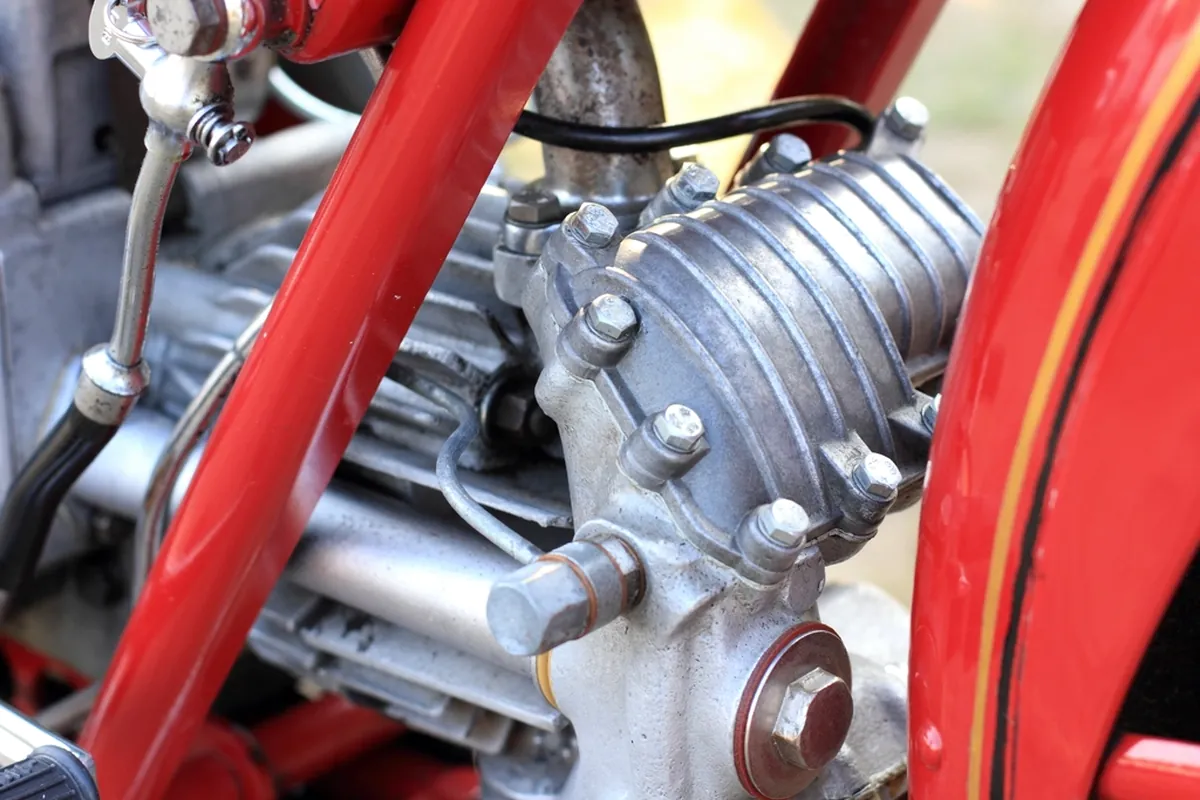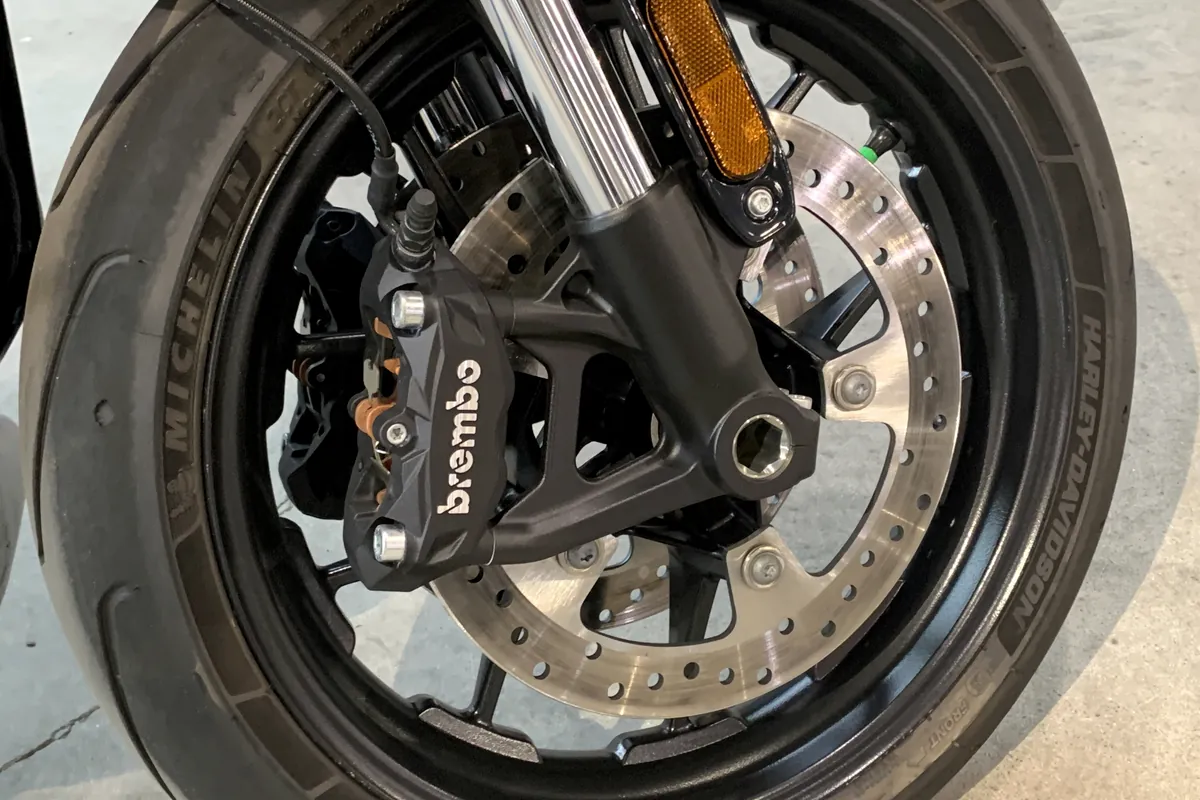
A pad check is not just a thickness measurement. Look for uneven wear, contamination, cracked friction material and a disc that is being scored.
Get a clear view
Use a light and look at the pad through the caliper. On some bikes you need to remove the caliper or the wheel. Do not force anything; follow the service information.
Check both pads on each side of the disc. A stuck piston can wear one pad faster.
Measure the friction material
Compare the remaining material with the wear limit in the manual. A pad that is close to the limit should be replaced before a long trip.
Do not judge by the backing plate alone. The friction material may be thinner than it looks.
Inspect the disc and fluid
Look for deep grooves, blue heat marks and a lip at the edge. Check the brake fluid level and colour. A low level with worn pads is normal; a low level with new pads suggests a leak.
Check the brake lines and caliper for leaks.
Replace as a set
Replace pads on both sides of a caliper as a set. Clean the caliper, check piston movement and bed in the new pads.
If one pad is much more worn, find out why before fitting new ones.
Checklist
- Friction material thickness against the limit.
- Even wear on both pads.
- Disc scoring, thickness and heat marks.
- Brake fluid level and colour.
- Caliper piston movement.
- Leaks at lines and seals.
- Bedding-in after replacement.
Questions
How often should brake pads be replaced?
It depends on riding, load and pad compound. Check at every service and before long trips; do not wait for a noise.
Can I replace only one pad?
No. Replace both pads in a caliper as a set to keep braking even.
Why is one pad worn more?
A sticking piston or a dirty caliper is the usual cause. Clean and inspect the caliper.