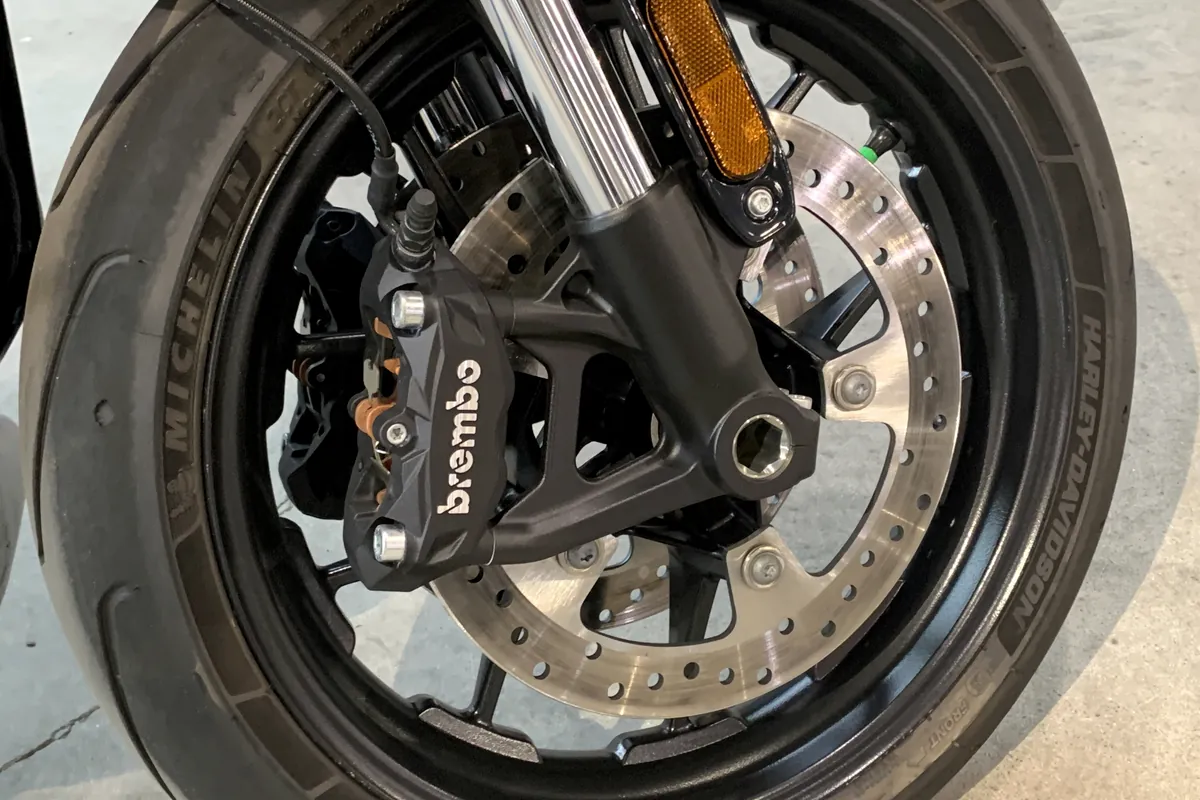
Brake noise is common and often minor, but it should never be ignored. A squeal can be the first sign of a pad that is down to the metal or a caliper that is not releasing.
Check pad wear first
Look at the friction material through the caliper or remove the pads. A pad at the wear limit or down to the backing plate is a safety issue, not a noise complaint.
Check both sides of the disc and both pads. Uneven wear suggests a sticking piston.
Look for glazing and contamination
Glazed pads have a shiny surface and lose bite. Clean the pads and disc with brake cleaner and inspect for oil or fluid contamination. A leaking fork seal or a careless fluid top-up can ruin pads.
Replace contaminated pads. Cleaning is not enough if the friction material has absorbed oil.
Check the disc and caliper
A warped or scored disc causes noise and pulsation. Check thickness and runout. A caliper that does not release can overheat the brake and warp the disc.
Clean the caliper, check piston movement and lubricate the sliding pins with the correct grease.
Bed in new pads
New pads need bedding-in to transfer a layer of friction material to the disc. Follow the maker's procedure and avoid hard stops from high speed until the bed-in is complete.
If the noise persists after bedding-in, recheck the installation and the disc.
Checklist
- Pad thickness and even wear.
- Glazing or contamination on pads and disc.
- Disc thickness, scoring and runout.
- Caliper piston movement and slide pins.
- Brake fluid level and condition.
- Wheel bearings and loose components.
- Bedding-in procedure for new pads.
Questions
Is squealing dangerous?
Not always, but it can indicate worn pads or a sticking caliper. Check it before a long ride.
Can I clean brake pads?
You can remove dust and light glaze, but oil-contaminated pads should be replaced.
Why do new brakes squeal?
New pads and discs need bedding-in. Some combinations are simply noisy; if performance is good and the installation is correct, monitor it.
