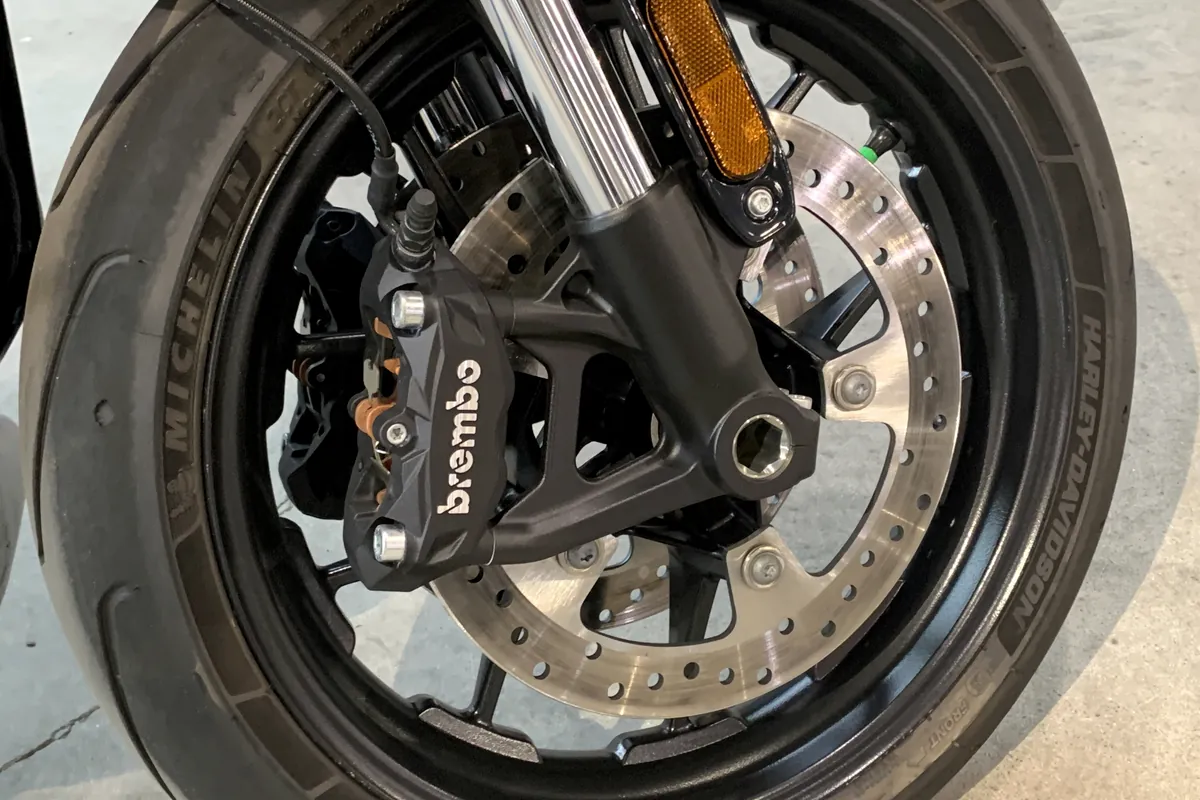
Start with fresh fluid, correct pads and a caliper that moves freely. Then check lines and discs. A brake upgrade is only useful if the lever gives you feel and the tire can use the force.
What this job covers
Start with fresh fluid, correct pads and a caliper that moves freely. Then check lines and discs. A brake upgrade is only useful if the lever gives you feel and the tire can use the force.
Signs you need it
The lever feels spongy, long or inconsistent. The brakes squeal, grind or pull to one side. The bike does not stop as sharply as it used to. The fluid is dark or the reservoir is low. A caliper or disc is hot after a ride without heavy braking.
The process
Inspection: Pads, discs, lines, calipers and lever feel are checked before anything is opened.
Fluid test: Fluid condition and moisture are assessed. Old fluid is replaced with the specified grade.
Caliper service: Pistons are cleaned and checked for free movement. Seized or corroded calipers are rebuilt or replaced.
Pad and disc work: Pads are matched to the use and bedded in. Disc thickness and runout are measured.
Bleeding: The system is bled correctly, including ABS or combined systems where fitted. Lever feel is verified.
Road test: The bike is tested at low speed first, then at normal road speed. The customer is told how to bed the pads.
What is included
A measured assessment of pads, discs and fluid Correct brake fluid and a proper bleed Caliper cleaning and piston check Pad bedding-in guidance Lever and pedal free-play adjustment A note on anything approaching its wear limit
What affects the scope
Whether the calipers or master cylinder are serviceable ABS or combined-brake bleeding requirements Disc condition and parts availability Rider weight, load and riding style
How to prepare
Describe when the lever feel changed and whether the bike has been stored. Bring any recent brake work invoices. Do not top up the reservoir with an unknown fluid.
Checklist
- Brake fluid replacement and bleeding
- Pad inspection, replacement and bedding-in
- Caliper cleaning and piston movement
- Braided lines and master-cylinder matching
- Disc wear, warping and contamination
- ABS and combined-brake system checks
Questions
How often should brake fluid be changed?
Most makers specify a time interval as well as a distance. Fluid absorbs moisture even when the bike is used lightly, so follow the manual and shorten the interval in humid conditions.
Can I upgrade just the pads?
Sometimes. A good pad compound can improve feel, but it will not fix a spongy line, a dragging caliper or a worn disc. Match the pad to the disc and the riding.
Why do new brakes feel weak?
New pads need bedding-in to transfer a layer of friction material to the disc. Follow the maker's procedure and avoid hard stops from high speed until the bed-in is complete.