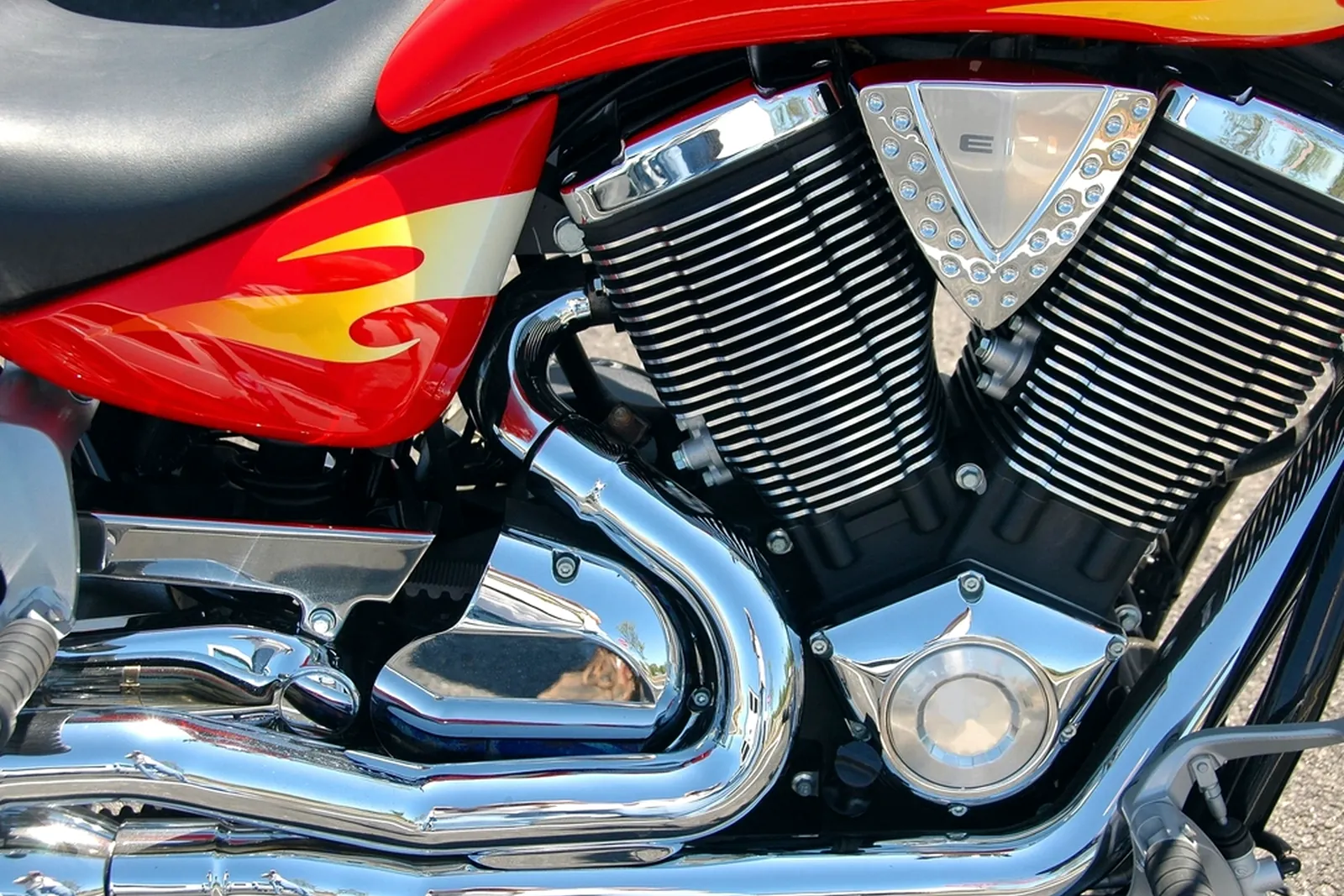
The Yamaha Aerox 155 shares the 155.09 cc liquid-cooled four-valve SOHC VVA engine and CVT with the NMAX, but the chassis, bodywork and riding position are different. The Aerox is firmer, flatter and more aggressive. That suits a solo rider on good roads; it is less comfortable for a passenger or a long, broken commute.
Verified mechanical facts
| Item | Specification |
|---|---|
| Engine layout | 155.09 cc liquid-cooled four-valve SOHC single with VVA |
| Fuel system | Fuel injection |
| Transmission | CVT |
| Final drive | V-belt |
| Cooling | Liquid |
| Brakes | Disc front and rear; ABS on some variants |
Sporty is a chassis decision
The Aerox feels different from the NMAX mainly because of its chassis and suspension settings, not because the engine is dramatically different. It is firmer, which gives a more direct feel on smooth roads and a harsher ride on broken ones.
If your route is mostly good asphalt and you ride alone, that firmness can be enjoyable. If your route is patched, potholed or you carry a passenger, it becomes a comfort cost.
Engine and CVT care
The liquid-cooled VVA engine needs the same fundamentals as the NMAX: clean coolant, a working fan, a clean radiator and a CVT belt service at the recommended interval. The Aerox's sportier use can mean harder acceleration, which wears the belt and rollers a little faster.
Use the specified belt and inspect the rollers. A shudder or a delay when pulling away is a sign that the CVT is due, not a characteristic to ignore.
Passenger and daily practicality
The Aerox has a smaller, firmer pillion seat than the NMAX and a more forward-leaning rider position. A short passenger is fine; a taller one may feel cramped. Check the grab rail and the pegs with two people before you buy.
Storage is present but not as generous as a comfort-oriented scooter. If you carry a helmet and a bag every day, try the storage with your own gear.
Brakes, tyres and ABS
Some variants have ABS on both wheels. Confirm the specification and check the warning light on a used bike. The Aerox's firmer chassis and sportier tyres reward good rubber; cheap tyres undermine the package.
Tyres are a recurring cost. Check the fitted price and availability before you buy, and keep the pressures correct. A sporty scooter on underinflated tyres feels vague and wears unevenly.
Used Aerox checks
Look for crash damage to the bodywork, the bar ends and the exhaust. A sporty scooter is more likely to have been ridden hard, so check the tyres, the brake pads and the CVT. A repainted panel on a low-mileage bike deserves a closer look at the frame and forks.
Cold start, coolant condition and ABS behaviour are the mechanical essentials. Ask for the service history and price any overdue CVT work into your offer.
Who should buy one
The Aerox suits a solo rider who wants a sporty scooter with the VVA engine, mostly on good roads, and who does not need maximum comfort or passenger space. It is a style and feel decision as much as a practical one.
If you carry a passenger daily, ride broken roads or want the most comfortable maxi-scooter experience, the NMAX is the better choice. The mechanical base is shared; the priorities are not.
Set-up that suits the firmer chassis
Because the Aerox is firm, tyre pressure and rear preload matter more than they do on a soft scooter. Check the pressures cold and set them for your weight and load. A few psi wrong in either direction is easy to feel on a short, stiff chassis.
If the ride is harsh on your regular route, check the tyre condition and pressure before changing suspension. Worn or overinflated tyres are a more common cause than a spring that is too stiff. Keep the standard settings until you have ruled out the simple causes.
The bottom line
Buy the Aerox for a firmer, sportier scooter on good roads. Choose the NMAX instead if comfort, passenger space and broken surfaces are part of your daily route.IndoBikes workshop
Checklist
- Your route is mostly smooth asphalt
- You ride alone most of the time
- The pillion seat suits your passenger
- The CVT does not shudder or slip
- The coolant and radiator are in good condition
- The ABS light behaves correctly if fitted
- Tyres are matched and affordable locally
- The service history covers CVT and coolant
Questions
Is the Aerox 155 the same engine as the NMAX?
They share the 155.09 cc liquid-cooled four-valve VVA engine layout and CVT. The chassis, suspension and bodywork differ.
Is the Aerox comfortable for a passenger?
It is firmer and more compact than the NMAX. Short trips are fine, but taller passengers may feel cramped. Test with two people.
Does the Aerox have ABS?
Some variants do, on both wheels. Confirm the exact specification and check the system on a used bike.
Is the Aerox good for long distance?
It can handle paved day trips, but the firm suspension and compact seat make long days less comfortable than a touring-oriented scooter.