CBS and ABS are often confused because both appear on scooter specification sheets. CBS links the front and rear brakes so a single lever applies some force to both. ABS monitors wheel speed and releases pressure to prevent a lock-up. CBS helps a rider who uses one brake; ABS helps a rider who brakes hard on a slippery surface.
How the systems differ
| System | What it does | What it does not do |
|---|---|---|
| CBS | Distributes braking force between front and rear | Prevent a wheel locking on a low-grip surface |
| ABS | Modulates pressure to prevent wheel lock | Shorten every stop or replace rider skill |
| Single-channel ABS | Controls the front wheel only | Prevent a rear-wheel lock |
| Dual-channel ABS | Controls front and rear independently | Guarantee grip on a loose or oily surface |
CBS: sharing the work
A combined braking system links the front and rear circuits so that pulling one lever applies some braking at both wheels. The aim is to make braking more stable for riders who habitually use only one brake, and to reduce the chance of a rear-wheel lift under hard front braking.
CBS does not measure wheel speed and cannot prevent a lock-up. On a wet or gravel surface, a hard grab can still lock a wheel. It is a useful convenience and a modest safety aid, not an anti-lock system.
ABS: preventing the lock
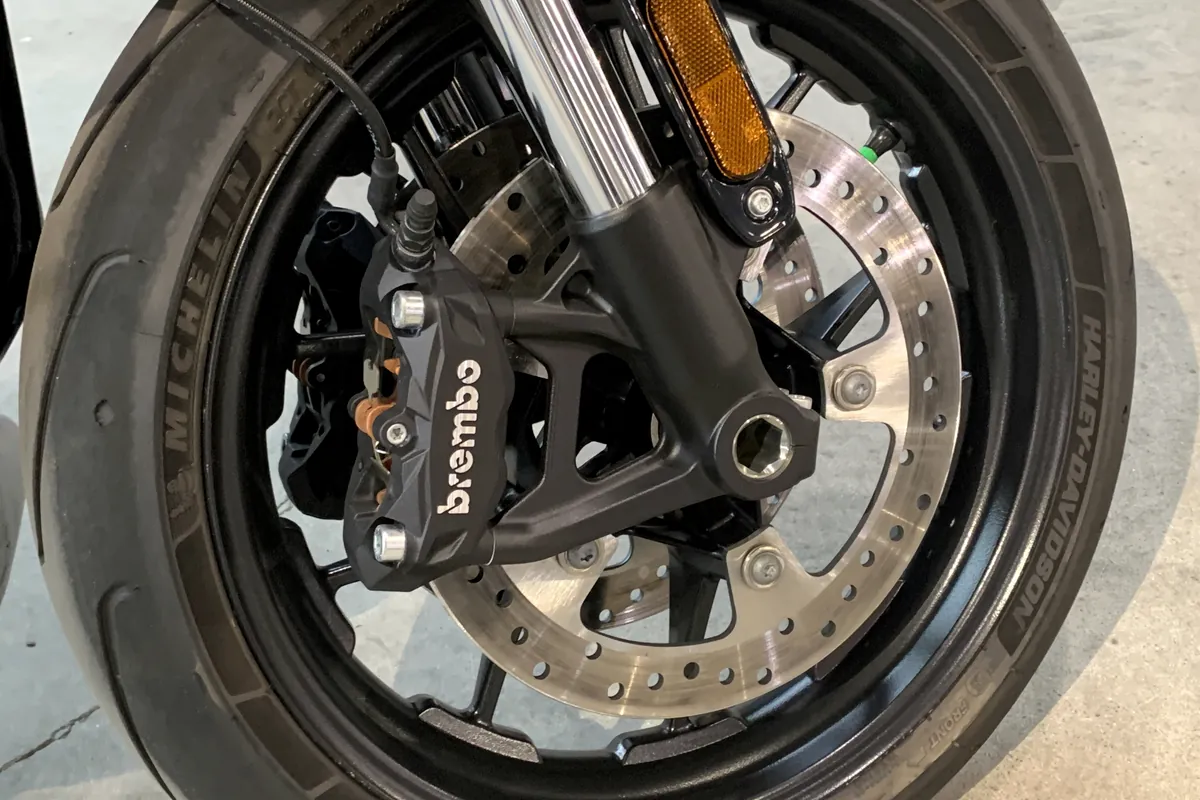
ABS uses wheel-speed sensors and a hydraulic modulator to release and reapply pressure when a wheel starts to lock. The rider feels a pulsing lever and may hear the pump. The system allows braking force to stay close to the limit of grip without the wheel skidding.
On a scooter, single-channel ABS usually controls the front wheel, which is the one most likely to lock under hard braking. Dual-channel systems control both. Either is a real benefit in the rain, but neither overrides physics: a wet manhole cover or a painted line still offers little grip.
What ABS does not fix
ABS cannot compensate for worn tyres, a loaded bike or a rider who brakes mid-corner. It also cannot shorten every stop; on a dry, grippy surface a skilled rider may stop in a similar distance without it.
The system is a safety net, not a licence to brake later. It is most valuable to a rider who is surprised by a hazard, which is exactly when skill is hardest to apply.
Maintenance and cost
Both systems need correct brake fluid and a functioning hydraulic circuit. ABS adds wheel sensors, a modulator and a warning light. The system self-tests at startup; if the light stays on, it has a fault and may not function.
ABS repairs can be expensive, and not every small workshop has the diagnostic tools. If you buy a used ABS bike, confirm the light behaves correctly and that the brake fluid has been changed on schedule.
Is ABS worth paying for in Indonesia?
If you ride in the rain, on mixed surfaces or in dense traffic where unexpected stops are common, ABS is one of the most valuable options available. It is worth more than a larger engine, a digital dash or cosmetic upgrades.
If your budget is tight, good tyres and well-maintained conventional brakes come first. A bike with ABS and bald tyres is less safe than a bike without ABS and fresh rubber.
What to check on a test ride
Find a straight, empty section and brake firmly at moderate speed. With ABS, you should feel the lever pulse as the system intervenes, and the warning light should not stay on afterwards. With CBS, apply one lever and feel whether both brakes contribute smoothly.
Test in the dry first, then in the wet if you can. A brake that grabs or a lever that sinks is a fault regardless of the system. Do not accept a bike with a brake warning light as 'normal'.
The bottom line
ABS is worth the premium for wet-road and traffic safety; CBS is a useful help but not a substitute. Whichever you choose, tyres and brake maintenance matter first.IndoBikes workshop
Checklist
- The ABS warning light goes out after the self-test
- No brake warning light stays on
- The lever feels firm and does not sink
- Both brakes contribute smoothly
- Tyres have tread and are not aged
- Brake fluid has been changed on schedule
- A local workshop can service the system
- You have tested a firm stop in a safe area
Questions
Is CBS the same as ABS?
No. CBS links the brakes to share force; ABS modulates pressure to prevent a wheel locking. Only ABS is an anti-lock system.
Is single-channel ABS enough?
It controls the front wheel, which is the usual lock-up risk under hard braking. Dual-channel adds rear control but is not essential for most riders.
Can I ride a motorcycle with the ABS light on?
The brakes usually still work conventionally, but the anti-lock function may be disabled. Treat it as a fault and have it diagnosed before relying on it.
Does ABS make braking distance shorter?
Not always. On dry, grippy surfaces a skilled rider may match it. Its main benefit is preventing a lock-up in an emergency or on a low-grip surface.