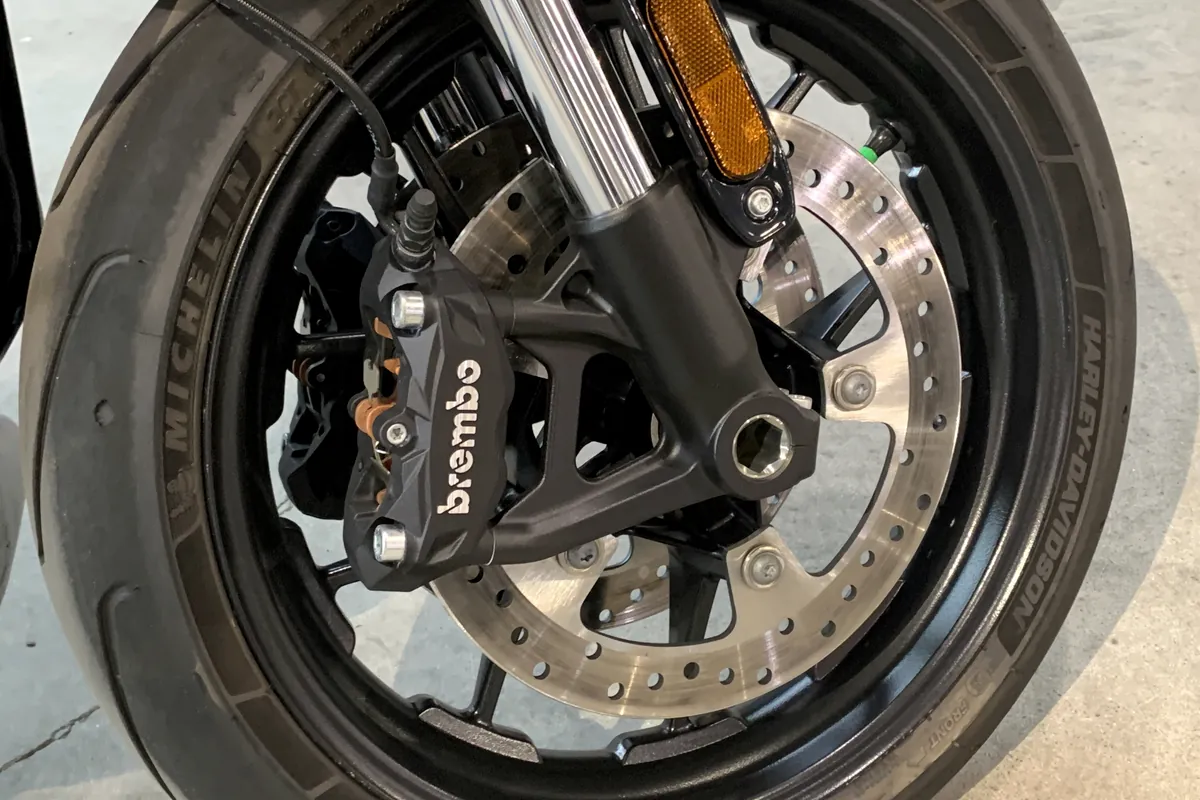
Brake noise is one of the most common reasons riders book a workshop, and one of the easiest to misdiagnose. A squeak at low speed with light pressure is often vibration or dust. A grind, a pulsing lever or a sudden loss of performance is a different category.
At a glance
| Symptom | Likely cause | Action |
|---|---|---|
| Squeak at low speed, light pressure | Dust, glaze or pad vibration | Inspect and clean; check thickness |
| Squeal after rain or washing | Surface rust on the disc | Ride gently; noise should clear |
| Grind under braking | Pad worn to metal | Stop riding; replace pads and inspect disc |
| Pulsing lever or pedal | Warped disc or drum | Measure disc runout; replace if out of spec |
| Bike pulls to one side | Seized caliper or collapsed hose | Stop; workshop inspection |
Separate the noise from the symptom
Note when the noise happens: light lever pressure, heavy braking, low speed, after rain, or only when reversing. A squeak that disappears after a few braking events may be surface rust or dust. A noise that gets worse with heat or pressure needs attention.
Check the lever feel at the same time. A spongy lever, a lever that pulls to the bar, a pulsing lever or a bike that pulls to one side is a safety issue, not a cosmetic one. Stop riding and inspect the brakes.
Disc brakes: pads, discs and calipers
Glazed pads, brake dust and a dry backing plate are common causes of squeal. A pad that is worn to the backing plate will grind, not squeak, and the disc will be damaged. Check the friction material thickness, not just the noise.
A warped disc causes a pulse through the lever or pedal, often with a rhythmic noise. A loose caliper, a missing anti-rattle clip or a worn slide pin can make the pad chatter. A contaminated pad from oil or brake fluid should be replaced, not cleaned.
Drum brakes
Drum brakes collect dust and glaze. A squeak or squeal can come from dry pivots, glazed shoes or a worn drum. Remove the wheel, clean the dust with the correct precautions and inspect the shoe lining thickness.
Do not use compressed air to blow brake dust into the air. Use a damp cloth or a sealed extractor. Brake dust can be harmful. Check the return springs and the cam mechanism for wear and lubrication.
New pads and bedding-in
New pads can squeal until they bed in. The friction material needs a series of moderate stops to transfer a consistent layer to the disc. Follow the pad manufacturer's bedding procedure and avoid hard stops from high speed for the first few kilometres.
If the noise persists after bedding in, check that the correct pad compound is fitted, that the disc is clean and that the caliper is aligned. A pad fitted dry without the specified shim or grease can chatter.
When noise means danger
Stop riding if you hear metal-on-metal grinding, feel a pulse through the lever, see brake fluid leaking or notice the bike pulling to one side under braking. A seized caliper or a collapsed hose can cause a wheel to drag or a brake to fail.
A brake that overheats and fades is also a stop-now condition. Do not pour water on a hot disc or caliper. Let it cool and have the system inspected.
Repair considerations
Pads and discs are consumables. Replace pads in pairs and replace a disc that is below the minimum thickness or visibly scored. Use the specified brake fluid and bleed the system if it has been opened.
A squeak that returns after a proper service may be a design characteristic of the pad compound. A quieter compound can help, but do not trade braking performance for silence. The priority is consistent stopping.
Checklist
- Note when the noise happens and whether the lever pulses.
- Check pad thickness and disc condition.
- Look for fluid leaks around the caliper and hose.
- Clean brake dust without compressed air.
- Check caliper mounting bolts and slide pins.
- Inspect drum shoes, springs and cam wear.
- Bed in new pads according to the manufacturer.
- Stop riding if there is grinding, leakage or a pulsing lever.
Questions
Why do my brakes squeak only at low speed?
Low-speed squeak is often vibration from dust, glazing or a dry backing plate. It can be harmless, but check pad thickness and disc condition before assuming so.
Can I spray WD-40 on a squeaky brake?
No. Never put oil or penetrating fluid on brake friction surfaces. It will reduce braking and contaminate the pads. Clean with brake cleaner and replace contaminated pads.
Do new brake pads squeal?
They can until they bed in. Follow the manufacturer's bedding procedure. If the noise continues, check fitment, compound and caliper alignment.