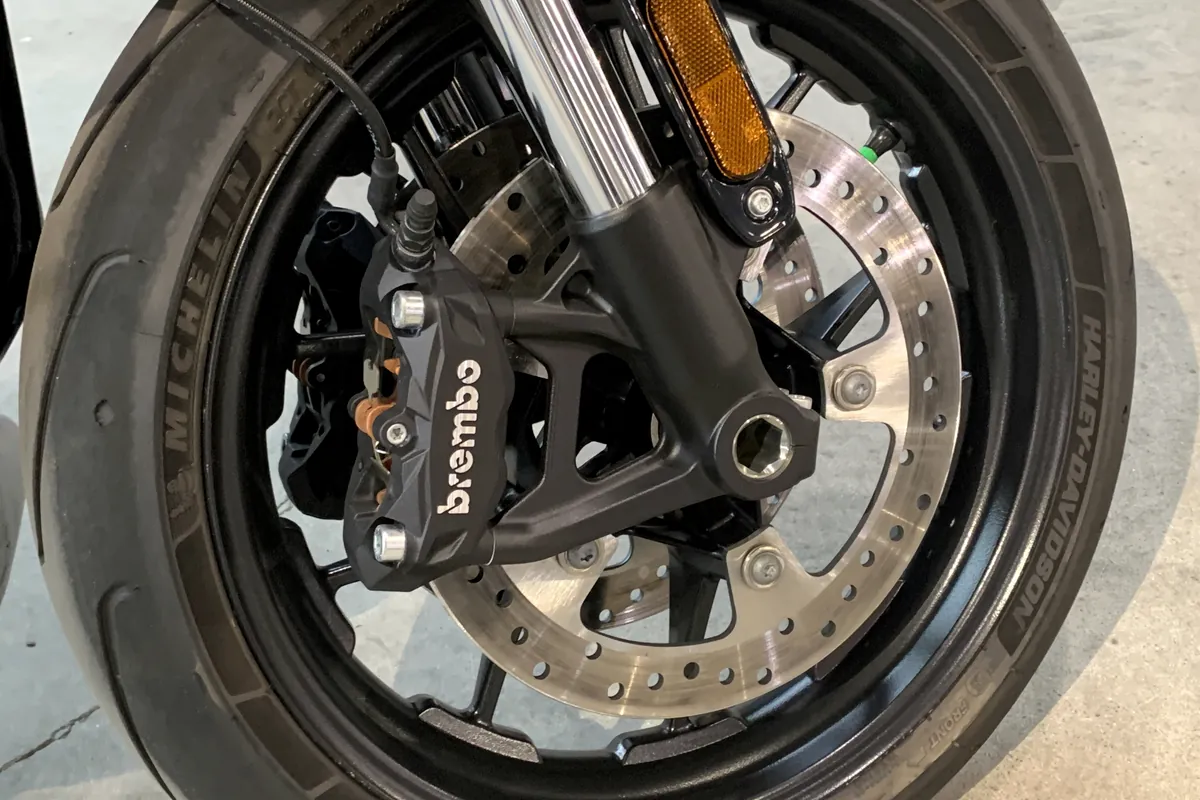
A brake fault is not a tuning opportunity. It is a safety defect. The symptom narrows the system: a spongy lever is hydraulic, a grind is friction material, a pull is alignment or a caliper, and a vibration is often a disc or a mounting issue.
Spongy or long lever travel
A lever that feels soft or travels further than it used to usually has air in the hydraulic system, old fluid, a failing master-cylinder seal or a bulging hose. Air can enter through a loose fitting, a damaged seal or a reservoir that ran dry. The fix is to find the leak, repair it and bleed the system properly.
Do not simply pump the lever and ride. A brake that changes feel during a ride can fail completely. If the lever reaches the bar or the brake does not hold pressure, stop riding and diagnose.
Squeal, grind and vibration
A squeal can be glazed pads, a missing anti-rattle shim, contaminated friction material or a worn disc. A grind is often metal-on-metal: the pad is worn past its friction material and the backing plate is touching the disc. That is a stop-riding condition.
A vibration under braking can be a warped disc, uneven pad deposits, a loose caliper, a worn wheel bearing or a steering-head issue. Check the disc for thickness, runout and cracks, and inspect the caliper mounting before replacing parts.
Drag and overheating
A brake that drags heats the disc, boils the fluid and can seize the wheel. Common causes are a caliper piston that does not retract, a master cylinder that does not release, corroded slides, a misaligned caliper or a brake pedal that is adjusted too tight. A hot disc and a bike that is hard to push are clues.
Do not touch a hot disc or caliper. Let it cool, then inspect. A dragging brake can also be caused by a wheel that is not installed correctly or a spacer that is missing.
Fluid, lines and maintenance
Brake fluid absorbs moisture from the air, which lowers its boiling point and promotes corrosion. Follow the service interval and use the specified fluid. Do not mix DOT grades or top up with an unknown bottle. Clean fluid is cheap; a boiled brake on a mountain descent is not.
Inspect the hoses for cracks, bulges and chafing. A braided line can improve feel, but it still needs correct routing and fittings. Bleed the system after any hose, caliper or master-cylinder work, and test the brake at walking speed before riding normally.
ABS and warning lights
An ABS warning light means the system has disabled itself. The cause can be a wheel-speed sensor, a damaged tone ring, low voltage, a fluid level issue or a fault in the ABS unit. The brakes may still work conventionally, but the ABS function is not available.
Do not ignore an ABS light or remove the bulb. Diagnose the fault with the correct tool and repair the cause. A wheel-speed sensor that is dirty or damaged is common; a damaged tone ring or wiring is also possible.
Checklist
- Stop riding if the lever reaches the bar or the brake drags.
- Check pad thickness and disc condition on both wheels.
- Inspect the hoses, fittings and fluid level.
- Look for leaks around the caliper and master cylinder.
- Test for a warped disc and a loose caliper mounting.
- Check wheel bearings and steering-head play if vibration persists.
- Bleed the system with the specified fluid after any repair.
- Diagnose an ABS warning light rather than ignoring it.
Questions
Why does my brake lever feel spongy?
Air in the hydraulic system, old fluid, a failing master-cylinder seal or a bulging hose. Find the cause, repair it and bleed the system. Do not ride with a brake that does not hold pressure.
Can I replace only the brake pads?
Yes, if the discs are within specification and the calipers are healthy. If the discs are scored, below minimum thickness or warped, replacing pads alone will not restore proper braking.
Is a squealing brake always dangerous?
Not always, but it should be inspected. A squeal can be vibration or glaze, but it can also be the warning before metal-on-metal contact. Check the pads and discs.