The KLX150 and CRF150L are the obvious choices for a rider who wants a light dual-sport for rough roads, trails and the occasional commute. They share a layout, a riding position and a purpose. They differ in displacement, fuelling and the amount of maintenance the owner can do at home.
Specifications
| Item | Kawasaki KLX150 | Honda CRF150L |
|---|---|---|
| Engine layout | Air-cooled SOHC single | Air-cooled SOHC single |
| Displacement | 144 cc | 149.15 cc |
| Fuel system | Carburettor | PGM-FI |
| Transmission | Five-speed manual | Five-speed manual |
| Final drive | Chain | Chain |
| Tyres | Dual-purpose / knobby | Dual-purpose / knobby |
| Best for | Simple trail use and field repair | Consistent starting and altitude use |
| Trade-off | Carburettor care and jetting | Less field-serviceable fuel system |
Engine and fuelling
The KLX150 uses a 144 cc air-cooled SOHC single with a carburettor and a five-speed gearbox. The CRF150L uses a 149.15 cc air-cooled SOHC single with PGM-FI and a five-speed gearbox.
A carburettor is simple and field-serviceable, but it is sensitive to dirt, stale fuel and altitude. Fuel injection starts consistently and compensates for altitude, but it needs a fuel pump, sensors and a workshop with diagnostic tools when it fails.
Dual-sport chassis
Both use long-travel suspension, a high seat, wide bars and knobby or dual-purpose tyres. They are designed to absorb rough ground rather than to carve smooth asphalt.
The KLX feels lighter and more compact. The CRF feels slightly larger and more planted. Seat height matters more than the spec sheet: a rider who cannot reach the ground confidently on a trail will struggle, whatever the badge.
Trail and road behaviour
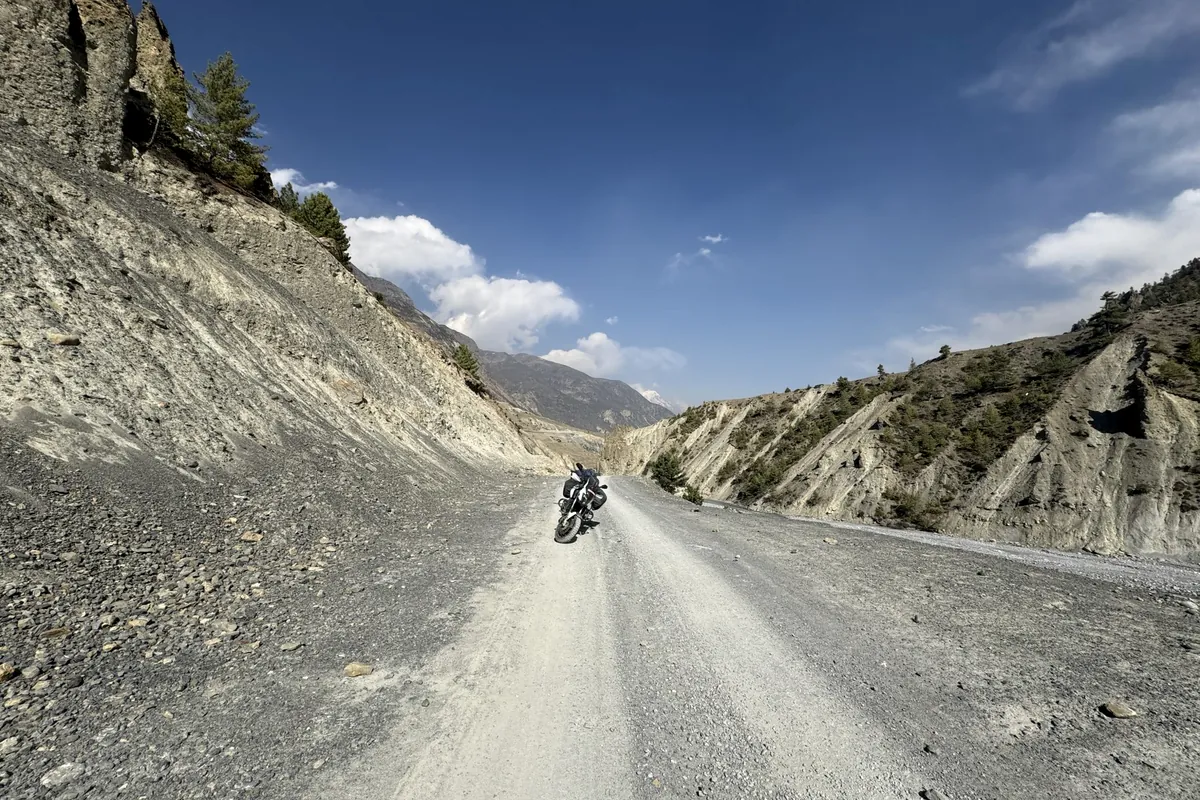
On gravel and broken surfaces, both are in their element. The KLX's lighter feel makes it easier to pick up after a fall and to place on a narrow trail. The CRF's additional capacity gives it a little more pull on a climb.
On the road, both are compromised by knobby tyres and long suspension. They are acceptable for short commutes, not for sustained highway speed. Swap to dual-purpose tyres if the bike spends most of its life on asphalt.
Maintenance in the field
The KLX's carburettor can be drained and cleaned at the roadside with basic tools. That is a real advantage on a remote trail. It also means the owner must understand jetting, idle mixture and fuel contamination.
The CRF's fuel injection is more consistent but less field-serviceable. Carry a clean fuel supply and keep the battery healthy. If the pump or a sensor fails, the bike stops and a workshop is the answer.
Ownership and modification
Both respond well to the usual dual-sport changes: better tyres, a luggage rack, handguards, a skid plate and a brighter headlight. Keep the suspension and the exhaust within the law and within the bike's charging capacity.
The KLX's simpler electrical system makes accessory fitting easier. The CRF's injection system needs a little more care when adding electrical load. Either way, use a fused circuit and do not overload the stator.
The decision
Choose the KLX150 if you want a simple, light trail bike you can service yourself and you are comfortable with carburettor care. Choose the CRF150L if you want consistent starting, altitude compensation and you have workshop support.
Both are honest dual-sports. The wrong choice is the one bought for looks and then used only on the highway, where neither is comfortable.
The verdict
The KLX150 is the simpler trail bike and the easier one to own without a workshop. The CRF150L is the more consistent starter and the better choice for a rider who rides at altitude or wants fuel injection. Both are compromised on the highway; choose them for the rough road.IndoBikes workshop
Checklist
- Sit on both and check feet-down reach.
- Ride a gravel section if possible.
- Check the KLX carburettor for dirt and stale fuel.
- Check the CRF fuel pump prime and warning lights.
- Inspect the chain, sprockets and tyre knobs.
- Confirm the bike's registration and off-road use.
Questions
Is the CRF150L fuel injected?
Yes. The CRF150L uses PGM-FI. The KLX150 uses a carburettor.
Which is better on the highway?
Neither is a highway bike. Both have long suspension and dual-purpose tyres. Keep speeds moderate and choose a dual-sport tyre if you ride mostly on asphalt.
Can I convert the KLX to fuel injection?
It is possible in principle but expensive and complex. It is usually cheaper to buy a fuel-injected bike than to convert a carburetted one.