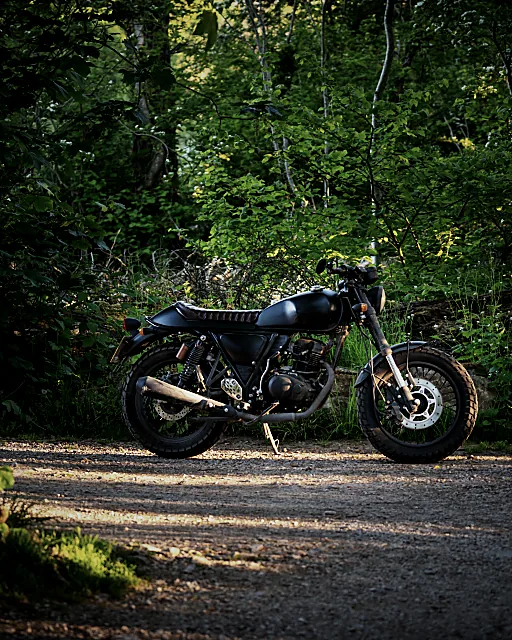
The W175 is the closest thing in this library to a blank classic canvas. It has a simple frame, an air-cooled engine and a carburettor. A scrambler build can be practical rather than decorative: taller suspension, dual-purpose tyres and a riding position that works on rough roads.
At a glance
| Area | Practical change | Constraint |
|---|---|---|
| Tyres | Dual-purpose compound | Road noise and wet grip |
| Suspension | Longer shocks, stiffer fork springs | Steering geometry and stand height |
| Fender | High front fender with a rigid bracket | Clearance at full travel |
| Fuelling | Rejet after intake or exhaust changes | Lean mixture can damage the engine |
| Frame | Bolt-on seat and rack | Cutting is permanent and structural |
The scrambler recipe
A high front fender, a small headlight guard, a flat seat, a wide bar and dual-purpose tyres create the look. A skid plate and a pair of handguards add protection for rough roads.
The W175's frame and suspension are modest. Do not pretend it is a motocross bike. A scrambler is a standard bike with better ground clearance and tyres, not a competition enduro.
Suspension and ground clearance
Longer rear shocks and stiffer fork springs can raise the bike and improve rough-road control. Changing the geometry affects steering and the stand. Keep the increase modest and check the chain and brake line clearance.
A high fender needs a proper mounting bracket. A fender that flexes into the tyre is dangerous. Check clearance at full fork travel and with the bars turned.
Wheels, tyres and brakes
Dual-purpose tyres suit the scrambler look and give more grip on gravel, at the cost of road noise and wet grip. Choose a compound that matches the riding you actually do.
The standard brakes are adequate for the bike's speed. Do not fit a tyre that is too aggressive for the rim or the riding. Check the brake pads and fluid after any wheel change.
Carburettor and exhaust
The W175's carburettor is sensitive to intake and exhaust changes. A freer exhaust or an open air filter can lean the mixture. Rejet the carburettor and check the plug after the change.
A scrambler exhaust should be high enough to clear obstacles but not so loud that it attracts enforcement. Use a baffle and keep the header sealed. Check the local noise rules.
Frame, seat and electrics
The W175's simple frame makes bolt-on changes easier. A flat seat and a small rear rack suit the scrambler brief. Avoid cutting the frame unless you have a structural plan and a workshop you trust.
The electrical system is simple, which makes lighting upgrades easier. Use a fused circuit and a headlight with a legal beam. A brighter bulb can exceed the standard charging margin if you add accessories.
The workshop plan
Start with the service: oil, valve clearance, carburettor clean, chain and brakes. Then fit the tyres, suspension and seat. Paint and bodywork last.
Use a workshop for suspension geometry, frame work and carburettor jetting. A scrambler that is reliable on a rough road is more useful than one that only looks the part.
The bottom line
The W175 is a natural scrambler because it is simple. Raise the suspension modestly, fit dual-purpose tyres and a rigid high fender, rejet the carburettor and keep the frame intact. The result should be a light bike that is happy on a rough road, not a show piece.IndoBikes workshop
Checklist
- Service the engine, carburettor, chain and brakes first.
- Choose dual-purpose tyres for the intended terrain.
- Raise the suspension modestly and check clearance.
- Mount the high fender with a rigid bracket.
- Rejet the carburettor after intake or exhaust changes.
- Use a baffled exhaust that meets noise rules.
- Keep the frame intact unless a workshop approves the cut.
- Check the chain and brake line clearance at full travel.
Questions
Is the W175 a good scrambler base?
Yes. It is simple, light and easy to work on. The limits are the modest suspension and the carburettor, which needs jetting after intake or exhaust changes.
Can I fit a high fender?
Yes, with a rigid bracket and enough clearance at full fork travel. A flexible fender can contact the tyre and cause a crash.
Do I need to rejet the carburettor?
If you change the air filter or the exhaust, yes. Check the spark plug colour and the engine behaviour after the change.