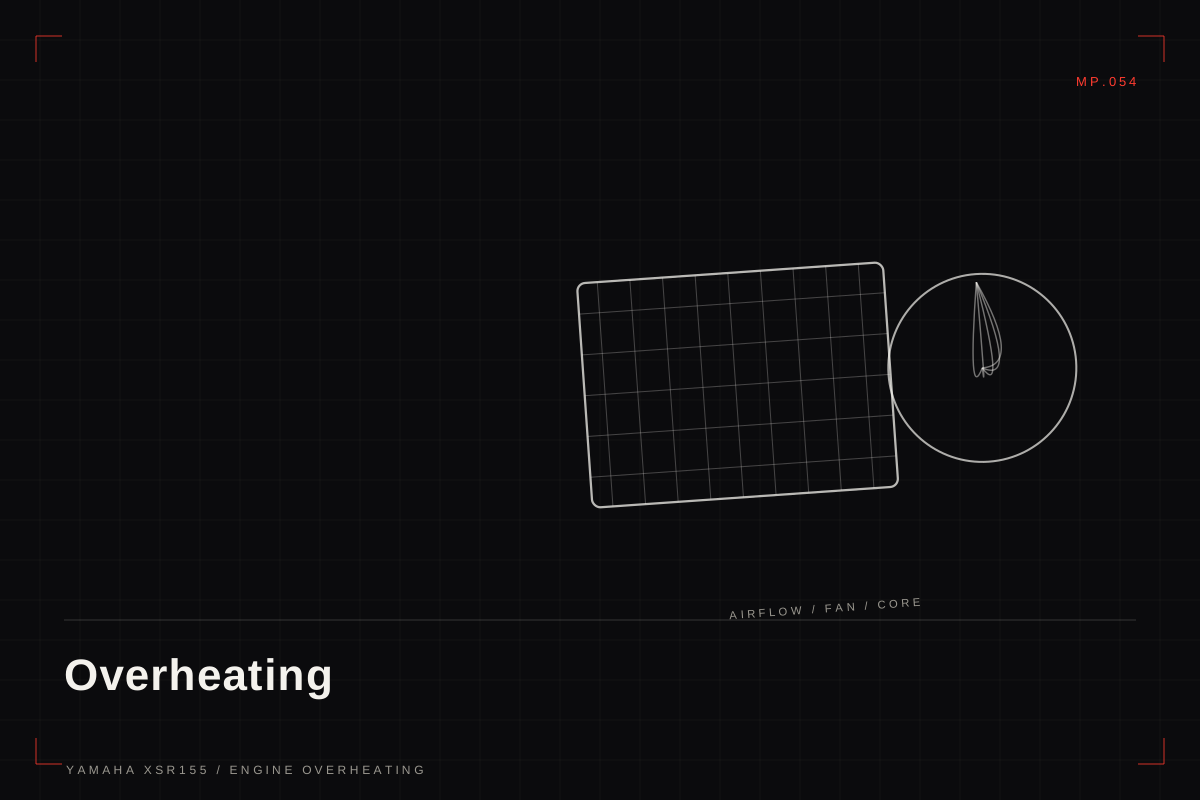
A Yamaha XSR155 that overheats is shedding less heat than the engine produces. In slow traffic the radiator depends on the fan, and a low coolant level, a blocked core or a lazy fan will show up there first.
Before you start
Coolant under pressure can exceed boiling point and cause severe burns. Never open the cap or a hose on a warm engine, and never pour cold water into a hot radiator. Keep hands clear of the fan and dispose of coolant safely.
Machine file Yamaha XSR155
- Engine
- Liquid-cooled four-valve SOHC single with VVA
- Cooling
- Liquid
- Fuel
- Fuel injection
- Transmission
- Six-speed manual
- Final drive
- Chain
When the warning appears
Note whether the temperature rises in traffic and falls once you move, or keeps climbing at speed. The first pattern points to airflow and the fan. The second points to circulation, coolant loss or a mixture problem.
A warning light is a stop signal. Pull over, switch off and let the engine cool before opening anything. Riding on with the light showing can warp the head.
Overheat pattern and likely cause
| Pattern | Likely cause | Check |
|---|---|---|
| Hot in traffic, cool at speed | Fan circuit | Fan, fuse, relay |
| Hot at speed | Core, pump or cap | Core, pressure test |
| Level keeps dropping | Leak or head gasket | Pressure and gas test |
| Radiator cool, engine hot | Thermostat or pump | Flow check |
| Pale spark plug | Lean mixture | Intake leak and scan |
| Hot after an oil change | Oil level or grade | Level and specification |
Coolant level and cap
Check the expansion bottle when the engine is cold and compare it with the marks. Then check the radiator level if the design allows, again only when cold. A level that keeps dropping means coolant is leaving the system.
Look for white deposits at hose joints and around the water pump. The pressure cap is a service part that weakens with age; a cap that opens early lowers the boiling point and lets the engine run hot.
Fan and radiator on a naked bike
With the engine warm and idling, watch for the fan to start. On a naked bike the radiator is exposed, but at a standstill there is still no airflow, so the fan is essential.
Clean the core from the front with low-pressure water. Insects and road film block the fins, and a bent fin stack cannot be cleaned back into shape. Keep hands away from the fan while the engine runs.
Oil as part of the cooling system
Engine oil carries heat away from the combustion chamber and the clutch, so a low level reduces the engine's ability to shed heat. Check the level with the bike upright and the engine warm, following the manual procedure.
Oil that is overdue for a change also loses some of its ability to transfer heat and lubricate. Use the specified grade and change it at the recommended interval rather than topping up indefinitely.
Mixture and combustion temperature
A lean mixture burns hotter. An intake leak at the boot or a faulty sensor can raise combustion temperature without any coolant loss, which is why an overheating complaint sometimes ends at the throttle body.
A diagnostic scan and an intake inspection are cheaper than a head gasket repair. If the spark plug is very pale, ask for the mixture to be checked before assuming the cooling system alone is at fault.
After the overheat
Refill and bleed the system with the specified coolant, then check the level again after the first heat cycle. Trapped air creates hot spots and false readings.
If the engine boiled or ran with the warning on, ask for a compression test and an exhaust-gas check in the coolant. A warped head and a failed gasket need to be confirmed, not guessed.
Keeping it from coming back
The XSR155's liquid-cooled single needs a clean radiator, a working fan and the correct coolant. Check the level cold, rinse the core from the front, and confirm the fan runs. Avoid holding the bike at a standstill with the engine hot; if the warning appears, stop and let it cool rather than riding for airflow.
A short checklist
- Note whether the temperature falls once you ride.
- Let the engine cool before opening anything.
- Check the expansion bottle and radiator when cold.
- Watch for the fan to start when hot.
- Clean the radiator core from the front.
- Check the oil level and the spark plug colour.
Questions owners ask
Why does my XSR155 only overheat in traffic?
At a standstill the radiator relies on the fan. A fan that does not run, a dirty core or a low coolant level shows up first when there is no natural airflow.
Can low oil cause overheating?
Oil carries heat away from internal parts, so a low level reduces the engine's cooling margin and accelerates wear. Check the level using the procedure in the manual.
Should I keep riding to cool it down?
No. Moving air helps the radiator, but riding with a temperature warning risks warping the head. Stop, let it cool and find the cause.