Parts & accessories — Encyclopedia
Every part has a job. Start with the job.
Seventy component references for motorcycles sold and serviced in Indonesia. What the part does, how it fails, how to choose a replacement and where the workshop should take over.
70 references
Start here Featured
The parts riders ask about first
Eight common components, chosen because they wear, fail or get replaced often. Each reference links back to the maintenance and service pages that use it.
 P.01
Engine
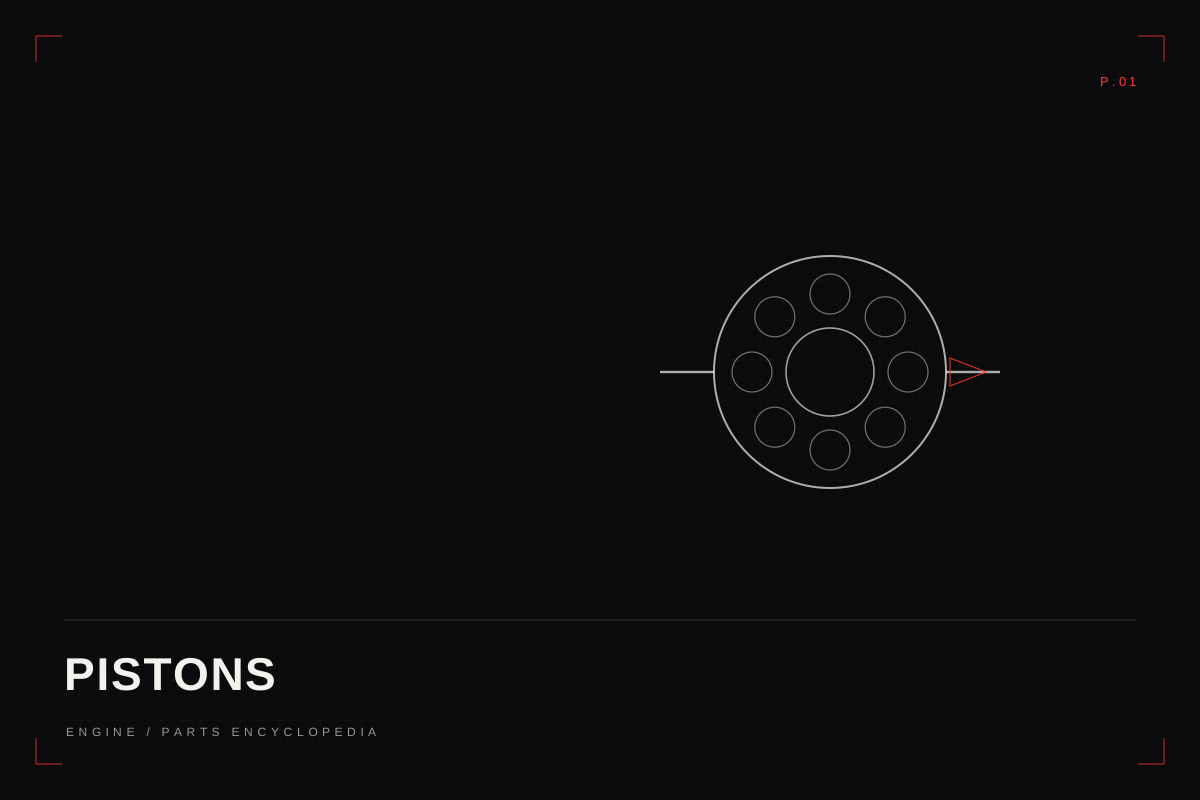
Motorcycle pistons
A piston turns combustion pressure into linear force, then hands it to the connecting rod. Its fit, material and condition decide compression, noise and how long the top end lasts.
Open reference ↗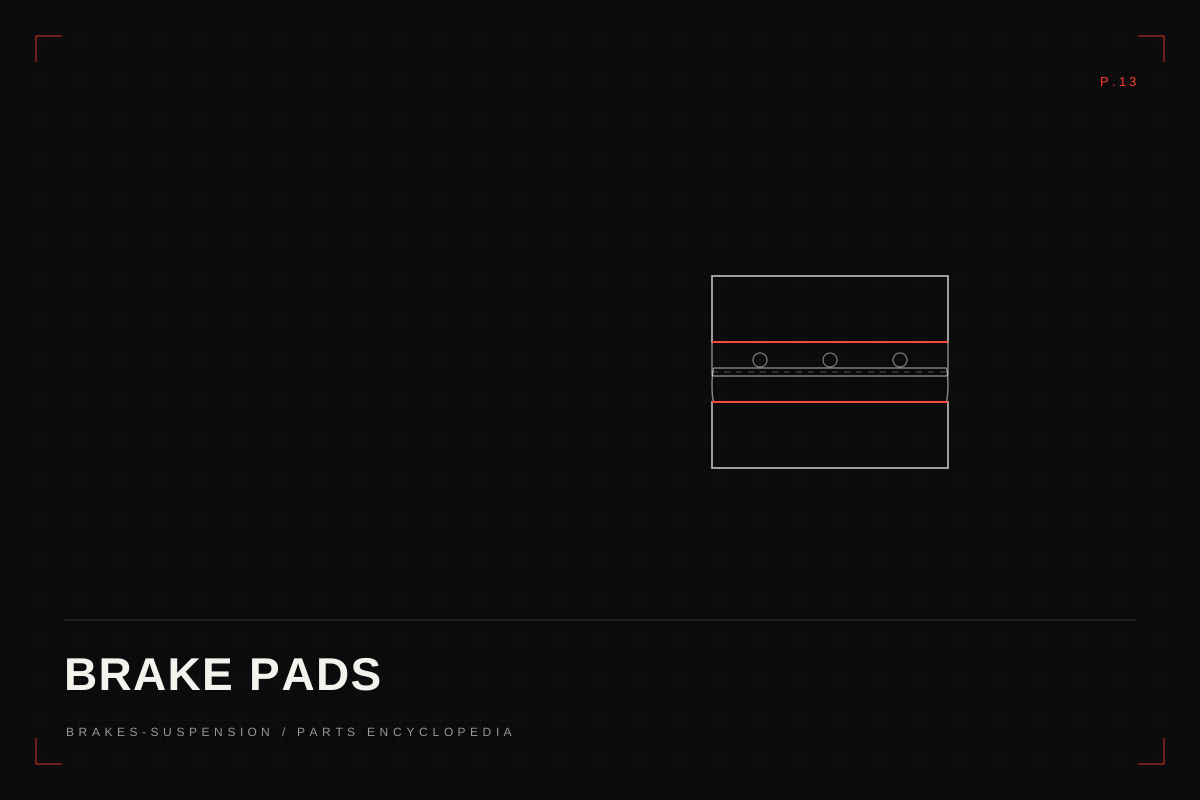 P.13
Brakes & suspension
Motorcycle brake pads
Pads press against the disc and convert road speed into heat. Compound, thickness and bedding in decide whether the lever feels sharp or wooden.
Open reference ↗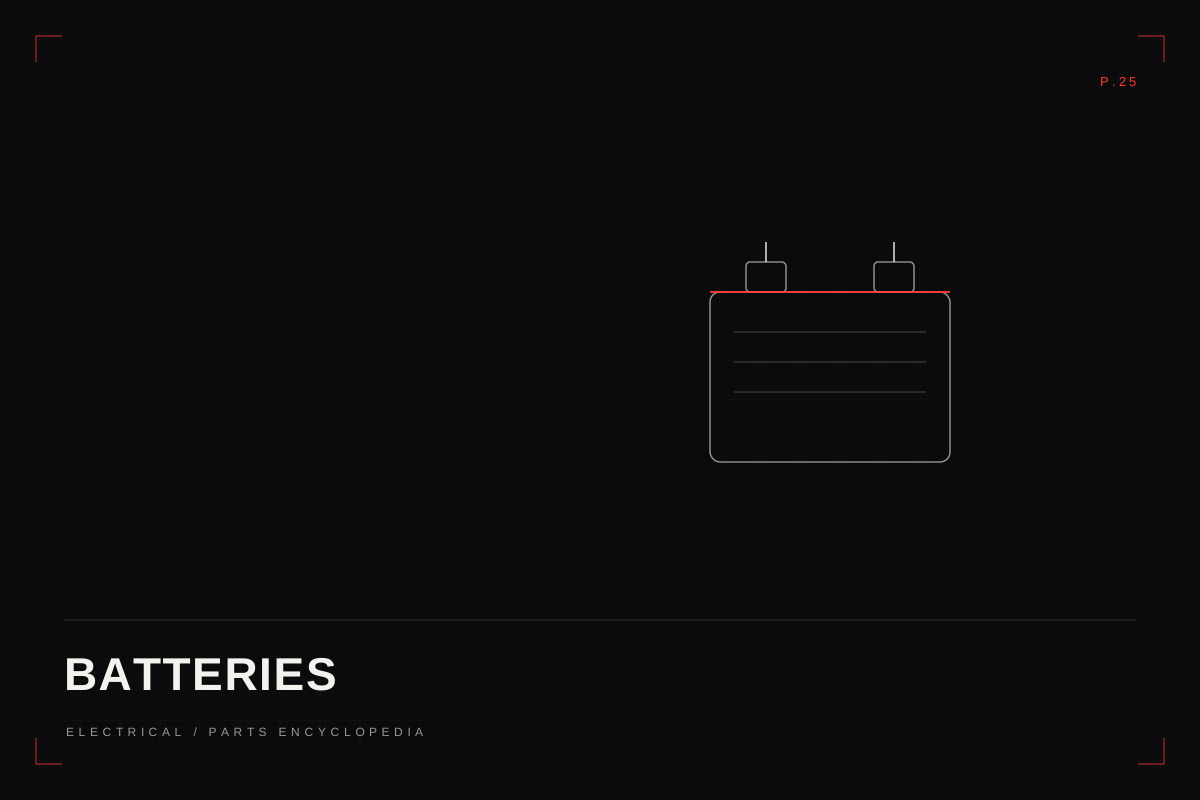 P.25
Electrical
Motorcycle batteries
A battery starts the engine and steadies the electrical system. Capacity, chemistry and charging habits decide how long it lasts in heat and traffic.
Open reference ↗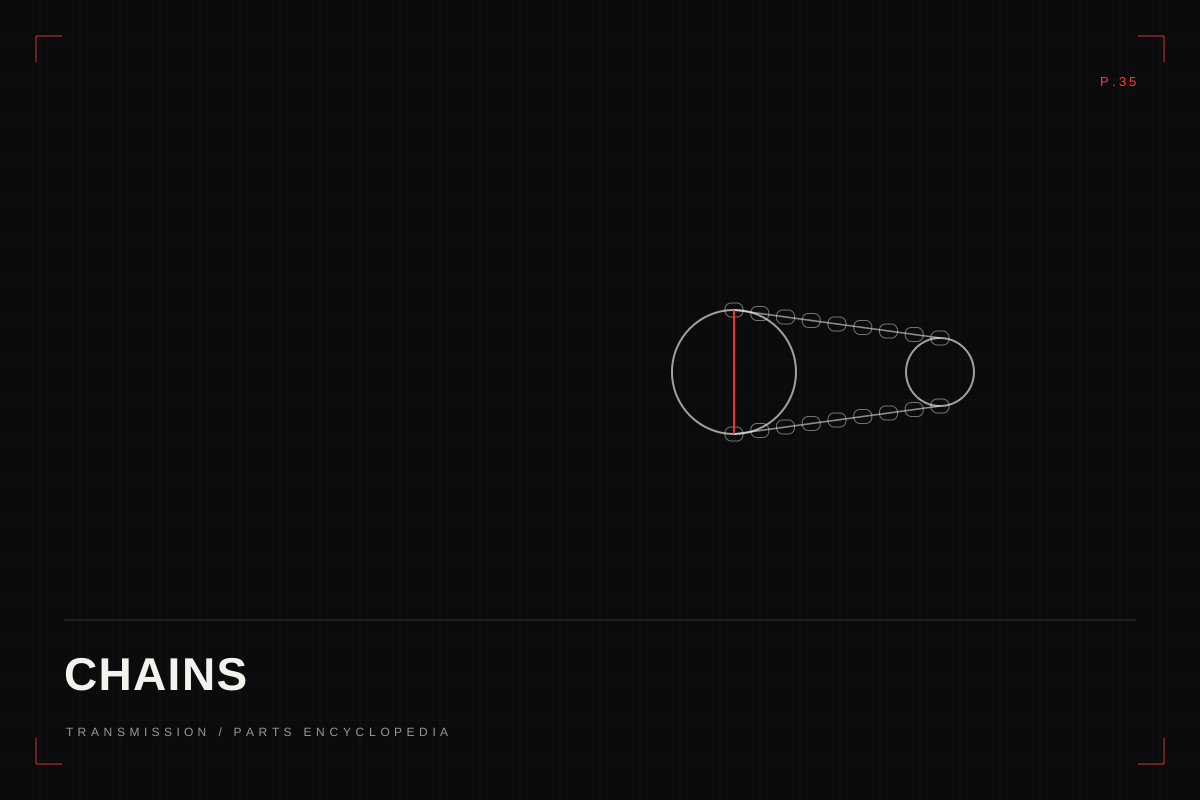 P.35
Drivetrain
Motorcycle chains
A chain transfers drive, tolerates some misalignment and needs regular care. Slack, lubrication and sprocket condition decide how long it lasts.
Open reference ↗ P.45
Tires & wheels
Motorcycle tires
Tires carry every force the bike produces. Compound, pressure, tread depth and age decide grip, wear and how the bike feels in the rain.
Open reference ↗ P.55
Accessories
Motorcycle seats
A seat spreads load and isolates the rider from vibration. Shape, foam density and cover material matter more than thickness.
Open reference ↗ P.64
Tools
Motorcycle torque wrenches
A torque wrench tightens a fastener to a measured value. The wrong range, a dropped tool or a skipped sequence causes stripped threads and loose parts.
Open reference ↗ P.32
Electrical
Motorcycle headlights
A headlight is a lamp and a reflector working together. Beam pattern, aim and colour temperature decide what you see and what oncoming traffic sees.
Open reference ↗01 Engine
Engine parts
Top end, bottom end, fuel and air. The parts that turn a spark into useful pressure.
P.01Engine
Motorcycle pistons
A piston turns combustion pressure into linear force, then hands it to the connecting rod. Its fit, material and condition decide compression, noise and how long the top end lasts.
Open reference ↗ P.02
Engine
Motorcycle piston rings
Rings seal the piston to the bore, control oil and move heat into the cylinder. Most oil burning and low-compression complaints trace back to them.
Open reference ↗ P.03
Engine
Motorcycle cylinders
The cylinder guides the piston, holds compression and carries heat away. Its bore, plating and deck condition decide whether new rings can seal.
Open reference ↗ P.04
Engine
Motorcycle crankshafts
The crankshaft turns reciprocating piston force into rotation. Its bearings, runout and balance affect vibration, oil pressure and whether the engine stays together.
Open reference ↗ P.05
Engine
Motorcycle camshafts
The camshaft opens and closes the valves at the right moment. Its profile decides where the engine makes power, and its condition decides whether it makes it at all.
Open reference ↗ P.06
Engine
Motorcycle valves
Intake and exhaust valves let the charge in and the burned gas out. They live in the hottest part of the engine and depend on correct clearance and a good seat.
Open reference ↗ P.07
Engine
Motorcycle valve springs
Springs close the valves and stop the train from floating at speed. Sag, breakage and wrong installed height cause misfires and valve damage.
Open reference ↗ P.08
Engine
Motorcycle gaskets
Gaskets seal the gaps between machined surfaces. The right material, thickness and fitting method decide whether a rebuild leaks or holds.
Open reference ↗ P.09
Engine
Motorcycle oil pumps
The oil pump moves oil to the bearings, cam and gearbox. Low pressure or a scored pump can destroy an engine before the temperature gauge moves.
Open reference ↗ P.10
Engine
Motorcycle fuel injectors
An injector atomises fuel in a measured pulse. Clogged or mismatched injectors cause rough running, misfires and fuel smell that ignition parts cannot fix.
Open reference ↗ P.11
Engine
Motorcycle throttle bodies
The throttle body meters air into the engine and carries the sensors the ECU needs. Sticking plates, worn TPS tracks and vacuum leaks upset idle and response.
Open reference ↗ P.12
Engine
Motorcycle air filters
The air filter traps dust before it reaches the piston and rings. The right type and the right oiling matter more than the claim on the box.
Open reference ↗02 Brakes & suspension
Brakes and suspension
The parts that decide how the machine stops, steers and stays composed on bad surfaces.
P.13Brakes & suspension
Motorcycle brake pads
Pads press against the disc and convert road speed into heat. Compound, thickness and bedding in decide whether the lever feels sharp or wooden.
Open reference ↗ P.14
Brakes & suspension
Motorcycle brake discs
A disc is a heat sink with a friction face. Thickness, flatness and the mounting bobbins decide whether braking stays smooth when hot.
Open reference ↗ P.15
Brakes & suspension
Motorcycle brake calipers
The caliper holds the pads and turns hydraulic pressure into clamping force. Sticking pistons, torn seals and worn sliders cause drag, heat and uneven wear.
Open reference ↗ P.16
Brakes & suspension
Motorcycle brake master cylinders
The master cylinder turns a lever pull into hydraulic pressure. Bore size, seal condition and fluid level set the feel at the bar.
Open reference ↗ P.17
Brakes & suspension
Motorcycle brake lines
A brake line carries pressure without swelling or leaking. Age, abrasion and bad routing cause a soft lever or a sudden loss of brakes.
Open reference ↗ P.18
Brakes & suspension
Motorcycle brake fluid
Brake fluid transmits pressure and absorbs water while doing it. The wrong grade or old fluid changes boiling point, pedal feel and corrosion inside the system.
Open reference ↗ P.19
Brakes & suspension
Motorcycle front forks
Forks absorb the road, keep the front tire loaded and hold the wheel in line. Oil condition, spring rate and damping set how the front behaves.
Open reference ↗ P.20
Brakes & suspension
Motorcycle rear shock absorbers
The rear shock carries load and controls how the back of the bike moves. A tired damper makes the rear feel vague, harsh or bouncy.
Open reference ↗ P.21
Brakes & suspension
Motorcycle fork seals
A fork seal holds oil in the leg and dirt out. A weep becomes a leak quickly, and a leak can reach the brake disc.
Open reference ↗ P.22
Brakes & suspension
Motorcycle suspension springs
Springs carry the bike and rider, absorb bumps and set ride height. Rate, free length and fatigue decide whether the suspension works in its travel.
Open reference ↗ P.23
Brakes & suspension
Motorcycle swingarms
The swingarm carries the rear wheel and takes the load from the shock. Bearing play, cracks and misalignment affect stability and tire wear.
Open reference ↗ P.24
Brakes & suspension
Motorcycle steering bearings
Steering head bearings let the fork turn smoothly and hold it in line. Loose, tight or notched bearings cause wobble, weaving and vague steering.
Open reference ↗03 Electrical
Electrical and lighting
Storage, charging, ignition, starting and the lights that make the machine legal and visible.
P.25Electrical
Motorcycle batteries
A battery starts the engine and steadies the electrical system. Capacity, chemistry and charging habits decide how long it lasts in heat and traffic.
Open reference ↗ P.26
Electrical
Motorcycle spark plugs
A plug ignites the mixture and carries heat out of the combustion chamber. Heat range, gap and condition tell you how the engine is running.
Open reference ↗ P.27
Electrical
Motorcycle ignition coils
A coil turns battery voltage into the thousands of volts needed at the plug. Heat, vibration and cracked insulation cause misfires that look like fuel faults.
Open reference ↗ P.28
Electrical
Motorcycle stators
The stator generates alternating current for the charging system. Burnt windings, shorted coils and a weak output leave the battery to run the bike.
Open reference ↗ P.29
Electrical
Motorcycle regulator rectifiers
The regulator rectifier converts AC from the stator and holds voltage in range. When it fails, batteries boil or go flat and other electronics suffer.
Open reference ↗ P.30
Electrical
Motorcycle starter motors
A starter motor converts battery current into cranking torque. Slow cranking, clicking or a spinning motor with no engine turn point to different faults.
Open reference ↗ P.31
Electrical
Motorcycle ECUs
The ECU decides fuel and spark from sensor inputs. Fault codes, poor connections and sensor drift cause running problems that parts swapping rarely fixes.
Open reference ↗P.32Electrical
Motorcycle headlights
A headlight is a lamp and a reflector working together. Beam pattern, aim and colour temperature decide what you see and what oncoming traffic sees.
Open reference ↗ P.33
Electrical
Motorcycle turn signals
Indicators tell other road users what you intend. Flash rate, lens condition and mounting decide whether they are seen in time.
Open reference ↗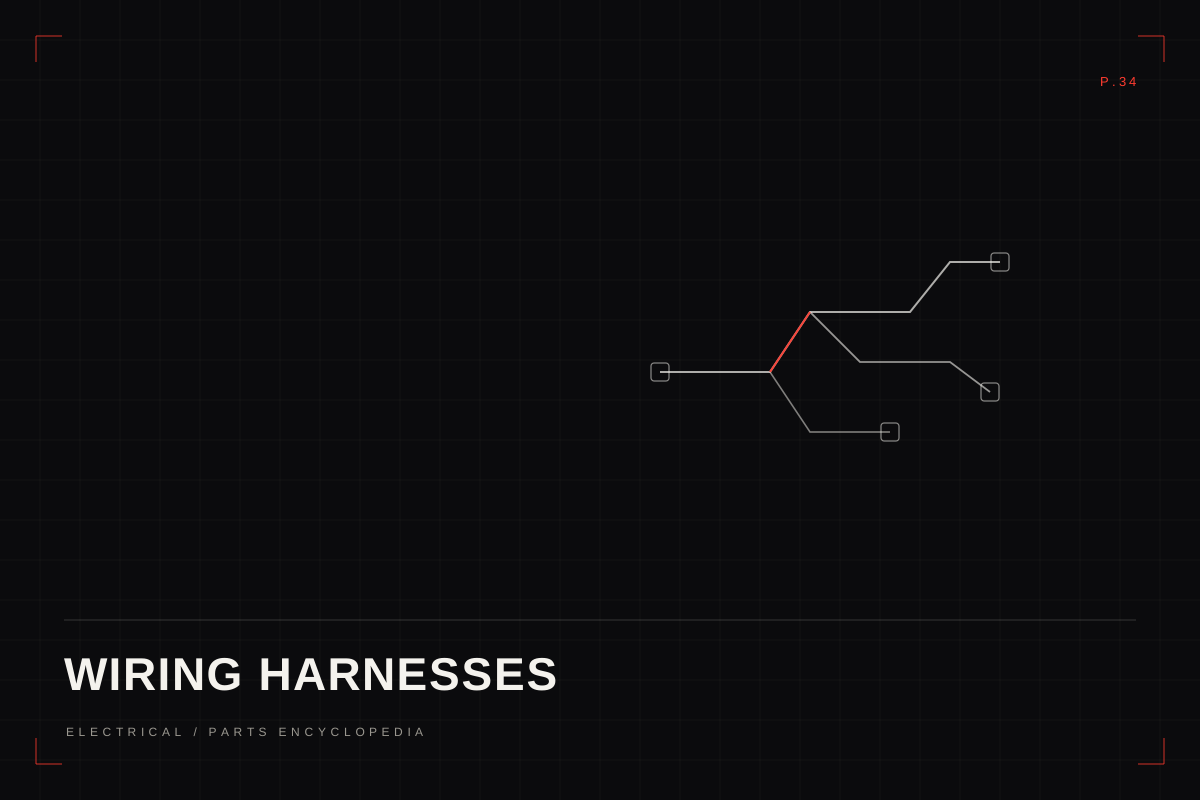 P.34
Electrical
Motorcycle wiring harnesses
A harness carries power and signals to every part of the machine. Corrosion, chafing and bad repairs cause faults that move around and resist diagnosis.
Open reference ↗04 Drivetrain
Transmission and drivetrain
Clutch, gearbox, chain, belt and the parts that carry engine torque to the wheel.
P.35Drivetrain
Motorcycle chains
A chain transfers drive, tolerates some misalignment and needs regular care. Slack, lubrication and sprocket condition decide how long it lasts.
Open reference ↗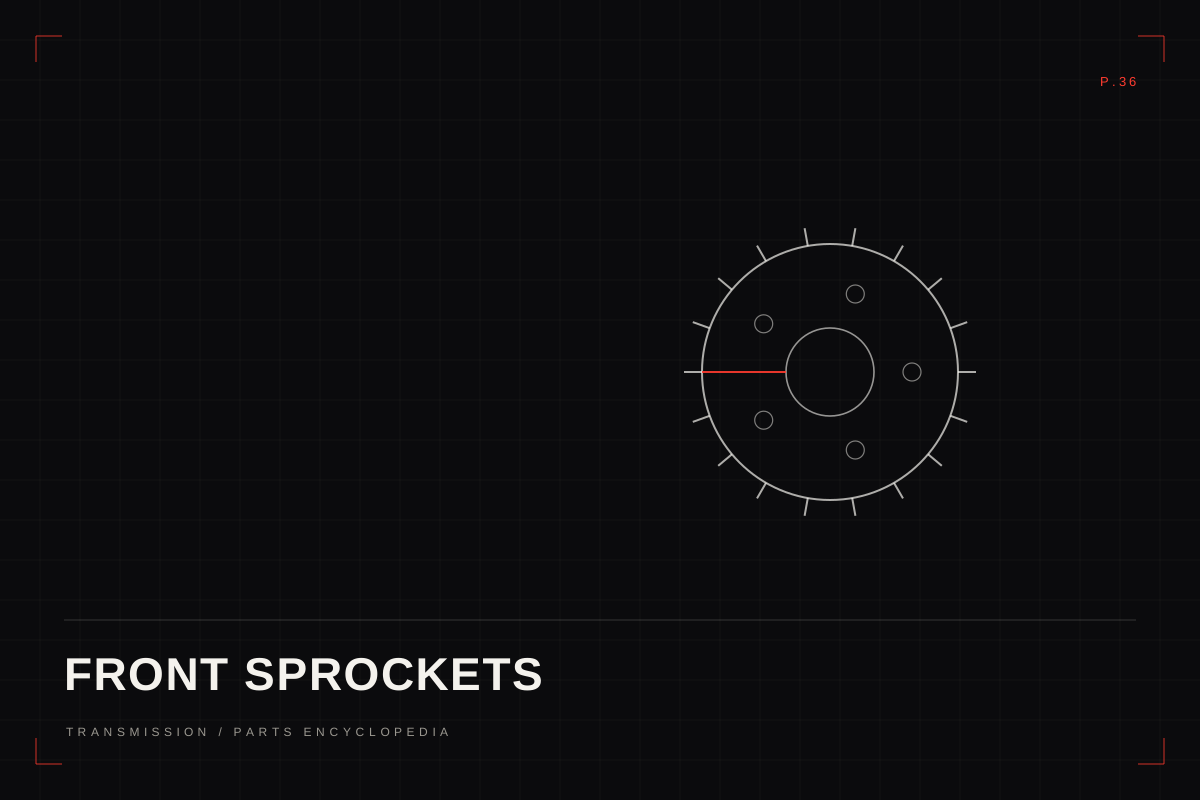 P.36
Drivetrain
Motorcycle front sprockets
The front sprocket turns the chain and sets the final drive ratio with the rear. Spline wear and hooked teeth are easy to miss under the cover.
Open reference ↗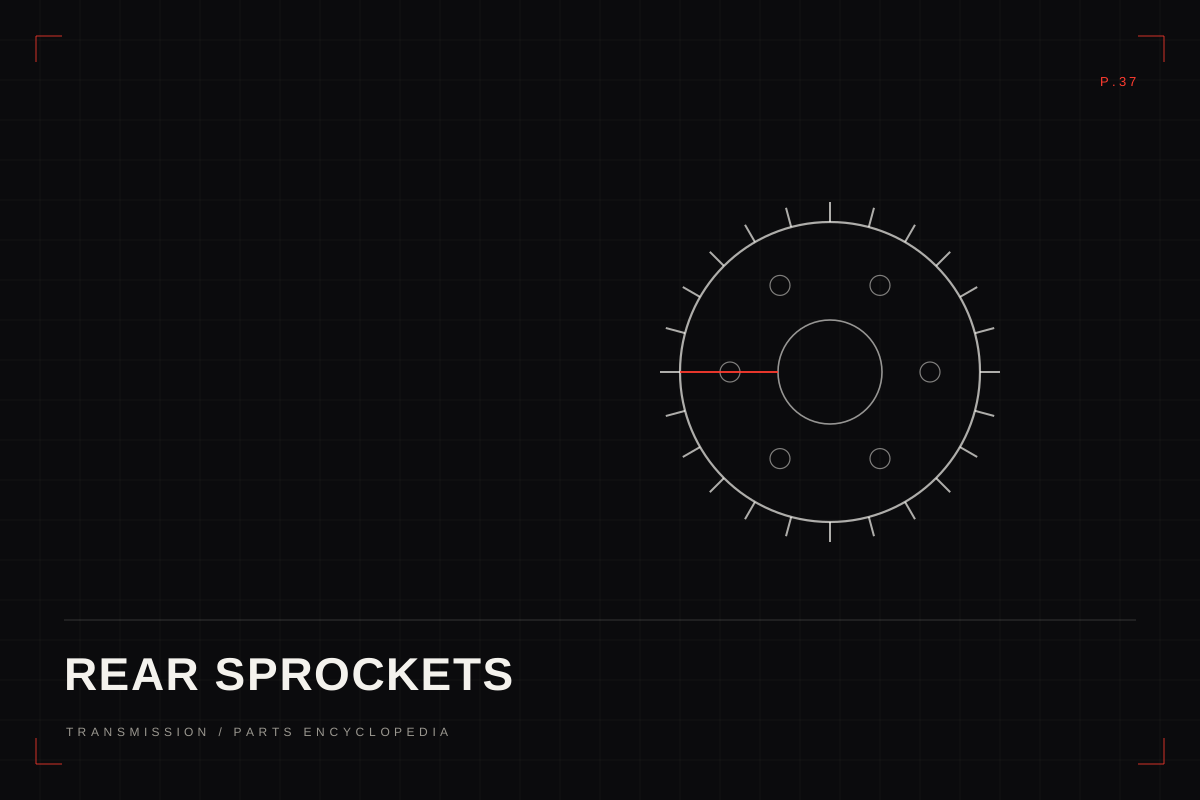 P.37
Drivetrain
Motorcycle rear sprockets
The rear sprocket sets the final ratio and takes drive load at the wheel. Material, tooth count and mounting decide wear and chain life.
Open reference ↗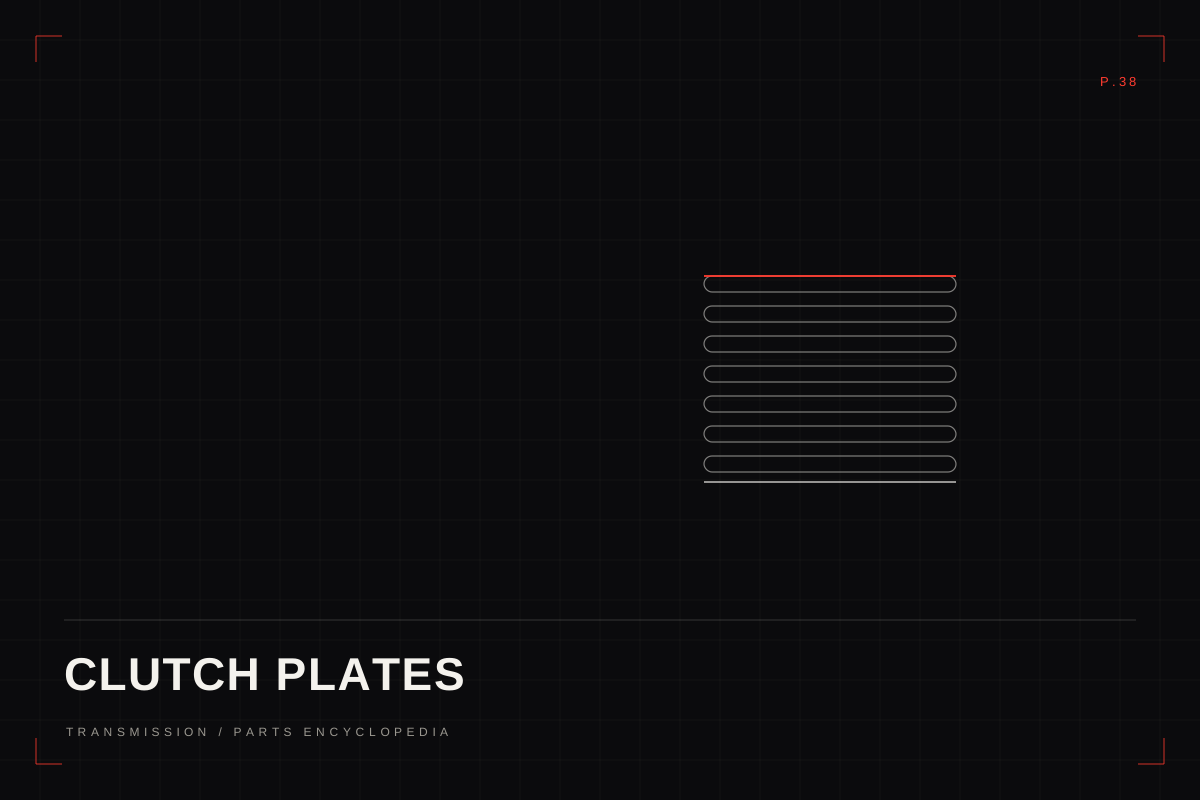 P.38
Drivetrain
Motorcycle clutch plates
Friction and steel plates press together to transmit torque. Wear, warping and contaminated oil cause slipping, drag or a grabby take-up.
Open reference ↗ P.39
Drivetrain
Motorcycle clutch cables
A clutch cable carries lever movement to the release mechanism. Fraying, tight routing and wrong free play cause a heavy lever or a slipping clutch.
Open reference ↗ P.40
Drivetrain
Motorcycle gearboxes
A gearbox matches engine speed to road speed. Oil condition, shift technique and worn dogs cause noise, false neutrals and jumping out of gear.
Open reference ↗ P.41
Drivetrain
Motorcycle CVT belts
A CVT belt transfers drive between two variable pulleys. Width, heat and contamination decide when it slips, snaps or leaves you stranded.
Open reference ↗ P.42
Drivetrain
Motorcycle variators
The variator changes the drive ratio as engine speed rises. Worn ramps, flat rollers and a loose nut upset acceleration and top speed.
Open reference ↗ P.43
Drivetrain
Motorcycle roller weights
Roller weights control when the variator shifts. Their mass, shape and condition decide acceleration, rpm and top speed.
Open reference ↗ P.44
Drivetrain
Motorcycle final drive systems
Chain, belt and shaft drive each trade maintenance against smoothness, cost and weight. The right choice depends on how the bike is used.
Open reference ↗05 Tires & wheels
Tires and wheels
Rubber, rims, spokes, bearings and valves. The contact patch and everything that holds it.
P.45Tires & wheels
Motorcycle tires
Tires carry every force the bike produces. Compound, pressure, tread depth and age decide grip, wear and how the bike feels in the rain.
Open reference ↗ P.46
Tires & wheels
Motorcycle tire sizes
Tire sizes encode width, aspect ratio, rim diameter, load and speed. Reading them correctly prevents the wrong tire and the wrong handling.
Open reference ↗ P.47
Tires & wheels
Motorcycle tubeless tires
A tubeless tire seals against the rim instead of relying on a tube. The bead, rim and valve all have to hold air.
Open reference ↗ P.48
Tires & wheels
Motorcycle inner tubes
An inner tube holds the air in a tube-type tire. Size, valve type and fitting technique decide whether it lasts or fails on the first ride.
Open reference ↗ P.49
Tires & wheels
Motorcycle alloy wheels
Alloy wheels are light and hold a tubeless seal well. Cracks, bends and bearing seats decide whether a wheel can be repaired or must be replaced.
Open reference ↗ P.50
Tires & wheels
Motorcycle spoked wheels
Spoked wheels absorb impacts that would crack an alloy rim. Spoke tension, rim trueness and rim tape decide whether they stay round and sealed.
Open reference ↗ P.51
Tires & wheels
Motorcycle wheel bearings
Wheel bearings let the wheel spin with minimal friction and carry the bike's weight. Play, roughness and water damage lead to vibration and handling faults.
Open reference ↗ P.52
Tires & wheels
Motorcycle tire valves
A tire valve is a one-way seal and a service point. Cracked rubber, a loose core or a wrong-angle stem causes slow leaks that are easy to miss.
Open reference ↗06 Accessories
Accessories and comfort
Contact points, wind protection, luggage and the small fittings that change a ride.
 P.53
Accessories
Motorcycle mirrors
Mirrors are a safety part, not a styling detail. Position, vibration and field of view decide whether you can see a vehicle before it reaches you.
Open reference ↗ P.54
Accessories
Motorcycle windscreens
A screen moves air around the rider. Height, angle and shape decide whether it protects your chest or buffets your helmet.
Open reference ↗P.55Accessories
Motorcycle seats
A seat spreads load and isolates the rider from vibration. Shape, foam density and cover material matter more than thickness.
Open reference ↗ P.56
Accessories
Motorcycle handlebars
Bars set the riding position and the leverage over the front wheel. Width, bend, rise and clamp size decide comfort and control.
Open reference ↗ P.57
Accessories
Motorcycle grips
Grips transmit steering feel and absorb vibration. Compound, diameter and fit decide whether your hands last a long ride.
Open reference ↗ P.58
Accessories
Motorcycle phone mounts
A phone mount has to hold a heavy device over bad roads and keep it dry. Clamp security, vibration and charging decide whether it survives.
Open reference ↗ P.59
Accessories
Motorcycle top boxes
A top box adds lockable storage but changes weight distribution. Mounting strength, load limits and aerodynamics decide whether it is safe.
Open reference ↗ P.60
Accessories
Motorcycle side bags
Side bags carry weight lower than a top box and leave the passenger seat free. Clearance, mounting and waterproofing decide whether they work.
Open reference ↗ P.61
Accessories
Motorcycle crash bars
Crash bars absorb a fall and keep the engine and bodywork off the ground. Mounting strength and clearance decide whether they help or cause damage.
Open reference ↗ P.62
Accessories
Motorcycle USB chargers
A USB charger keeps a phone or camera running on a long ride. Wiring, fusing and weather sealing decide whether it works or drains the bike.
Open reference ↗07 Tools
Tools and workshop equipment
The measuring, lifting, charging and diagnostic equipment a home workshop actually uses.
 P.63
Tools
Motorcycle tool kits
A tool kit should cover the fasteners on your own bike, not every job. Weight, access and a few spare parts matter more than a large roll.
Open reference ↗P.64Tools
Motorcycle torque wrenches
A torque wrench tightens a fastener to a measured value. The wrong range, a dropped tool or a skipped sequence causes stripped threads and loose parts.
Open reference ↗ P.65
Tools
Motorcycle paddock stands
A paddock stand lifts the front or rear wheel for maintenance. The right type and a secure lift make chain, tire and brake work safer.
Open reference ↗ P.66
Tools
Motorcycle battery chargers
A charger restores a battery and a maintainer keeps it topped up. The wrong rate or chemistry damages the battery or creates a hazard.
Open reference ↗ P.67
Tools
Motorcycle diagnostic scanners
A scanner reads fault codes and sensor data from the ECU. It points to a circuit, not always to the failed part.
Open reference ↗ P.68
Tools
Motorcycle chain tools
A chain tool breaks the old chain and rivets the new one. The wrong tool or a poor rivet can turn a routine job into a roadside failure.
Open reference ↗ P.69
Tools
Motorcycle tire pressure gauges
Tire pressure changes grip, wear and fuel use. A gauge that reads accurately and a routine that checks cold pressure matter more than the brand.
Open reference ↗ P.70
Tools
Motorcycle oil drain pans
An oil change is messy without the right pan. Capacity, a secure pour spout and a plan for disposal matter as much as the wrench.
Open reference ↗No part matches that search. Try a system name, a component or a symptom such as “brake” or “vibration”.
Use it Workshop
From a part number to a decision
A reference page explains the component. These pages explain the work around it: diagnosis, maintenance intervals, model notes and what a service includes.