Most chains are endless or joined with a rivet master link. To replace one you need to press out a pin, cut the chain to length and rivet the new link. A chain tool does that without grinding the frame or damaging the sprockets.
What it is for
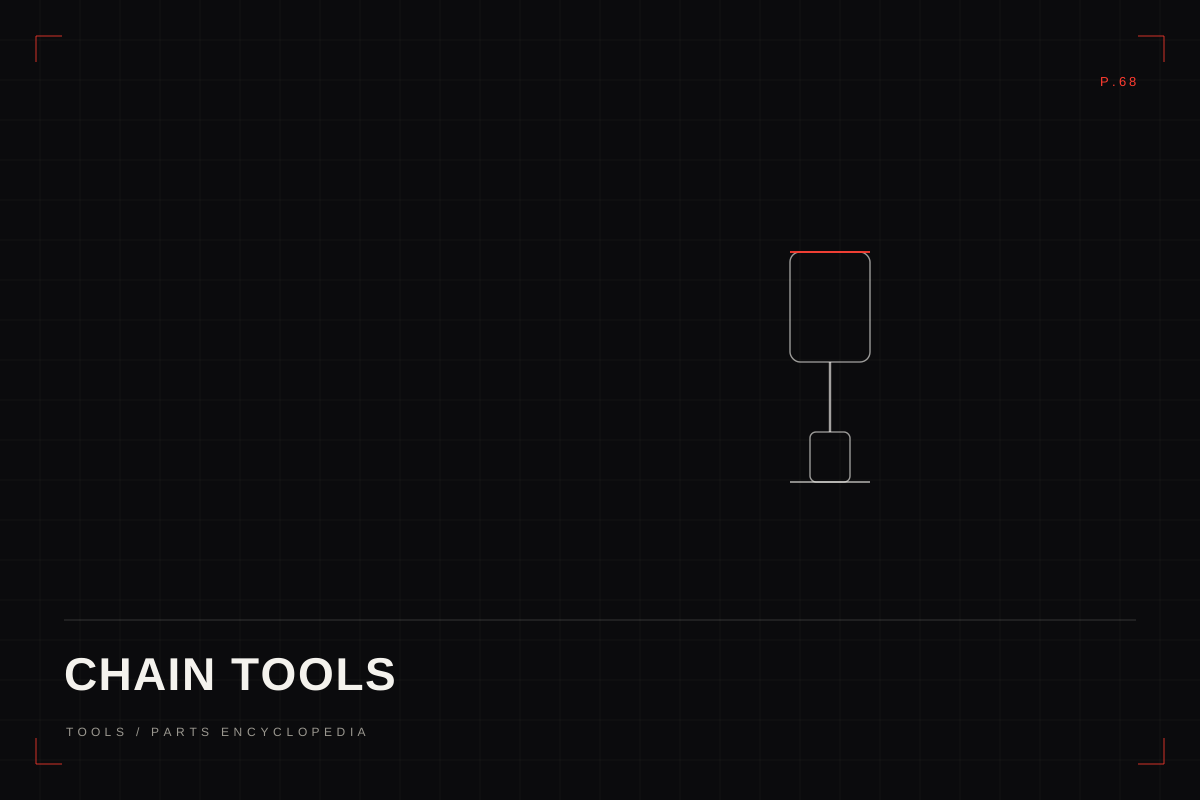
The tool pushes a pin out of a link so the chain can be separated. It also presses the master link side plate on and flares the rivet heads so the link cannot come apart.
A chain tool is specific to chain pitch. A 520 chain needs a 520 tool or a tool with the right anvils. Using the wrong size can bend the tool or damage the link.
How it works
The chain is supported in the tool's cradle. A press screw pushes a hardened pin through the link. For riveting, a shaped anvil presses the side plate and flares the rivet.
The rivet flare must be enough to hold the plate but not so much that it cracks. The master link's pins should protrude evenly. A rivet that is too tight can bind the link; one that is too loose can fail.
Types and variations
- Chain breaker. Pushes the pin out. Some also rivet.
- Chain riveter. Presses the side plate and flares the rivet.
- Combination tool. Breaks and rivets. The usual home workshop choice.
- Chain press. Pushes the side plate on without damaging the O-rings.
- Alignment tool. Checks that the rear wheel and sprockets line up.
When it stops being reliable
- A bent or broken press pin.
- A cracked anvil or a worn cradle.
- A tool that no longer aligns with the chain.
- Rivets that are uneven or under-flared.
- A master link that binds after riveting.
- A chain that is cut to the wrong length.
Choosing one
- Match the tool to the chain pitch and type.
- Choose a tool with a stable cradle and a smooth press screw.
- A combination tool is convenient; separate breaker and riveter tools can be stronger.
- Check that replacement pins are available.
- For a sealed chain, use a tool that does not crush the O-rings.
Range and compatibility
- Support the chain on a solid surface, not on the bike alone.
- Grind the pin head before pressing it out if the maker recommends it.
- Press the side plate on squarely and check the O-rings.
- Flare the rivet to the maker's dimension, not by eye.
- Check that the link moves freely after riveting.
Accuracy and care
- Keep the press screw lubricated.
- Replace bent pins.
- Store the tool in its case.
- Clean the tool after use.
- Check the alignment of the tool before applying force.
Safety and limits
A poorly riveted chain can fail at speed. Check the rivet and use the maker's specification.
Wear eye protection when grinding or pressing a chain pin.
Keep fingers clear of the press and the chain.
Questions
Can I reuse a rivet master link?
No. Use a new master link each time the chain is joined.
Do I need to grind the pin before breaking a chain?
Many makers recommend it to avoid damaging the tool. Follow the tool's instructions.
How much should I flare the rivet?
The chain maker gives a dimension, often a small amount of spread. Too little is unsafe; too much can crack the pin.
Can I use a clip master link instead?
On a low-power bike, sometimes. On a high-power bike, use a rivet link.