A mirror is a glass or plastic lens on a stalk. It is small, it vibrates and it sits in the wind, which is why so many bikes have poor rearward vision. Adjusting it properly and keeping it stable is worth more than buying a fashionable pair that shows your elbows.
What it does
Mirrors let the rider see behind and to the sides without turning the head for long. They are required equipment in most markets and must meet a minimum field of view.
A mirror works by reflecting light from the road behind into the rider's eye. The stalk position and the lens curvature set the view. A convex lens shows more area but makes objects look smaller and further away.
How it mounts
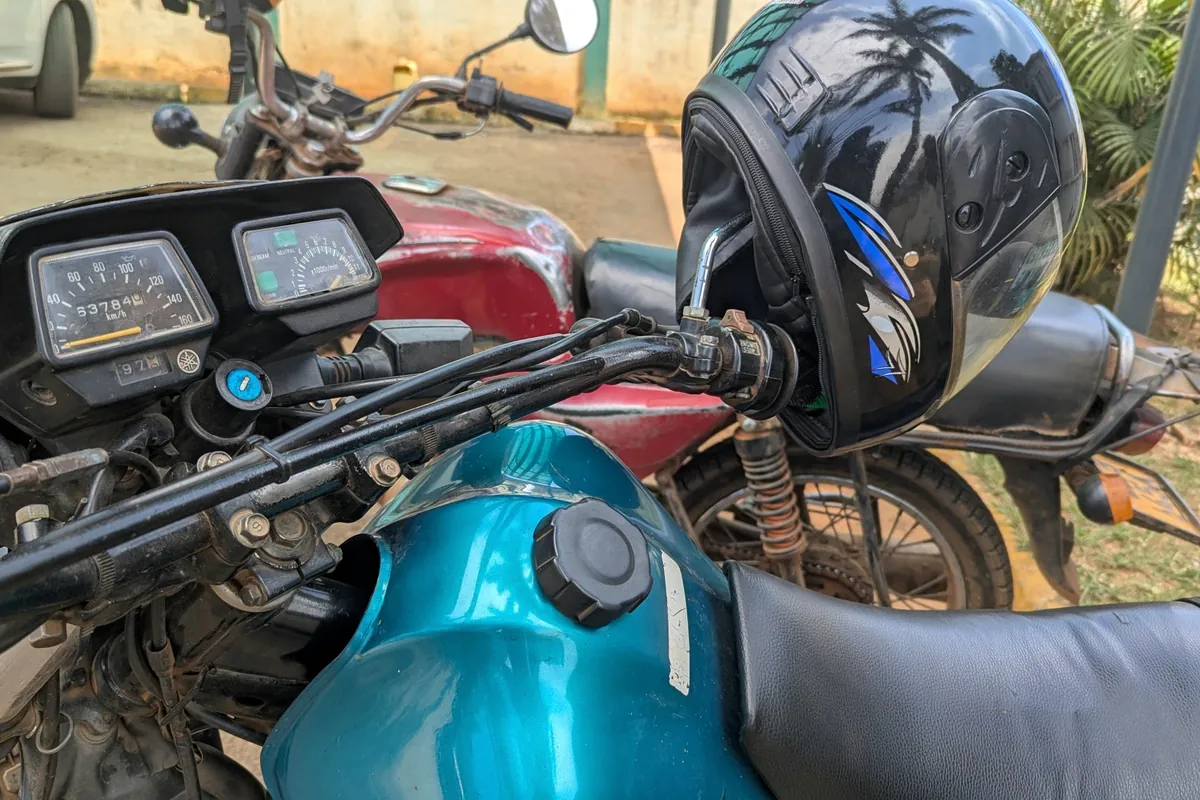
The mirror is mounted on the bar, the fairing or the lever perch. The ball joint or clamp allows adjustment. Vibration from the engine and road passes through the stem and blurs the image.
A mirror that is too small, too low or badly angled shows the rider's shoulder or the sky. A mirror that is too far out catches wind and vibrates. The useful position is a compromise between field of view and stability.
Materials and types
- Bar-end mirrors. Mount at the end of the bar. Good view, but wider and more exposed.
- Stalk mirrors. The common original type. Adjustable and easy to replace.
- Fairing-mounted. Integrated into the bodywork. Clean look, harder to adjust.
- Convex lenses. Wider view, smaller image. Common on the left mirror.
- Folding mirrors. Fold away for lane filtering or storage. Check the latch security.
Wear and failure signs
- A cracked or desilvering lens.
- A stem that moves at speed or will not hold adjustment.
- Heavy vibration that makes the image unreadable.
- A clamp that has crushed or cracked the bar.
- Corrosion at the thread or ball joint.
- A mirror that hits the tank or screen at full lock.
Choosing a part
- Check the thread size and direction. Many bikes use a right-hand thread on one side and a left-hand thread on the other.
- Choose a lens size and shape that gives a usable view without hitting the bars or screen.
- For a vibration-prone bike, choose a heavier stem or a mirror with a damper.
- Check local rules for mirror size, position and field of view.
- Avoid mirrors that clamp on a thin-walled bar without a proper insert.
Fit and compatibility
- Fit the correct adapter or thread insert. Do not force a mismatched thread.
- Position the mirror so it does not hit the tank, screen or rider at full lock.
- Tighten the clamp or lock nut firmly without crushing the bar.
- Adjust with the bike upright and the rider seated.
- Check the view on both sides and test at speed in a safe place.
Care and adjustment
- Clean the lens with water and a soft cloth, not a solvent.
- Check the clamp and stem at every service.
- Tighten a loose mirror before it strips the thread.
- Replace a desilvered lens. Polishing will not restore it.
- Check the mirror position after fitting new bars or a screen.
Safety and limits
A mirror that falls off can hit a following vehicle. Check the mounting.
Do not rely on mirrors alone. Turn your head before changing lanes.
A mirror that vibrates into uselessness is a safety problem. Fix or replace it.
Questions
Why do my mirrors vibrate so much?
A loose stem, a thin bar, a missing damper or engine vibration. Check the mounting and consider a heavier mirror.
Are bar-end mirrors legal?
Rules vary. They must meet the local field-of-view and mounting requirements.
Can I use one mirror?
Some markets allow it, many do not. Check the local rules and keep both if in doubt.
How do I stop a mirror moving at speed?
Tighten the ball joint or clamp, or replace a worn plastic insert. Do not overtighten and crack the housing.