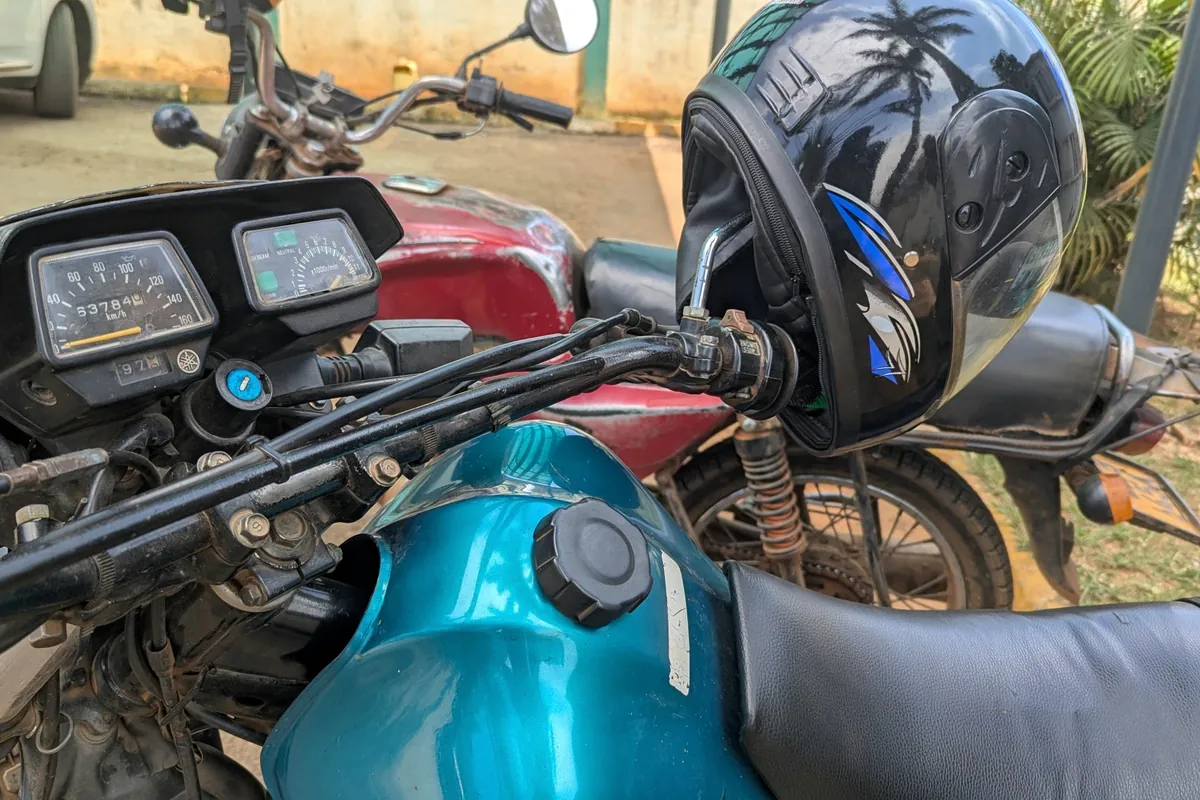
A grip is a rubber or foam sleeve on the bar. It has to hold the hand in place, damp vibration and survive sun, rain and gloves. A loose grip can slip off; a hard grip transmits every engine vibration into the palms.
What it does
The grip gives the hand something to hold and isolates it from the bar. It also provides friction so the hand does not slide under braking or acceleration.
The throttle side has to rotate with the throttle tube. The clutch side is fixed to the bar. A grip that is glued or wired on must stay put in rain and heat.
How it mounts
Rubber compounds absorb vibration and conform to the hand. A softer compound is comfortable but wears faster. A harder compound lasts longer and transmits more vibration.
The grip is held by friction, adhesive or safety wire. On the throttle side, the grip must not rub the switch housing or the bar end. A grip that is too long can interfere with the throttle.
Materials and types
- Standard rubber. The common grip. Cheap and comfortable.
- Dual-compound. A harder core with a softer outer. A balance of wear and comfort.
- Foam grips. Light and comfortable, but wear quickly and absorb water.
- Heated grips. Built-in elements. Need a switched power supply and a relay.
- Lock-on grips. A clamp secures the grip without glue. Common on off-road bikes.
Wear and failure signs
- A smooth or polished surface where the glove rubs.
- A grip that rotates on the bar or throttle tube.
- Cracks or splits in the rubber.
- A grip that has swollen or softened from solvent.
- A throttle grip that drags on the switch housing.
- Bar ends that are loose or missing.
Choosing a part
- Match the bar diameter and the grip length.
- Choose a compound for the climate and the mileage. Soft grips are comfortable but short-lived.
- For heated grips, check the wattage and the bike's charging capacity.
- Avoid grips with a hard pattern that concentrates pressure on the palm.
- Check that the grip does not foul the throttle or the switch housing.
Fit and compatibility
- Clean the bar and the inside of the grip.
- Use the maker's adhesive or grip glue. Hairspray is a temporary fix, not a permanent one.
- Slide the grip on quickly and align the pattern.
- Safety wire the grip if you ride off-road or in heavy rain.
- Check the throttle return and clearance before riding.
Care and adjustment
- Clean with soap and water, not solvent.
- Replace worn or slippery grips.
- Check the throttle side for drag at every service.
- Keep the bar ends tight.
- Replace heated grips if the element fails. A partial failure can be hard to diagnose.
Safety and limits
A grip that slips off the bar can cause a crash. Fix it before riding.
A throttle grip that drags can prevent the throttle from closing. Check clearance.
Heated grips must be wired through a switched, fused circuit.
Questions
How do I stop a grip from slipping?
Clean the bar and use proper grip adhesive. Safety wire is the most secure option for off-road use.
Are soft grips more comfortable?
They absorb more vibration, but they wear faster and can feel vague. Dual-compound grips are a good compromise.
Can I fit heated grips to any bike?
Usually yes, if the charging system can cope and the grips are wired through a relay and fuse.
How often should grips be replaced?
When they are worn smooth or start to slip. There is no fixed interval.