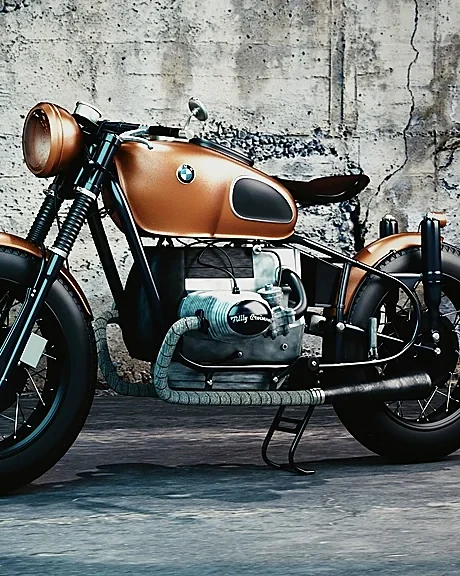
A motorcycle battery has a hard life. It sits close to the engine, runs at high temperature, has a small reserve and is expected to start an engine from cold. Most failures come from standing unused or from a charging system that never quite fills it, rather than from a sudden defect.
What it does
The battery stores energy for starting and supplies power when the engine is off or the charging system cannot keep up. It also absorbs voltage spikes and smooths the output of the regulator rectifier.
Capacity is given in amp hours and cold cranking amps. A bigger battery is not automatically better: the bike's charging system and mounting space set the limit. A battery with too much capacity may never fully charge on short trips.
How the circuit works
Lead acid cells produce roughly two volts each, so six cells make a 12 volt battery. Discharging converts lead and acid into lead sulphate. Charging reverses the process. Sulphation happens when the battery sits discharged, and it permanently reduces capacity.
A starter motor draws a large current for a short time. The battery voltage sags during cranking, and the ignition and ECU must still work. A weak battery can crank the engine slowly and still cause poor running because the voltage collapses.
Types and variations
- Flooded lead acid. The traditional battery with liquid electrolyte. Cheap, but needs checking and can spill.
- AGM. Absorbed glass mat. Maintenance free, resistant to vibration and the usual original fitment.
- Gel. Electrolyte held in a gel. Good deep discharge tolerance, slower to charge.
- Lithium iron phosphate. Light and small, with a very low self discharge. Needs a compatible charger and protection from cold charging.
- Sealed maintenance free. A general term. Check the actual chemistry before choosing a charger.
Failure signs
- Slow cranking, especially when cold or after a short stop.
- A clicking starter relay with no engine turn.
- Resting voltage below about 12.4 volts after standing.
- Voltage that drops sharply during cranking.
- A swollen case or leaking terminals.
- The bike needs a jump start more than once in a month.
Choosing a replacement
- Match the physical size, terminal layout and capacity to the original. Reverse terminals can short on the frame.
- Choose the same chemistry unless the bike's charging system and charger support a change.
- For a lithium battery, use a lithium-specific charger and check the regulator's charging voltage.
- Buy from a seller who dates stock. A battery that has sat on a shelf is partly aged.
- Check that the vent tube, if fitted, is routed away from the frame and exhaust.
Fit and compatibility
- Disconnect the negative terminal first and reconnect it last.
- Clean the terminals and apply a thin film of dielectric grease.
- Secure the battery with its strap or bracket. Vibration kills plates.
- Check that the terminals cannot touch the seat or frame.
- After fitting, check charging voltage at idle and at a raised idle.
Testing and care
- Use a smart charger if the bike sits for weeks. A maintainer is better than repeated jump starts.
- Keep the terminals clean and tight.
- Avoid short trips that never let the battery recharge.
- Do not charge a frozen battery.
- Check the charging system if a new battery goes flat quickly.
Safety and limits
Batteries produce hydrogen, which is explosive. Keep sparks and flames away, and charge in a ventilated place.
Electrolyte is corrosive. Wear eye protection and rinse any contact with plenty of water.
A swollen battery can rupture. Replace it, do not try to charge it.
Questions
How long does a motorcycle battery last?
Two to four years is typical in a hot climate, less with short trips. Heat and standing unused shorten life more than mileage.
Can I use a car charger on a motorcycle battery?
Only on a low current setting and only if it is suitable for the chemistry. A fast car charger can overheat a small battery.
Why does my new battery go flat?
A charging fault, a parasitic drain or a battery that does not match the bike. Test the charging system before replacing the battery again.
Is a lithium battery a good upgrade?
It saves weight and holds charge well, but it needs a compatible charger and care in cold weather. It is not a drop-in for every bike.