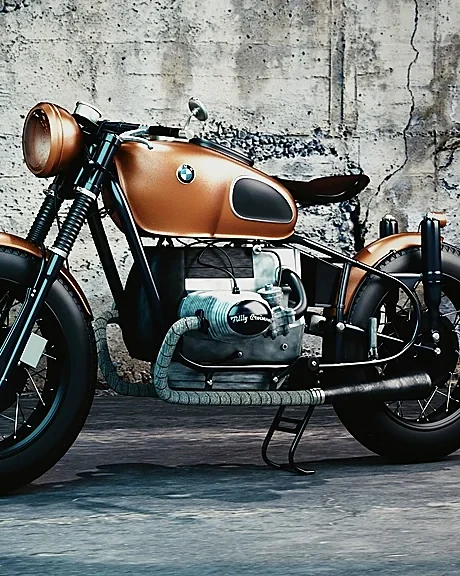
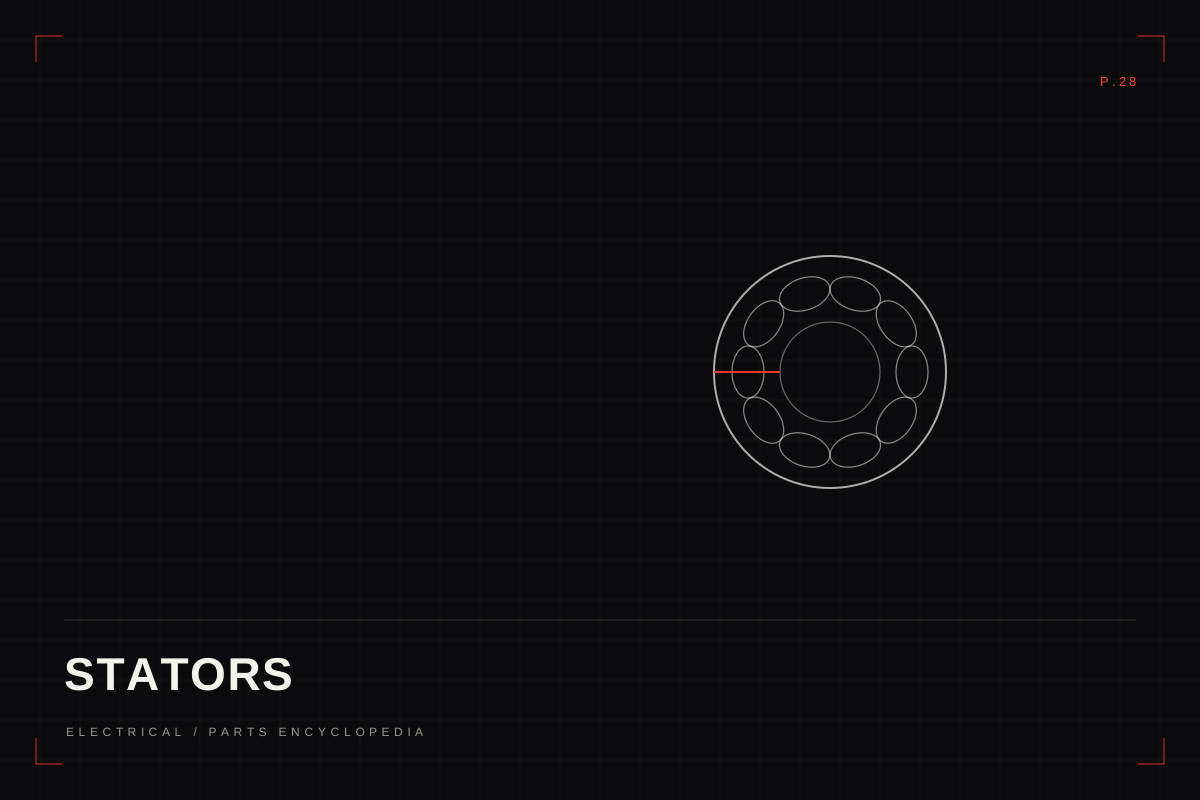
A stator is a ring of copper coils mounted around the flywheel. As the magnets in the flywheel pass the coils, they induce alternating current. The regulator rectifier converts that to direct current and sets the voltage. A stator can fail from heat, vibration or a shorted regulator.
What it does
The stator supplies the bike's electrical power once the engine runs and recharges the battery. It has no moving parts, but it lives in hot oil or hot air and carries high current.
On most motorcycles the stator has three output wires. A failure in one phase reduces output by roughly a third, which may still run the bike but leaves the battery flat over time.
How the circuit works
The flywheel magnets rotate past the coils and induce a voltage that rises with engine speed. The regulator rectifier clips and rectifies that output. The battery absorbs the result and stabilises the voltage.
Because output rises with rpm, a bike that idles in traffic with lights on may not charge. That is normal up to a point; a stator fault makes it worse and shows as a flat battery after repeated short trips.
Types and variations
- Permanent magnet stator. The most common motorcycle type. Output rises with rpm.
- Field-controlled alternator. The regulator controls the rotor field. Common on larger touring bikes.
- Single-phase. Simpler, lower output. Found on small engines.
- Three-phase. Smoother and higher output. The usual motorcycle arrangement.
- Oil-cooled stator. Runs inside the engine oil. Heat and oil condition affect life.
Failure signs
- A battery that goes flat despite regular riding.
- Dim lights at idle that do not brighten with revs.
- Burnt or blackened windings, often with a smell of hot resin.
- Low or uneven AC output between phases.
- A short to earth, measured with a multimeter on the highest resistance range.
- A failed regulator that takes the stator with it.
Choosing a replacement
- Match the stator to the engine, the flywheel and the regulator. Output and winding arrangement differ.
- Check whether the bike has a known stator weakness and whether an upgraded winding is available.
- Replace the regulator rectifier if it has failed, or the new stator may fail too.
- Use a stator with the correct connector and lead length. Splicing in a hot, oily area is a weak point.
- For a high-output accessory load, check the charging capacity before adding lights or heated gear.
Fit and compatibility
- Disconnect the battery and drain the oil if the stator sits behind the engine cover.
- Clean the mating surfaces and use a new gasket.
- Route the leads away from hot parts and sharp edges, with the original clips.
- Torque the cover bolts evenly to avoid leaks.
- After fitting, check AC output and charging voltage before riding.
Testing and care
- Keep the oil clean and at the right level on an oil-cooled stator.
- Check the charging voltage at every service.
- Do not add high-draw accessories without checking the system's capacity.
- Look for oil leaks at the stator cover.
- Replace a failing regulator before it damages the stator.
Safety and limits
A stator short can cause a fire or a sudden loss of charging. Stop if you smell hot insulation.
The flywheel magnets are strong and the cover can hold oil. Follow the manual for removal.
Do not test the charging system with the battery disconnected. The regulator can be damaged.
Questions
How do I test a stator?
Measure resistance between the output wires and to earth, then check AC voltage across the phases with the engine running. Compare with the manual's figures.
Can a bad battery damage the stator?
Not directly, but a battery that will not accept charge makes the regulator work harder and can overheat the system.
Why do stators fail?
Heat, vibration, insulation breakdown and a failed regulator. Oil condition matters on oil-cooled units.
Can I ride with a weak stator?
Only a short distance. The battery is running the bike, and it will stop when the voltage drops too low.