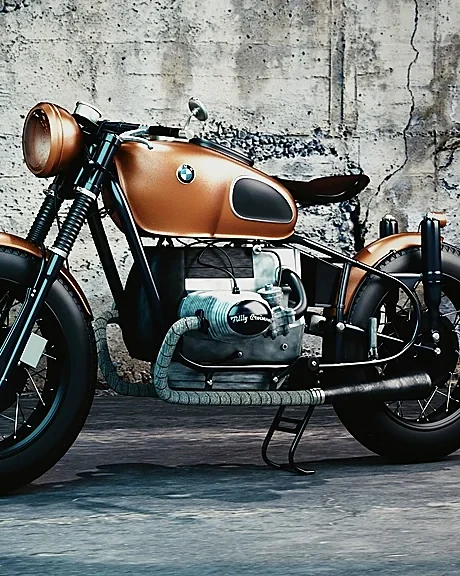
An ignition coil has two windings around an iron core. The primary winding charges when current flows, and the secondary winding produces a high voltage when the current is interrupted. The coil has to do this thousands of times a minute, in heat, without the insulation breaking down.
What it does
The coil provides the voltage to jump the plug gap. It also shapes the spark duration. A weak coil may still produce a spark in open air but fail under compression, when the resistance across the gap is higher.
On a wasted-spark system, one coil may fire two plugs at once, one on compression and one on exhaust. On a coil-on-plug system, each plug has its own coil. The diagnostic approach differs.
How the circuit works
Current flows through the primary winding and builds a magnetic field. When the ECU interrupts the current, the field collapses and induces a high voltage in the secondary winding. That voltage travels through the lead or directly to the plug.
The coil's resistance is a basic check, not a guarantee. A coil can have correct resistance and still break down when hot. Cracks in the housing let moisture in, which causes a misfire in rain or after washing.
Types and variations
- Coil-on-plug. One coil per plug, mounted directly on the plug. Common on modern bikes.
- Stick coil. A long coil that fits into the head. Similar to coil-on-plug.
- Wasted spark. One coil fires two plugs. Simple and common on twins.
- Coil with a separate lead. The coil is remote and a high tension lead runs to the plug.
- CDI and inductive systems. Different charging principles. The coil must match the ignition system.
Failure signs
- A misfire that appears when hot or in wet weather.
- Rough running on one cylinder, often worse under load.
- Cracks or tracking marks on the coil housing.
- Corroded terminals or a swollen potting compound.
- Resistance outside the maker's range, though a coil can fail without this.
- A plug that is wet with fuel on one cylinder only.
Choosing a replacement
- Match the coil to the ignition system, the plug type and the mounting. Resistance and dwell requirements differ.
- Replace coils in pairs on a wasted-spark system if one fails.
- Check the plug caps and leads before replacing a coil. A corroded cap is cheaper to fix.
- Use the correct coil for the bike's ECU. A mismatch can damage the driver.
- Avoid unbranded coils with no resistance specification.
Fit and compatibility
- Disconnect the battery before working on the ignition system.
- Clean the mounting surface so the coil has a good ground path.
- Apply dielectric grease to the boot if the maker recommends it.
- Seat coil-on-plug units fully and check the retaining bolt.
- Check the plug gap and condition before blaming the new coil.
Testing and care
- Keep the coil area dry and free of oil.
- Do not pressure wash directly at the coil or plug wells.
- Inspect the boots for cracks at every plug change.
- Check the earth connections on the frame and engine.
- If a coil fails repeatedly, check the charging voltage and the ECU driver.
Safety and limits
Ignition voltage can cause a painful shock. Do not hold a plug or lead while cranking.
Fuel vapour near a spark is a fire risk. Test spark away from the open plug hole.
A misfiring cylinder washes oil from the bore and can damage the engine and catalyst. Fix it promptly.
Questions
How do I test an ignition coil?
Measure primary and secondary resistance and compare with the manual. Also inspect for cracks and check the plug cap and earth. Resistance alone does not prove a coil is good.
Can a bad coil damage the ECU?
A shorted coil can damage the ignition driver. If a coil is suspect, fix it before replacing the ECU.
Why does the bike misfire only in the rain?
Moisture is reaching the coil, cap or wiring. Look for cracks and tracking marks, and check the plug well drains.
Should I replace all coils at once?
On a coil-on-plug engine, replace the failed one and inspect the others. On a wasted-spark system, replace the pair.