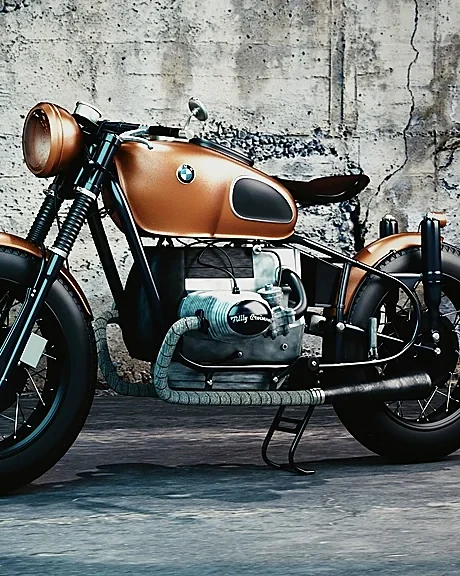
An engine control unit reads sensors, compares them with maps and controls the injectors and ignition coils. It also runs the idle valve, the fuel pump relay and, on modern bikes, traction control and ride modes. The ECU is rarely the faulty part, but it is often blamed first.
What it does
The ECU stores the fuel and ignition maps and adjusts them for temperature, air pressure and throttle position. It also monitors sensors and sets a fault code when a signal is outside the expected range.
It protects the engine. If a critical sensor fails, it may run a default map that allows the bike to limp home. That default is not a repair, and riding hard in limp mode can damage a catalyst or the engine.
How the circuit works
Sensors report air pressure, temperature, throttle position, engine speed, oxygen content and more. The ECU calculates the fuel pulse and ignition timing many times a second. It also controls the idle speed and the fuel pump.
Fault detection compares sensor signals with plausibility limits. A disconnected sensor sets a code immediately. A sensor that drifts slowly may not set a code until it is far out of range, which is why live data matters.
Types and variations
- Open-loop ECU. Uses maps without oxygen feedback. Common on older injected bikes.
- Closed-loop ECU. Uses an oxygen sensor to correct mixture. Common on modern emissions-controlled bikes.
- Ride-by-wire ECU. Controls the throttle motor as well as fuel and spark.
- Integrated ABS and traction ECU. Shares data with brake and traction systems.
- Programmable ECU. Aftermarket unit for tuned engines. Needs mapping and a skilled tuner.
Failure signs
- A fault code that returns after clearing.
- A misfire or rough idle with no obvious ignition or fuel fault.
- The engine running in limp mode with limited rpm.
- Corroded connector pins or water in the plug.
- A no-start with no fuel pump prime or no spark.
- Erratic behaviour after a jump start or a charging fault.
Choosing a replacement
- Match the ECU part number and software to the bike. Immobiliser and CANbus systems may need coding.
- Do not replace an ECU before checking power, earth, sensors and wiring.
- For a modified engine, use a reputable tuner with a dyno and the correct software.
- Check whether the replacement needs programming for the keys or the dash.
- Keep the original unit if you fit a programmable ECU, so the bike can be returned to standard.
Fit and compatibility
- Disconnect the battery before unplugging the ECU.
- Check the connector for water, corrosion and bent pins.
- Apply dielectric grease to the seal, not the pins, if the maker recommends it.
- Mount the ECU so it is not exposed to direct heat or vibration.
- After fitting, read fault codes, clear them and run the engine to confirm.
Testing and care
- Keep the battery in good condition. Low voltage causes strange faults.
- Do not jump start from a running vehicle.
- Keep the ECU connectors dry and the drains clear.
- Read codes before replacing parts.
- After any engine work, check that all sensors are connected.
Safety and limits
Do not probe ECU pins with a test light. Use a high impedance multimeter.
A faulty ECU can cause a sudden loss of power. If the bike enters limp mode, ride gently to a workshop.
Water in the connector can short sensor supplies and damage the ECU. Dry it before reconnecting.
Questions
Can I replace the ECU myself?
On some bikes yes, on others the unit needs coding to the immobiliser or dash. Check the procedure first.
Do fault codes tell me which part to replace?
No. A code tells you which circuit is out of range. The cause can be the sensor, the wiring, the connector or the ECU.
Will a power commander or flash improve my bike?
It can improve a specific fault or a modified engine. It is not a substitute for fixing a mechanical problem.
Why does the ECU need a good earth?
It uses voltage references for sensors. A poor earth shifts those references and causes false readings.