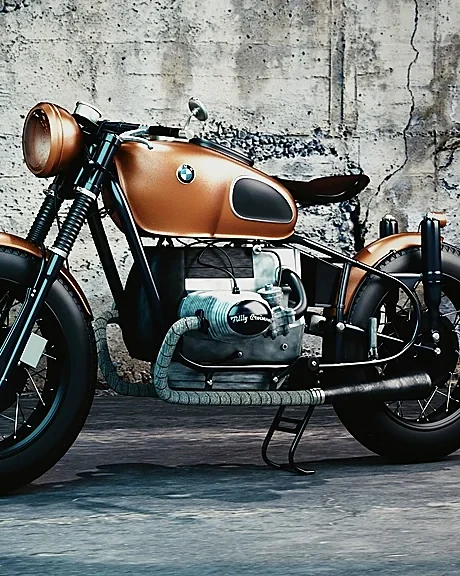
A starter motor is a small, powerful electric motor with a gear or a sprag clutch that engages the flywheel. It draws a large current for a short time and has to work in heat and vibration. Most starting faults are in the battery, cables or relay, not the motor itself.
What it does
The starter turns the engine fast enough to build compression and start. It also has to disengage once the engine fires, either through a solenoid that moves the pinion or a sprag clutch that releases.
Starter motors are rated for short bursts. Cranking for long periods overheats them and flattens the battery. If the engine does not start within a few attempts, the problem is usually fuel, ignition or compression.
How the circuit works
The starter relay connects the battery to the motor. Current flows through the brushes and commutator, the armature turns, and a gear reduces the speed and multiplies torque. A solenoid may also push the pinion into mesh.
The motor's earth path is as important as the live cable. A corroded earth strap or a loose engine mount adds resistance, and the starter turns slowly even with a good battery.
Types and variations
- Permanent magnet starter. Magnets provide the field. Compact and common on modern bikes.
- Field coil starter. Windings provide the field. Found on older machines.
- Solenoid-operated. The solenoid engages the pinion and switches the current.
- Sprag clutch starter. The motor drives through a one-way clutch. Common on scooters.
- Kick start. Not electric, but still found on small bikes as a backup.
Failure signs
- A single click from the relay with no crank. battery, relay or earth.
- Slow, laboured cranking. battery, cables or a worn motor.
- A motor that spins freely without turning the engine. sprag clutch or pinion.
- A grinding noise during cranking. damaged pinion or flywheel teeth.
- Burning smell or smoke from the starter. internal fault or long cranking.
- The starter stays engaged after the engine fires. relay or solenoid fault.
Choosing a replacement
- Match the mounting, pinion teeth and rotation to the engine.
- Check the battery and cables first. A new starter will not fix a bad earth.
- For a rebuild, use brushes and bearings specified for the motor.
- Consider a high-torque starter only if the engine needs it and the battery can supply the current.
- Check that the replacement is sealed for the bike's use. Off-road bikes need better sealing.
Fit and compatibility
- Disconnect the battery negative first.
- Clean the mounting face and earth strap to bare metal.
- Check the pinion and flywheel teeth before fitting.
- Torque the mounting bolts and the main cable nut. A loose main cable overheats.
- After fitting, crank briefly and listen for unusual noise, then start the engine and confirm disengagement.
Testing and care
- Keep the battery charged and the terminals clean.
- Do not crank for more than the manual's limit at one time.
- Check the earth strap at every service.
- Keep the starter area free of oil and dirt.
- Fix fuel and ignition faults rather than cranking a cold engine repeatedly.
Safety and limits
Starter current can weld a spanner to the frame. Disconnect the battery before working on the main cable.
A starter that stays engaged can overheat and cause a fire. Disconnect the battery if it will not stop.
Cranking with the bike in gear can move it unexpectedly. Check neutral.
Questions
Why does my starter click but not turn?
Usually low battery voltage, a faulty relay or a bad earth. Measure battery voltage while cranking before replacing the starter.
Can I bump start a bike with a bad starter?
On a manual bike, sometimes. It is a workaround, not a repair, and it does not work on a scooter with a centrifugal clutch.
Why does the starter spin but the engine does not turn?
The pinion or sprag clutch is not engaging. On a scooter this often means a worn starter clutch.
How long should I crank?
Short bursts of a few seconds, with a pause between. Long cranking overheats the motor and drains the battery.