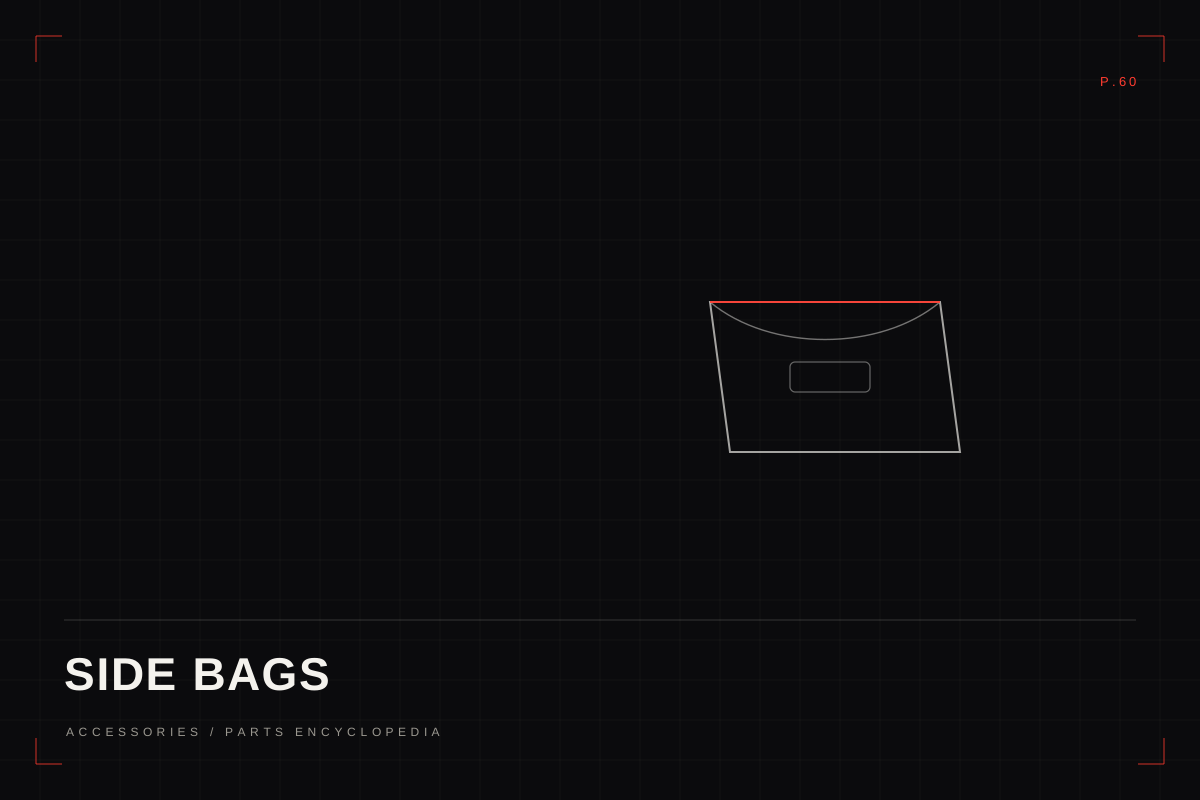
Side bags, also called panniers, hang beside the rear wheel. They keep the centre of gravity lower than a top box and can carry more than a tail bag. The trade-off is width, clearance and the need for a proper mounting frame.
What it does
Side bags add storage on both sides of the rear wheel. They keep weight low and central, which is better for handling than a heavily loaded top box.
The bags must clear the rear tire, the exhaust, the indicators and the passenger's legs. A bag that touches the exhaust can melt; one that touches the tire can be pulled into the wheel.
How it mounts
Soft bags hang from a frame or straps over the seat. Hard panniers lock onto a frame with quick-release mounts. The frame carries the load and keeps the bag away from moving parts.
Weight on both sides should be balanced. An uneven load makes the bike lean or steer differently. A bag that is wider than the bars affects filtering and can hit vehicles.
Materials and types
- Soft textile bags. Light, cheap and easy to remove. Less secure and less waterproof.
- Semi-rigid bags. A shaped shell with a soft body. A compromise.
- Hard panniers. Lockable and weather resistant. Need a mounting frame.
- Aluminium panniers. Strong and repairable. Heavy and wide.
- Saddlebags. Drape over the seat. Simple, but can rub the paint.
Wear and failure signs
- A mounting strap or buckle that has frayed.
- A frame bolt that has loosened.
- A bag that has rubbed through the paint or the tire.
- A waterproof liner that is torn or missing.
- A lock or latch that no longer secures the bag.
- A bag that sags into the exhaust.
Choosing a part
- Choose bags designed for the bike or a universal set with a proper frame.
- Check clearance to the tire, exhaust, indicators and passenger pegs.
- Choose a waterproof design or use dry bags inside.
- Keep the width in mind for traffic and narrow lanes.
- Check the load limit of the frame and the bike.
Fit and compatibility
- Fit the mounting frame with the correct bolts and torque.
- Adjust the straps so the bags sit evenly and do not sag.
- Check clearance with the suspension fully compressed if possible.
- Keep the weight balanced side to side.
- Check the bags after the first ride and at every stop on a long trip.
Care and adjustment
- Check the straps and buckles before every ride.
- Clean and reproof textile bags.
- Lubricate hard pannier locks.
- Remove the bags when not in use to reduce wind load and theft risk.
- Check the paint under the bags for rubbing.
Safety and limits
A bag that touches the tire or exhaust can cause a crash or a fire. Check clearance.
An overloaded or uneven load affects stability. Keep the weight within limits.
A bag that is wider than the bars can hit a vehicle in traffic.
Questions
Are soft or hard panniers better?
Soft bags are lighter and cheaper; hard panniers are more secure and weatherproof. The choice depends on the trip.
Do I need a mounting frame?
For most side bags, yes. A frame keeps the bag away from the tire and exhaust.
How much weight can side bags carry?
Check the frame and bike limits. Keep the load balanced and low.
Can side bags damage the paint?
Yes, if they rub. Use a protective film or a frame that holds them clear.