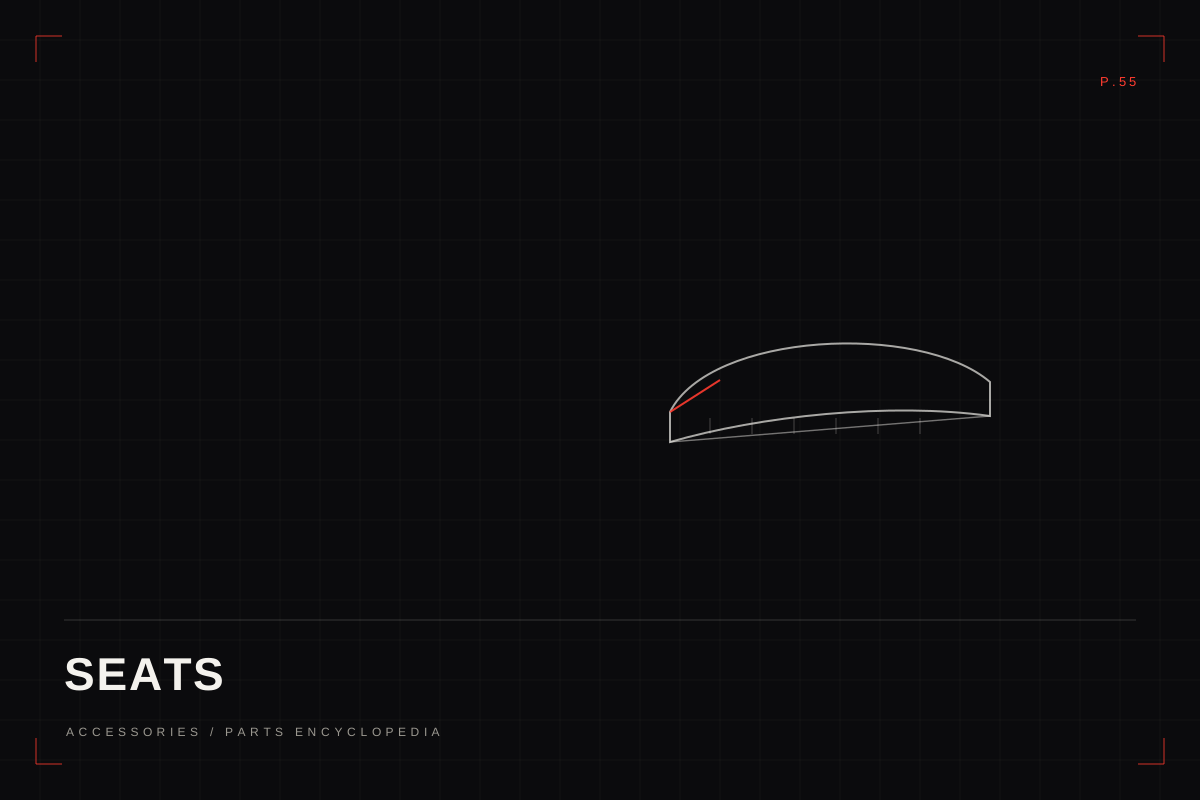
A motorcycle seat looks like a cushion, but it is a structural part of the riding position. It sets hip angle, reach to the bars and how much vibration reaches the rider. A thick soft seat can be less comfortable than a thinner, shaped one because it compresses and concentrates pressure.
What it does
The seat supports the rider's weight and spreads it over the contact area. It also damps vibration and keeps the rider in place during braking and acceleration.
Shape controls where the pressure goes. A narrow nose lets a shorter rider reach the ground. A wider rear spreads load on long rides. A step or a dish changes how the rider sits and how much they can move.
How it mounts
Foam compresses under load. Closed-cell foam holds its shape but feels firm. Open-cell foam is softer but collapses over time. A gel layer can spread pressure, but it also holds heat.
The cover keeps water out and provides grip. A smooth vinyl cover lets the rider slide; a textured cover holds them. Stitching and seams are where water gets in.
Materials and types
- Standard seat. Original shape and foam. A baseline for comfort and height.
- Comfort seat. More foam and a wider profile. Raises seat height slightly.
- Low seat. Less foam or a narrower profile. Helps shorter riders reach the ground.
- Gel seat. A gel layer for pressure distribution. Can be hot in the sun.
- Custom seat. Built to the rider's shape and use. The best result if done well.
Wear and failure signs
- Foam that has collapsed, leaving a hard spot or a dip.
- A cover that is cracked, torn or letting water in.
- A cracked or rusted seat pan.
- Loose mounting bolts or broken tabs.
- A seat that holds water and soaks the rider.
- A shape that no longer suits the rider after a bar or peg change.
Choosing a part
- Match the seat to the bike's mounting points and the rider's height and weight.
- Decide whether you need more height, less height or a different shape.
- Choose a cover material for the climate. Vinyl is easier to clean; leather needs more care.
- For long distance, a shaped seat with firmer foam often works better than a soft gel pad.
- Check that the seat does not change access to the tank or the side panels.
Fit and compatibility
- Check that the seat locks into the original mounts and does not rub the tank.
- Allow clearance for the rider's gear and a passenger.
- If the seat height changes, check the side stand and ground reach.
- Seal the seams if the seat will be used in heavy rain.
- Check that the seat does not trap water around the battery or ECU.
Care and adjustment
- Clean with a mild soap and water, not a solvent.
- Dry the seat after rain, especially at the seams.
- Treat leather covers with a suitable conditioner.
- Check the mounting bolts at every service.
- Repair a torn cover before water reaches the foam.
Safety and limits
A seat that moves or unlocks while riding can cause a loss of control. Check the latch.
A seat that is too tall can make the bike unstable at a stop. Consider a lower seat or suspension change.
Do not use a slippery cover on a bike with a steep tank. It lets the rider slide forward under braking.
Questions
Is a gel seat better for long rides?
It can spread pressure, but it also holds heat and can be too soft. Shape and foam density matter more.
Can I lower my seat height?
Yes with a low seat, less foam or a different link. Check that the riding position still works.
Why does my seat get wet after rain?
Water enters through seams or a cracked cover and soaks the foam. Seal or replace the cover.
Do custom seats improve comfort?
A well-built custom seat can. A poorly shaped one can be worse than the original.