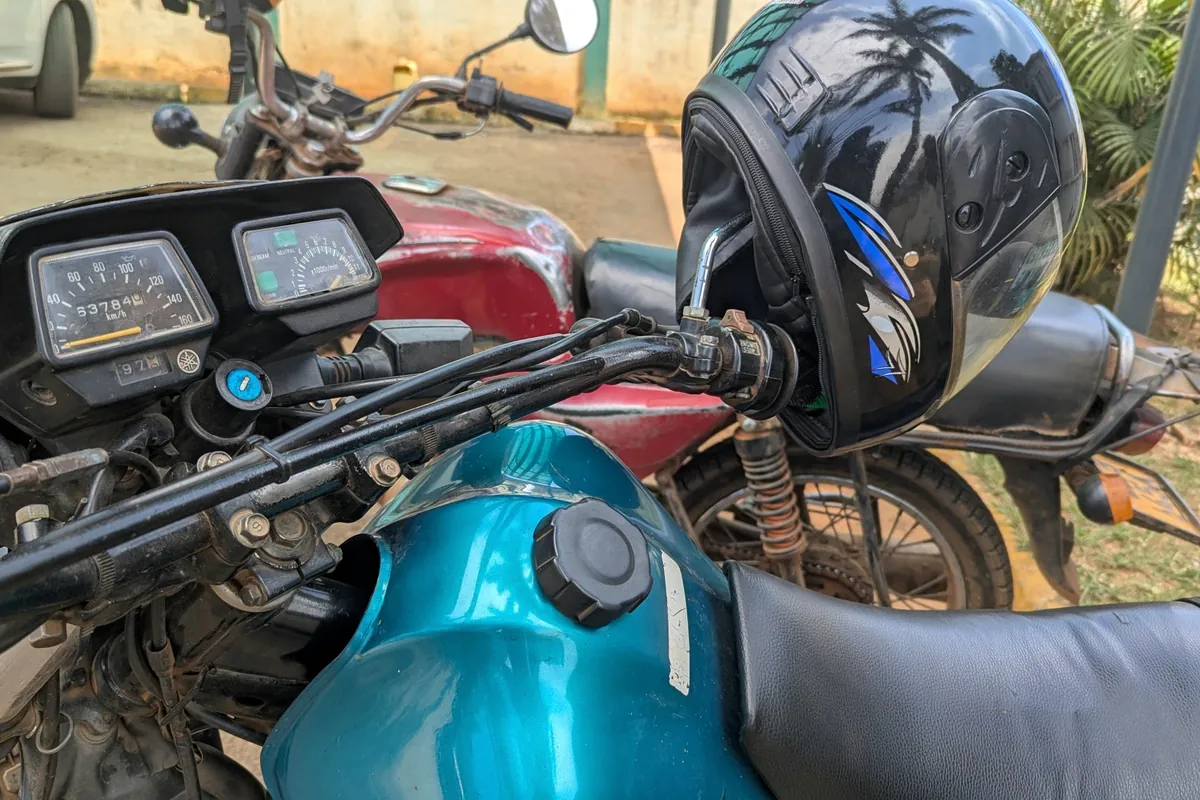
Crash bars are tubular guards bolted to the frame or engine mounts. They are common on adventure and touring bikes. In a low-speed drop they can save expensive bodywork; in a high-speed crash they may bend into the bike or dig into the road.
What it does
Crash bars hold the bike away from the ground in a fall. They protect the engine cases, radiator, fairing and sometimes the rider's legs. They also give a place to mount auxiliary lights or highway pegs.
They are not a substitute for riding carefully. A bar that is poorly mounted can transfer force into the frame and crack it. A bar that is too wide can catch on kerbs or reduce ground clearance.
How it mounts
The bar contacts the ground first and slides or deforms. The mounting points take the load. A well-designed bar spreads that load over several frame points, not one bolt.
The bar has to clear the front wheel, the suspension and the rider's legs. If it hits the ground before the tire in a corner, it can lift the wheel and cause a crash.
Materials and types
- Engine guards. Small bars around the engine. Common on road bikes.
- Full crash bars. Wrap around the fairing and engine. Common on adventure bikes.
- Aluminium bars. Lighter but less able to absorb impact.
- Steel bars. Stronger and more repairable. Heavier.
- Frame sliders. Pucks on a single mount. Less coverage than a bar.
Wear and failure signs
- Bent or cracked tubes after a drop.
- Rusted or chipped powder coating.
- Loose or missing mounting bolts.
- Cracks at the frame mounting points.
- Bars that have moved into the bodywork or the front wheel.
- Rubber mounts that have perished.
Choosing a part
- Choose bars designed for the bike, with mounting points that spread the load.
- Check clearance to the front wheel, suspension and bodywork.
- Consider the bar's width for filtering and ground clearance.
- Avoid bars that mount only to the engine cases. They can crack the cases in a fall.
- Check that the bars do not block access for service.
Fit and compatibility
- Fit the bars with the correct bolts and spacers.
- Torque the mounts to specification and check them after the first ride.
- Check clearance with the suspension compressed and the bars turned.
- Do not overtighten or use longer bolts that bottom out in the frame.
- Check that the bars do not touch the brake lines or wiring.
Care and adjustment
- Check the mounting bolts at every service.
- Touch up chips in the coating to prevent rust.
- Replace bent bars. Do not bend them back.
- Check the frame mounting points after a drop.
- Keep the bars clean so cracks are visible.
Safety and limits
A poorly mounted crash bar can damage the frame in a fall. Use a designed kit.
A bar that reduces cornering clearance can cause a crash. Check clearance.
Crash bars protect the bike, not the rider. Wear proper gear.
Questions
Do crash bars actually protect the bike?
In a low-speed drop, often yes. In a high-speed crash, their effect is limited and they may cause other damage.
Can crash bars damage the frame?
A poorly designed or mounted bar can. Choose a kit that spreads the load.
Do crash bars affect handling?
They add weight and width. A badly placed bar can reduce cornering clearance.
Can I mount lights on crash bars?
Yes, if the bar is strong enough and the wiring is protected. Check local rules for light position.