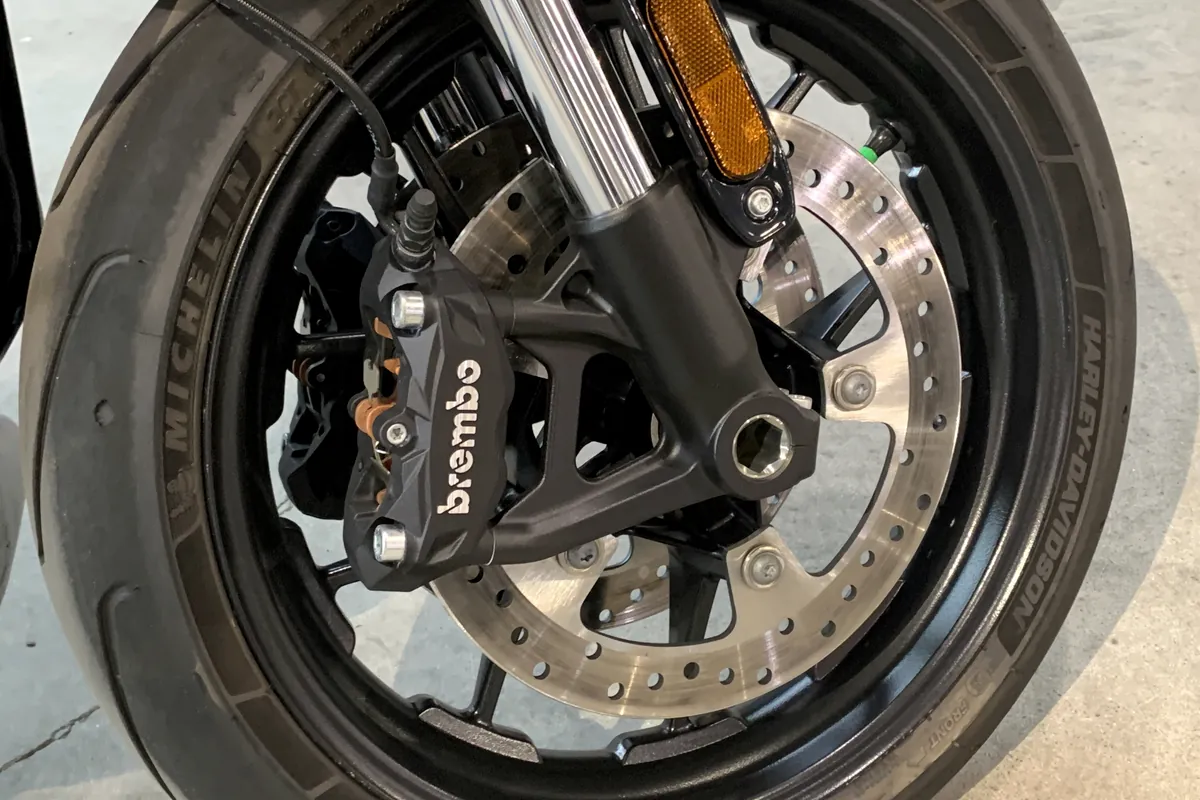
A telescopic fork is two tubes that slide inside each other. A spring carries the load, oil and valving control the movement, and the tubes keep the wheel tracking straight. Forks do two jobs at once: suspension and structure. A fork that is only half serviced affects both.
What it does
The fork lets the front wheel move up and down over bumps while the chassis stays relatively steady. It also carries braking force into the frame and sets the steering geometry through the triple clamps.
Each leg has a spring and a damper, or one leg may handle compression and the other rebound. Oil level changes the air spring, so a small difference in oil height changes the feel near full travel.
How it works
When the wheel hits a bump, the slider moves up the stanchion and compresses the spring. The damper forces oil through valving, which slows the movement. On rebound, the spring pushes back and the damper controls how fast it returns.
Fork oil does two jobs. It lubricates the bushings and seals, and it provides the damping medium. Oil breaks down, collects metal and water, and changes viscosity with age. That is why a fork service can transform a bike with no visible leak.
Types and variations
- Conventional fork. Stanchions at the top, sliders at the bottom. Simple and common on commuters.
- Upside-down fork. Sliders at the top. Stiffer and lighter, common on performance bikes.
- Cartridge fork. A sealed damping cartridge inside the leg. More consistent and easier to tune.
- Open-bath fork. Oil and valving share the leg. Simpler and cheaper to service.
- Electronic suspension. Motor-adjusted damping or spring preload. Service still needs the correct oil and seals.
Wear and failure signs
- Oil weeping past the dust seal and onto the stanchion.
- Pitting, scratches or worn coating on the stanchion. A sharp edge cuts new seals.
- A clunk or play when the front brake is held and the bike is rocked.
- Dive under braking that has increased gradually, suggesting tired springs or old oil.
- A fork that tops out or bottoms out easily.
- Milky or dirty oil at service, or metal on the drain plug.
Choosing a replacement
- Match stanchion diameter, length, offset and axle mount. Forks from another model rarely bolt on without changing geometry.
- For a seal or bushing kit, use the size and type specified for the fork, not a universal kit.
- Choose spring rate for the rider and load, not for the bike alone. A heavier rider needs more spring, not just more preload.
- Use the oil viscosity and volume the maker specifies as a baseline, then adjust with care.
- For a damaged stanchion, re-coating or replacement is usually better than polishing through the hard layer.
Fit and setup
- Set fork height in the triple clamps to the manual's figure. A few millimetres changes steering response.
- Torque the triple clamp bolts to specification. Overtightening distorts the tube and binds the fork.
- Set sag with the rider aboard, then adjust rebound and compression one click at a time.
- Check that the axle and pinch bolts are aligned and the wheel spins freely.
- After a rebuild, cycle the fork several times before setting the final oil level.
Inspection and care
- Wipe the stanchions after wet or dusty rides. Dirt under the dust seal becomes a leak.
- Service the oil at the interval or when the damping fades.
- Replace the dust seals when they crack or stop wiping the tube.
- Check for play at every tire change.
- Do not use a pressure washer near the seals.
Safety and limits
A fork that loses oil can lose damping and bottom out under braking. Fix leaks before riding hard.
A cracked or bent stanchion is a structural fault. Replace it.
Fork work needs the bike supported securely and the front end unloaded. Never work under a bike held only by a side stand.
Questions
How often should fork oil be changed?
Many makers specify a distance or a time interval, often around 10,000 to 20,000 km. Dirty oil and worn bushings matter more than the calendar.
Do both fork legs have damping?
On many modern bikes, one leg handles compression and the other rebound. On older bikes, both legs usually do both. Check the manual before adjusting.
Can I fix a fork leak with a seal mate?
A thin cleaning tool can remove grit from the seal lip and stop a minor weep. If the stanchion is pitted or the seal is torn, it needs replacement.
Why does my fork dive so much under braking?
Worn springs, low oil, too much compression damping or brake modulation. Check sag and oil level first.