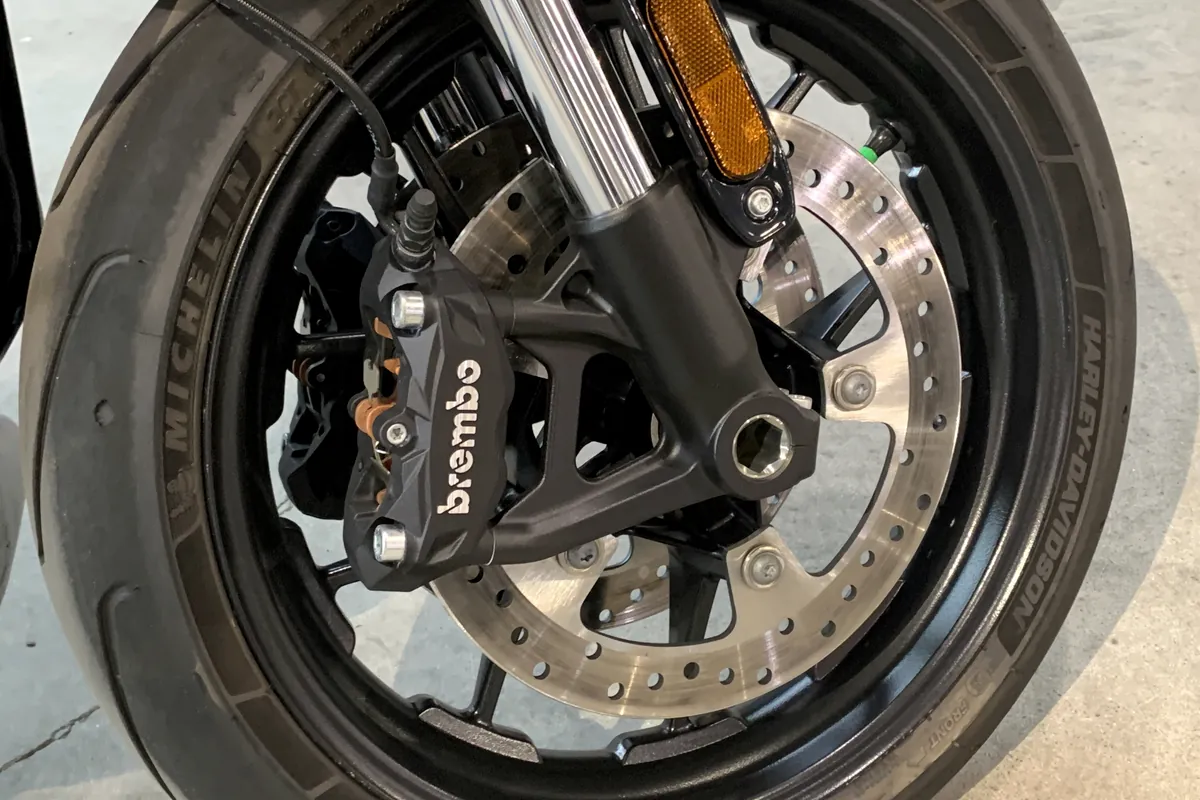
A fork seal is a rubber lip that presses against the stanchion. Above it sits a dust seal that wipes grit away from the lip. The pair works as a system. When the dust seal cracks, grit reaches the oil seal and wears it out from the outside.
What it does
The seal keeps fork oil in the slider and keeps water and grit out. It also guides the stanchion slightly, though the bushings carry the main side load.
A small film of oil on the stanchion is normal. A visible ring of oil after a ride, or oil running down the leg, is not. The difference matters because a light film can be mistaken for a failed seal and a real leak can be ignored.
How it works
The seal lip is held against the stanchion by a small coil spring. Fork oil lubricates the lip as the fork moves. The dust seal sits above it and scrapes larger particles away before they reach the lip.
When the fork compresses, air pressure inside the leg pushes oil against the seal. A blocked or wet dust seal, a scratched stanchion or worn bushings that let the tube move sideways all increase the load on the lip.
Types and variations
- Standard oil seal. A single lip with a spring. Common on most forks.
- Dual lip seal. Two lips for better dirt exclusion. Often used with a separate dust seal.
- Dust wiper. The outer scraper. Replace it with the oil seal.
- Seal mate tools. Thin plastic tools that clean under the lip. Useful for a minor weep, not a repair.
- Fork boots. Rubber gaiters that protect the stanchion. Common on off-road bikes.
Wear and failure signs
- An oil ring on the stanchion after a ride, or oil running onto the slider.
- A cracked or hardened dust seal.
- Pitting, stone chips or worn coating on the stanchion.
- Fork oil on the brake disc or pads. This is a safety fault.
- Play in the fork bushings, which lets the stanchion move and wear the seal.
- A leak that returns soon after a seal replacement, usually because the stanchion was not repaired.
Choosing a replacement
- Use the seal size and type specified for the fork. Diameter, lip design and height vary.
- Replace the dust seal with the oil seal. A new oil seal under a cracked wiper will fail again.
- Check the stanchion for pitting before fitting a new seal. A rough surface cuts the lip.
- Buy a seal kit that includes the bushings if the fork has play.
- For off-road use, consider fork boots or a neoprene guard.
Fit and setup
- Support the bike with the front wheel off the ground and the fork leg removed or unloaded.
- Clean the seal seat and lubricate the new seal with fork oil.
- Drive the seal square with a proper seal driver. A hammer and punch distorts it.
- Fit the dust seal with the correct orientation and seat it fully.
- Set the oil level with the fork collapsed and the spring removed, as the manual describes.
- Check for leaks by cycling the fork several times before riding.
Inspection and care
- Wipe the stanchions after every ride in dust or rain.
- Inspect the dust seals for cracks at every service.
- Fix stone chips in the stanchion coating before they become seal cutters.
- Do not pressure wash the seal area.
- If a seal starts to weep, clean under the lip early rather than waiting for a full leak.
Safety and limits
Fork oil on a brake disc or pads reduces braking. Clean or replace contaminated pads.
A leaking fork can lose damping and bottom out. Repair it before hard riding.
Fork disassembly involves spring force and oil. Use the correct tools and support the bike safely.
Questions
Can I stop a fork leak with a seal mate?
Sometimes, if grit is trapped under the lip and the stanchion is smooth. It will not fix a torn seal, a pitted tube or worn bushings.
Do I need to replace both fork seals at once?
It is good practice. Both seals see similar use, and a second failure soon after the first is common.
Why did my new seal start leaking?
A scratched stanchion, a distorted seal, too much oil, or worn bushings that let the tube move. Check all four before blaming the seal.
Can I ride with a leaking fork seal?
Only to a workshop, and gently. Oil can reach the brake, and the fork loses damping as the level drops.