A drain pan seems too simple to think about, until hot oil misses the pan, overflows or spills on the way to the recycling point. A pan with enough capacity, a wide mouth and a good spout makes the job cleaner and safer.
What it is for
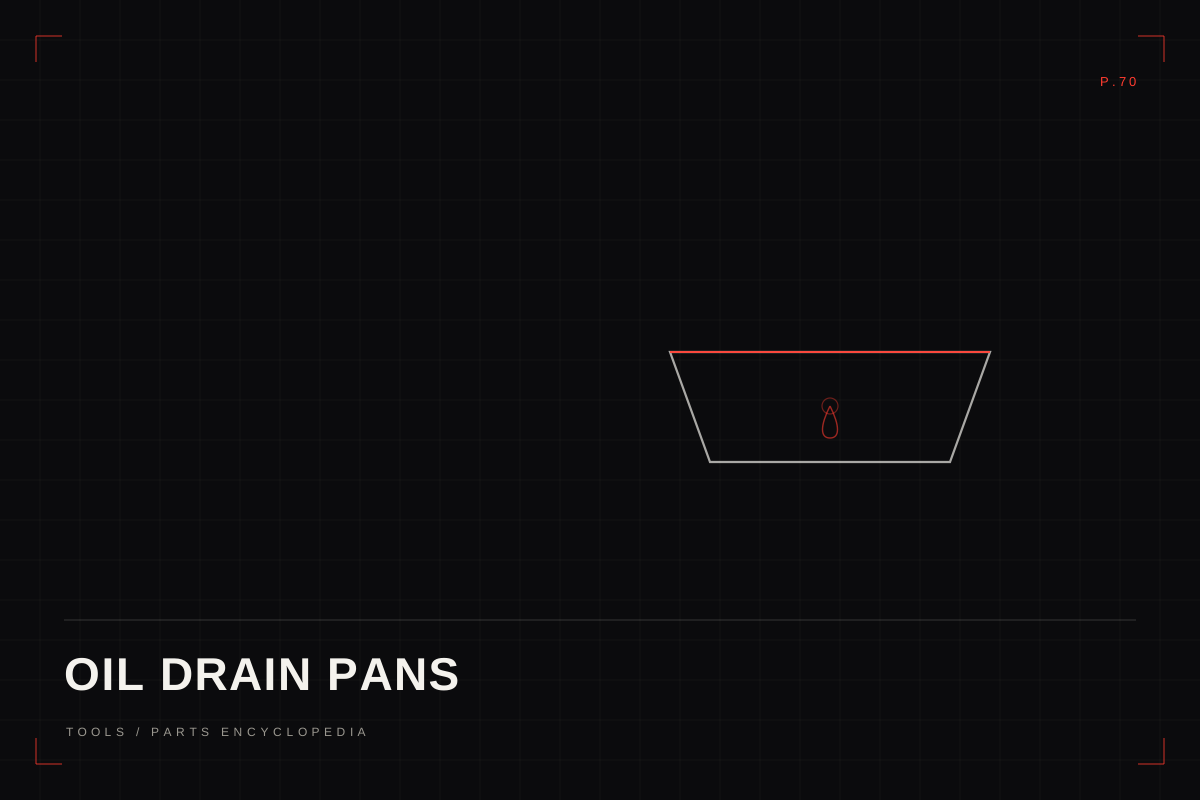
The pan catches the used oil when the drain plug is removed. It also holds the oil filter and any tools that drip. A pan with a grid keeps the drain plug from falling into the oil.
Capacity matters. A motorcycle sump can hold several litres, and the oil comes out fast when hot. A pan that is too small overflows before the flow slows.
How it works
The pan sits under the drain plug. The oil flows out, and the pan's wide mouth catches splashes. A spout or a lip lets you pour the oil into a container without spilling.
A sealed container is needed for transport. Many pans have a lid or a screw cap. Without one, oil sloshes out on the way to the recycling point.
Types and variations
- Standard drain pan. A shallow open pan. Cheap and easy to clean.
- Sealed drain pan. A pan with a lid and a spout. Easier to transport.
- Combination pan. A pan with a built-in container. Less messy.
- Funnel and pan set. A funnel helps direct oil into a container.
- Absorbent mat. Not a pan, but useful for spills.
When it stops being reliable
- Cracks or splits in the plastic.
- A spout that leaks.
- A lid that no longer seals.
- A pan that has become brittle from UV or heat.
- A missing grid or plug holder.
- Residue that contaminates the next oil change.
Choosing one
- Choose a pan with more capacity than the engine's oil volume.
- A sealed pan with a spout is easier to transport.
- Check that the pan is stable under the bike.
- A grid or a magnetic tray keeps the drain plug from getting lost.
- Keep a separate container for used oil.
Range and compatibility
- Warm the engine, then let it cool slightly before draining.
- Place the pan under the drain plug and remove the plug carefully.
- Let the oil drain fully, then refit the plug with a new washer.
- Pour the used oil into a sealed container.
- Clean the pan after use.
Accuracy and care
- Rinse the pan and dry it.
- Store it where it will not crack.
- Keep the lid clean.
- Do not mix used oil with other fluids.
- Take used oil to a recycling point.
Safety and limits
Hot oil causes burns. Let the engine cool slightly and wear gloves.
Used oil is toxic. Do not pour it down a drain or onto the ground.
Clean up spills immediately. Oil on a workshop floor is a slip hazard.
Questions
How much oil does a motorcycle hold?
It varies widely, often between 1 and 4 litres. Check the manual and use a pan with extra capacity.
Can I pour used oil down the drain?
No. Take it to a recycling point. Used oil is toxic and pollutes water.
Do I need a new drain plug washer?
Yes, a crush washer is usually a one-time part. Reusing one can cause a leak.
How do I avoid a mess when changing oil?
Use a pan with a wide mouth, let the oil drain fully, and have a rag and a funnel ready.