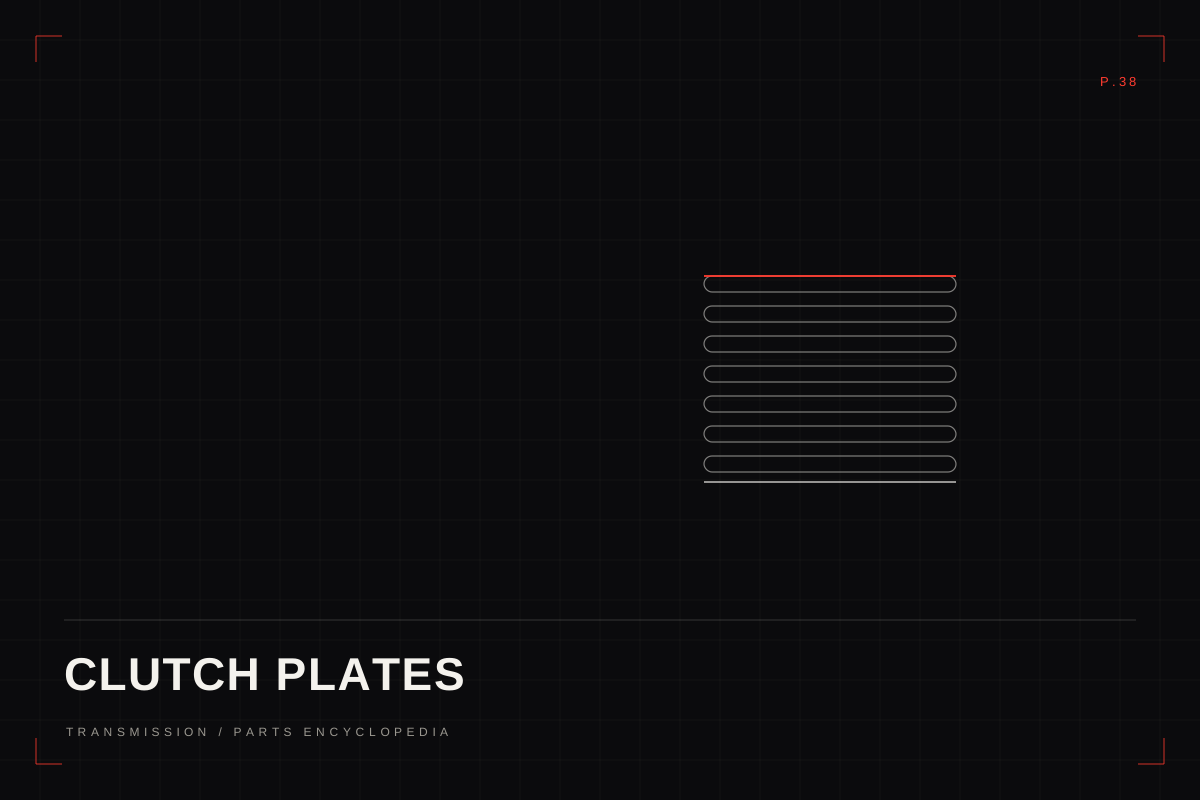
A wet clutch is a stack of alternating friction and steel plates running in engine oil. Springs press the stack together, and the lever or a hydraulic cylinder releases it. The plates transmit torque by friction, which means oil condition and plate flatness matter as much as thickness.
What it does
The clutch connects and disconnects the engine from the gearbox. It also slips deliberately during take-up so the bike can move away smoothly. The friction plates grip the steels when the springs compress the stack.
A wet clutch shares the engine oil. That oil cools the plates and carries away wear particles. The wrong oil, or an additive package that reduces friction, can make the clutch slip.
How it carries power
The pressure plate squeezes the stack. Friction plates are keyed to the clutch basket and rotate with it. Steel plates are keyed to the inner hub. When the lever is pulled, the pressure plate lifts and the plates separate.
Torque capacity depends on friction area, spring pressure and the number of plates. As friction material wears, the stack gets thinner and the springs extend. Eventually the spring pressure drops and the clutch slips under load.
Types and variations
- Wet multiplate. The common motorcycle clutch. Runs in oil and packs many plates into a small space.
- Dry clutch. Runs dry, often with a rattle. Common on some Ducati and older BMW models.
- Slipper clutch. Allows some slip under engine braking to reduce rear-wheel hop.
- Assist and slipper. Uses ramps to reduce lever effort and manage engine braking.
- Centrifugal clutch. Engages with engine speed. Common on scooters and small bikes.
Wear and failure signs
- The engine revs rise without matching road speed, especially under acceleration.
- A grabby or juddery take-up.
- Difficulty finding neutral or a bike that creeps with the lever pulled.
- A slipping clutch that smells hot after a hard ride.
- Blue or warped steel plates.
- Friction material worn near the service limit, or a broken friction tab.
Choosing a replacement
- Match plate count, thickness and tab pattern to the clutch basket.
- Use the friction material specified for the bike. Race plates can be grabby on the road.
- Replace the steels if they are warped, blue or scored. Check flatness on a surface plate.
- Replace the springs as a set with the plates.
- Use the oil grade the maker specifies. Friction-modified oils can cause slip.
Fit and compatibility
- Soak new friction plates in clean engine oil before fitting, as the manual directs.
- Check the clutch basket for notches where the plate tabs sit.
- Fit the plates in the correct order and align the marks.
- Torque the pressure plate bolts evenly and in stages.
- Check lever free play and the cable or hydraulic release.
Inspection and care
- Use the specified oil and change it on time.
- Avoid slipping the clutch for long periods in traffic.
- Check cable free play or hydraulic fluid level.
- Do not rest a hand on the clutch lever while riding.
- Investigate a slipping clutch before it glazes the steels.
Safety and limits
A slipping clutch can fail suddenly under load. If it slips badly, avoid hard acceleration and repair it.
A dragging clutch makes neutral hard to find and can cause the bike to creep. Fix it before it damages the gearbox.
Clutch work involves spring force and oil. Support the bike and follow the manual's sequence.
Questions
How long do clutch plates last?
It depends on riding style, load and oil. A touring bike can go a long way; a bike used for hill starts and traffic can wear plates much sooner.
Can I mix friction plate brands?
No. Use one set of the same type so friction and thickness are consistent.
Why does my clutch slip after an oil change?
The new oil may contain friction modifiers that are unsuitable for a wet clutch. Use the specified grade.
Do I need to replace the steels with the friction plates?
Check them. If they are warped, blue or worn, replace them. If they are flat and within spec, they can be reused.