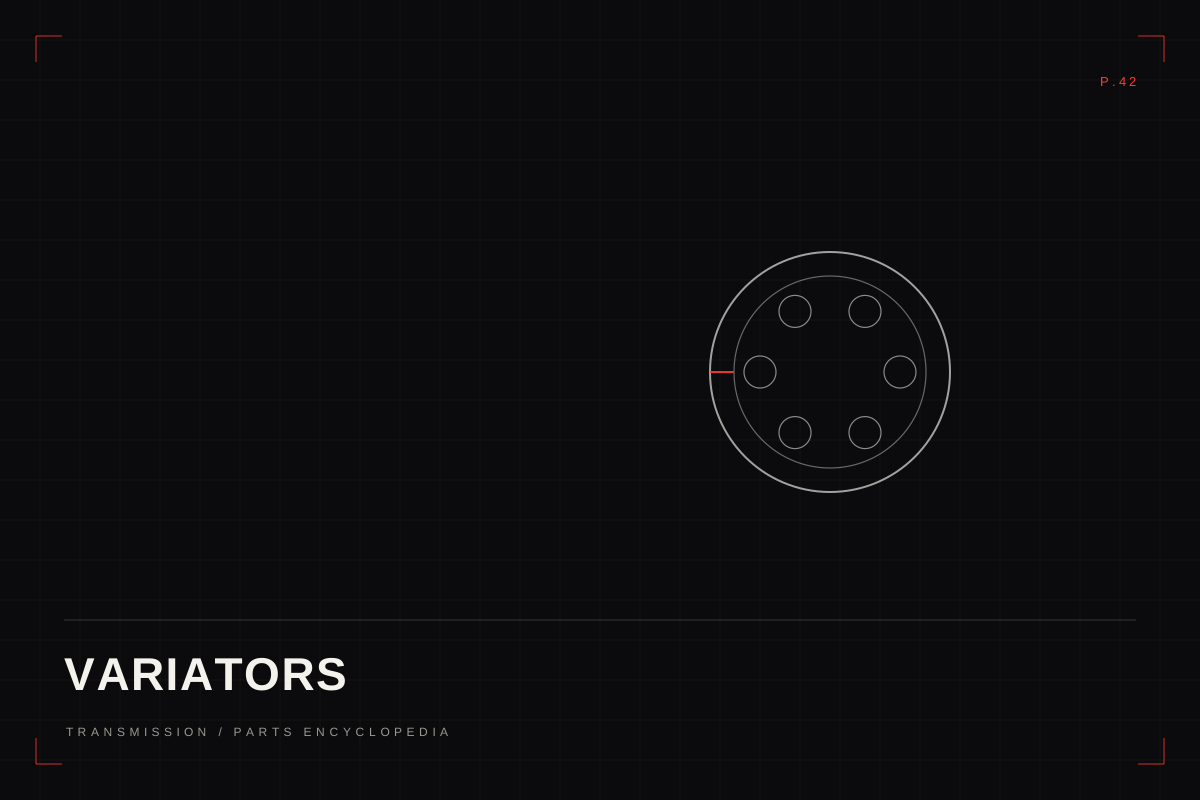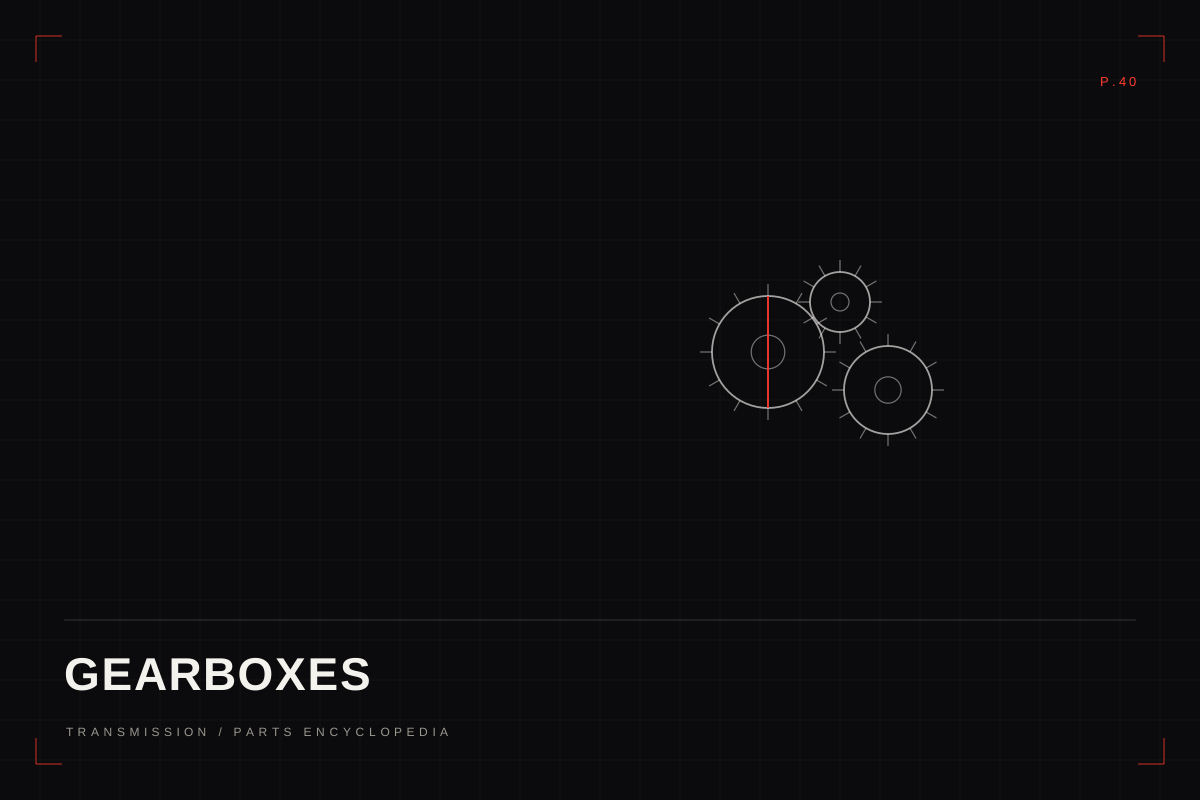
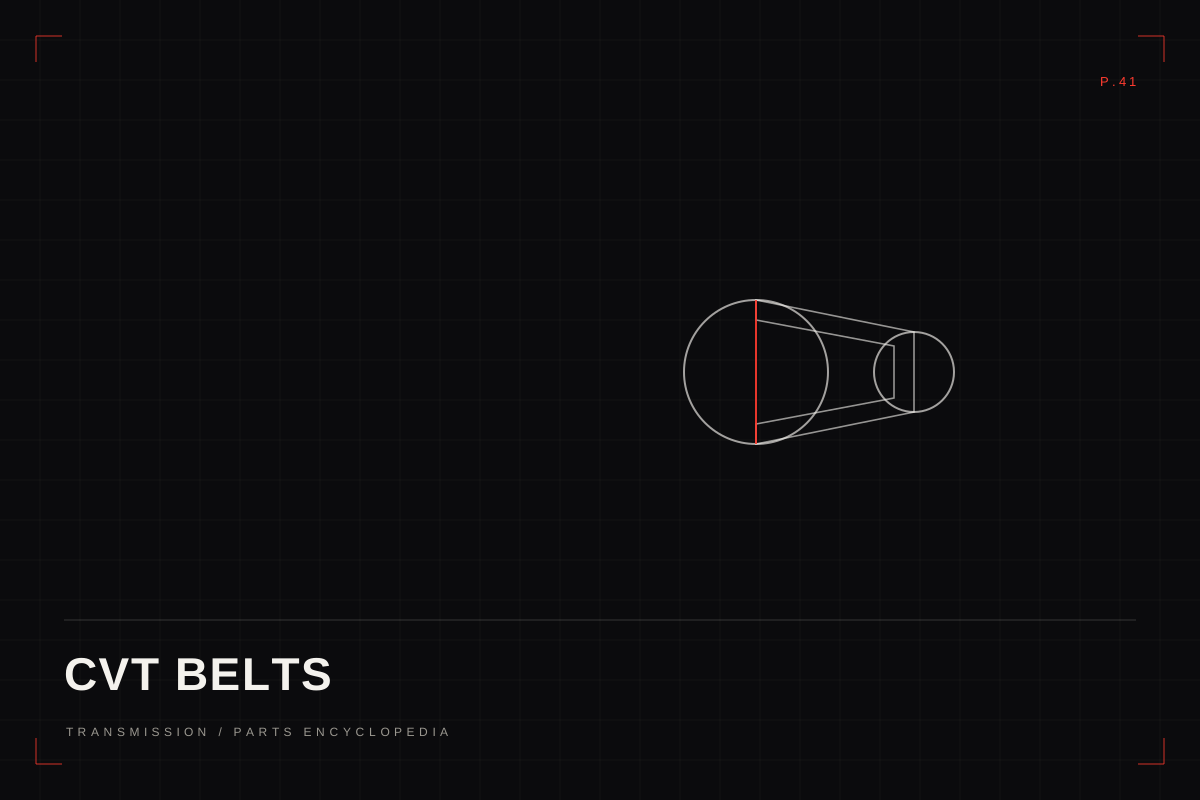
A scooter CVT uses a wide rubber belt running between a front variator and a rear clutch pulley. As the pulleys change diameter, the ratio changes without fixed gears. The belt is a wear item, and it works in a hot, dusty enclosure with no oil to carry heat away.
What it does
The belt transmits engine torque from the variator to the rear pulley. Its width sets the ratio range: a wider belt rides higher on the pulleys. As the belt wears thinner, the scooter loses top speed and the engine revs higher for the same speed.
The belt also has to survive heat from the engine and the clutch. Dust from the clutch shoes and road grit get into the CVT case and act like abrasive paste on the belt and pulley faces.
How it carries power
The variator pushes the belt outward as engine speed rises, which makes the belt ride higher at the front and lower at the rear. That changes the ratio. Roller weights control how quickly this happens.
The rear pulley has a torque spring and a clutch. When the engine idles, the clutch disengages so the scooter can stand still. When the clutch engages, the belt starts to pull. A glazed belt slips under load and generates more heat.
Types and variations
- Standard replacement belt. Matches the original dimensions and compound. The safe choice.
- Reinforced belt. Stronger cords for tuned engines. Check the pulley compatibility.
- Kevlar belt. Higher heat resistance. Can be noisier and needs correct break-in.
- Oversize belt. Changes the ratio range. Must match the pulley and case clearance.
- Used belt. Not worth fitting. A belt takes a set to the pulleys and wears quickly.
Wear and failure signs
- A belt narrower than the service limit.
- Cracks across the ribs or along the edges.
- Glazing on the side faces, causing slip and squeal.
- Exposed cords or missing chunks.
- Black dust in the CVT case, often from a slipping belt or clutch.
- A scooter that revs but does not accelerate as it should.
Choosing a replacement
- Match the belt dimensions and compound to the bike. A belt that is close may still be wrong.
- For a tuned engine, use a belt rated for the extra heat and load.
- Replace the belt at the maker's interval, even if it looks serviceable.
- Inspect the pulleys and rollers at the same time. A worn pulley destroys a new belt.
- Buy from a seller who can confirm the part number.
Fit and compatibility
- Clean the CVT case and pulley faces before fitting.
- Check the belt direction arrow if one is marked.
- Seat the belt fully in the rear pulley and keep it loose at the front while fitting the variator.
- Torque the variator nut and clutch nut to specification. A loose nut can destroy the shaft.
- Check the belt alignment and case gasket before closing.
Inspection and care
- Inspect the belt at the recommended interval and clean the CVT case.
- Avoid full throttle from cold. Let the belt warm up.
- Keep the CVT intake clean and the drain holes clear.
- Do not ride through deep water. Water in the case causes slip and rust.
- Replace worn rollers and clutch shoes with the belt if they are due.
Safety and limits
A snapped CVT belt leaves the scooter without drive. Replace a cracked or glazed belt before it fails.
The CVT case gets hot. Let it cool before opening it.
Keep fingers clear of the pulleys when the engine is running.
Questions
How often should a scooter belt be replaced?
Follow the manual, often around 12,000 to 24,000 km depending on the model and use. Dusty or loaded use shortens the interval.
Why does my scooter lose top speed?
A worn belt sits lower in the variator, reducing the ratio range. Worn rollers can cause the same symptom.
Can I fit a wider belt?
Only if the pulleys and case are designed for it. A wider belt can rub the case or fail to seat correctly.
What causes a belt to glaze?
Slipping under load, heat and contamination. Check the clutch and pulley faces as well as the belt.