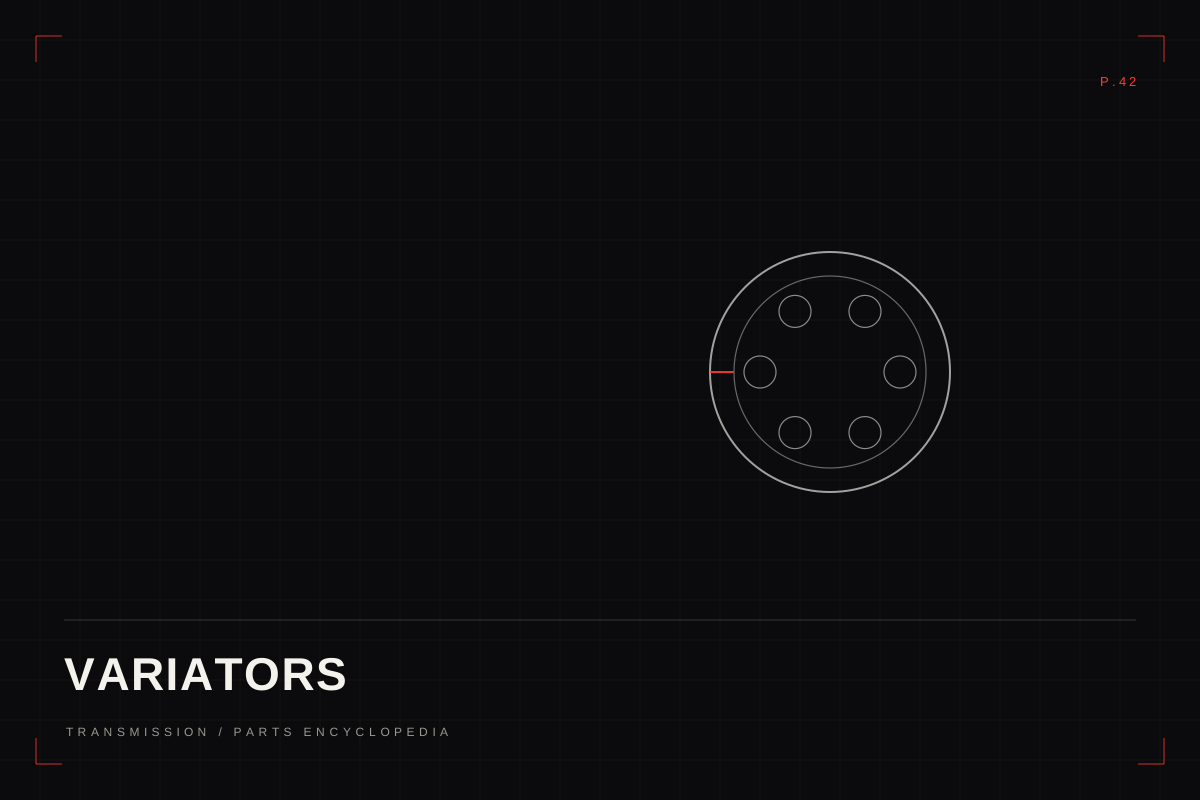
A variator is a pair of cone-shaped pulley halves on the crankshaft. Roller weights sit in ramps between them. As the engine speeds up, the rollers push the halves together, the belt rides higher and the ratio changes. It is a simple mechanism that needs clean, flat surfaces to work.
What it does
The variator sets the front pulley diameter. A larger effective diameter means a taller ratio and lower engine speed for a given road speed. The rear pulley reacts through the belt and the torque spring.
The variator also affects how the scooter accelerates. Lighter rollers let the engine rev higher before the ratio changes, which feels quicker but can hurt top speed and fuel use.
How it carries power
Centrifugal force pushes the rollers outward along the ramps. The movable pulley half slides inward and squeezes the belt. The belt rides higher on the front pulley and lower on the rear, changing the ratio smoothly.
The variator nut holds the assembly on the crankshaft. It must be tight. A loose nut lets the variator rock, which wears the splines and can damage the crank.
Types and variations
- Standard variator. Original ramp angles and roller weights. Balanced for road use.
- Performance variator. Different ramp angles for a wider ratio range. Needs matching rollers.
- Roller variator. Uses cylindrical rollers. The common scooter design.
- Slider variator. Uses shaped sliders instead of rollers. Different wear pattern.
- Manual and semi-automatic. Some scooters have a different CVT control. Check the design before changing parts.
Wear and failure signs
- Flat spots on the rollers, causing vibration and uneven acceleration.
- Grooves or scoring on the pulley faces.
- Worn ramps that let the rollers sit unevenly.
- A variator that rattles at idle.
- A loose centre nut or damaged splines.
- Black dust in the case from belt and roller wear.
Choosing a replacement
- Match the variator to the crankshaft spline and the belt width.
- Choose roller weights for the riding you do. Lighter weights raise rpm; heavier weights lower it.
- Replace rollers as a set with the variator if the ramps are worn.
- Use the correct centre nut and torque it properly.
- For a tuned engine, change the variator and rollers together with the belt and clutch springs.
Fit and compatibility
- Clean the crank nose and the variator bore.
- Fit the rollers in the correct orientation, if the design is directional.
- Hold the variator with the proper tool, not a screwdriver in the fins.
- Torque the centre nut to specification and use a new nut if required.
- Check that the belt is seated and the case cover clears the variator.
Inspection and care
- Clean the CVT case at every belt inspection.
- Check the rollers for flat spots when the belt is replaced.
- Do not use grease on the rollers or ramps unless the maker specifies it.
- Check the centre nut at every service.
- Replace the belt and rollers together when either is worn.
Safety and limits
A loose variator nut can damage the crankshaft. Torque it correctly.
The CVT case and exhaust get hot. Let them cool before working.
Keep hands clear when the engine is running. The variator can pull in loose clothing.
Questions
Do lighter rollers make a scooter faster?
They make the engine rev higher before the ratio changes, so acceleration feels stronger. Top speed may drop.
How do I know the variator is worn?
Look for flat spots on the rollers and grooves on the pulley faces. A vibration under acceleration is a common symptom.
Can I fit a performance variator without other changes?
It will change the rpm and ratio range, but the result depends on the rollers, belt and clutch. Tune the whole system.
Why does my variator rattle at idle?
Worn rollers, a loose nut or a worn belt. Inspect before it damages the crank.