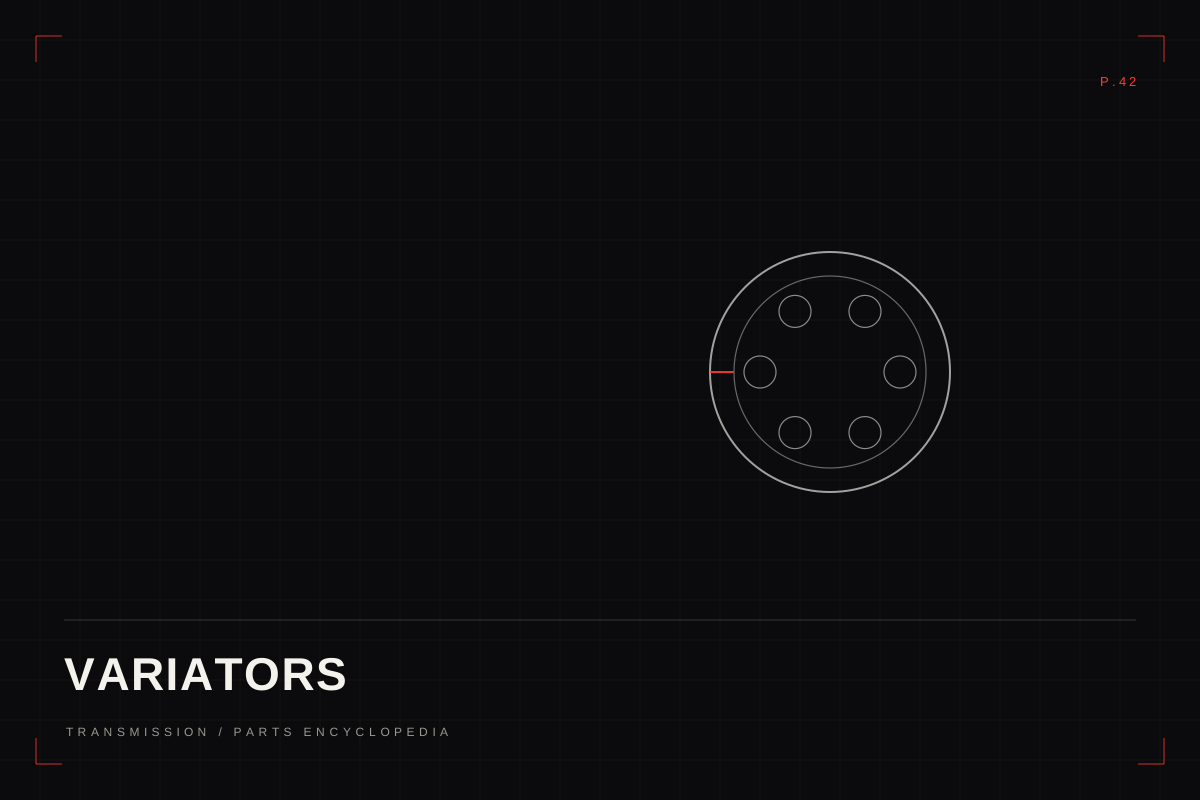
Roller weights sit inside the variator ramps. At rest they are at the bottom. As engine speed rises, centrifugal force pushes them outward and the variator changes ratio. A few grams of weight makes a noticeable difference to how a scooter feels.

What it does
The rollers are the variator's tuning element. Heavier rollers push outward at lower rpm, so the scooter shifts up early and runs at lower rpm. Lighter rollers delay the shift and hold higher rpm.
The set must be matched. One worn or different roller makes the variator sit unevenly, which causes vibration and uneven belt wear.
How it carries power
Centrifugal force pushes each roller up its ramp. The roller presses the movable pulley half inward. The rate depends on roller mass and ramp angle, which is why changing either changes the shift curve.
A roller that has worn flat no longer rolls smoothly. It slides, which wears the ramp and makes the variator stick. The belt then runs at an inconsistent diameter.
Types and variations
- Standard steel rollers. Durable and predictable. The usual original fitment.
- Coated rollers. A low-friction coating for smoother movement.
- Polymer rollers. Lighter and quieter. Wear differently from steel.
- Dr Pulley sliders. A shaped slider rather than a round roller. Different tuning behaviour.
- Mixed weights. Sometimes used to fine-tune the average mass. Keep pairs even.
Wear and failure signs
- Flat spots or a out-of-round profile.
- A roller that no longer slides freely in its ramp.
- Uneven wear across the set.
- Vibration under acceleration.
- A variator that sticks in one ratio.
- Black dust in the CVT case.
Choosing a replacement
- Match the roller diameter to the variator. A different diameter will not sit correctly.
- Choose weight by the riding you do and the rpm you want at cruise.
- Replace the full set, not just the worn roller.
- If you change roller weight, check the belt and clutch springs. They interact.
- Keep the original set if you experiment, so you can return to a known baseline.
Fit and compatibility
- Clean the ramps and the variator bore.
- Fit the rollers in the correct orientation and seat them fully.
- Check that the variator moves freely through its travel by hand.
- Torque the centre nut correctly.
- Test the scooter gently and check for vibration before riding normally.
Inspection and care
- Inspect the rollers when the belt is replaced.
- Keep the CVT case clean and dry.
- Replace the belt and rollers together if both are worn.
- Do not use grease unless the maker specifies it.
- Check for vibration after any change.
Safety and limits
A seized roller can make the variator stick, which affects control. Inspect worn parts.
The CVT case gets hot. Let it cool before opening.
Keep hands clear of the belt and pulleys when the engine runs.
Questions
What happens if I fit lighter rollers?
The engine holds higher rpm before the variator shifts, so acceleration feels stronger and top speed may drop.
Can I mix roller weights?
Some tuners do, but it can make the variator sit unevenly. If you experiment, keep the arrangement symmetrical.
How often should rollers be replaced?
Check them at every belt change. Replace them when flat-spotted or when the variator does not move smoothly.
Do heavier rollers improve fuel economy?
They can lower cruise rpm, which may help. The gain is small and depends on the rest of the CVT setup.