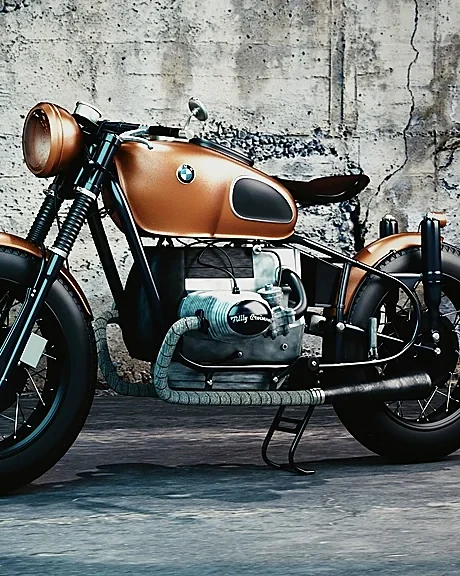
A motorcycle gearbox is usually a constant-mesh design: pairs of gears are always in mesh, and dogs or shift forks select which pair drives the shaft. The gears themselves rarely fail. What wears is the engagement dogs, the shift forks and the bearings.
What it does
The gearbox gives the engine a set of ratios so it can pull from a stop and cruise at speed. It also provides neutral and, on some bikes, a reverse for trikes.
The gearbox shares oil with the engine on most motorcycles. That oil lubricates the gears, bearings and shift mechanism, and carries wear debris to the filter or the magnet.
How it carries power
The shift drum rotates when the lever moves and pushes shift forks sideways. The forks slide dogs into engagement with the adjacent gear. Because the gears are always meshing, engagement is about locking a gear to its shaft, not moving gears into mesh.
The dogs are small lugs on the side of a gear. They take the drive load through a small contact area, so they wear and round off. Rounded dogs cause the gearbox to jump out of gear under load, especially in the lower gears.
Types and variations
- Constant mesh. The standard motorcycle gearbox. Gears stay in mesh and dogs select the ratio.
- Sequential. The rider shifts up or down one gear at a time. The usual motorcycle layout.
- DCT. Dual clutch transmission. Two clutches and automated shifting.
- CVT. Continuously variable. Common on scooters.
- Quickshifter. An add-on that cuts ignition or fuel for a clutchless shift.
Wear and failure signs
- Jumping out of gear under load.
- Difficulty selecting a gear, or a false neutral.
- Whining or rumbling that changes with gear.
- Metal filings on the drain plug or in the oil.
- A bent shift fork after a drop or a missed shift.
- Oil leaking from the shift shaft seal.
Choosing a replacement
- Gearbox parts are model-specific. Match shaft, gear and dog design exactly.
- For a rebuild, replace worn dogs, forks and bearings as a set where they interact.
- Use the specified oil. Some gearboxes are sensitive to friction modifiers.
- Consider a quickshifter only if the bike's ECU supports it and the gearbox is in good condition.
- Do not change ratios without checking chain length, speedometer calibration and ECU mapping.
Fit and compatibility
- Work clean. Grit in a gearbox destroys bearings quickly.
- Check shift fork alignment and drum rotation before closing the cases.
- Set the shift mechanism and detent spring correctly.
- Torque the case bolts in the manual's sequence.
- Fill with the specified oil and check the level after the first run.
Inspection and care
- Change gearbox oil at the interval.
- Use the clutch properly and avoid clutchless shifts unless the bike is designed for it.
- Do not rest a foot on the gear lever.
- Check for oil leaks at the shift shaft and sprocket cover.
- Investigate a new whine or a gear that jumps out.
Safety and limits
A gearbox that jumps out of gear can lock the rear wheel. Stop riding and diagnose it.
Metal in the oil means internal wear. Do not ignore it.
Gearbox work needs clean conditions and precision. Use a workshop if you are unsure.
Questions
Why does my bike jump out of second gear?
Worn engagement dogs or a bent shift fork are common. A loose chain or worn cush drive can make it feel similar.
Can I fix a gearbox without removing the engine?
On some bikes the gearbox is accessible behind a cover. On most, the engine cases must be split.
How often should gearbox oil be changed?
Follow the manual. On a shared-sump bike, the engine oil interval covers the gearbox.
Are quickshifters hard on the gearbox?
A well set up quickshifter can be gentle, but it still shifts under load. It is not a substitute for worn dogs.