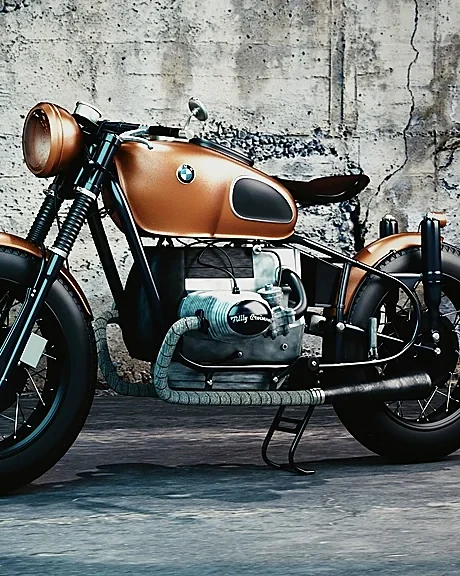
A clutch cable is a stranded steel inner running inside a lined outer. It has to move freely under load and survive repeated bending at the lever and the engine. Most cable failures start with poor routing or a lack of lubrication, long before the cable snaps.
What it does
The cable pulls the release mechanism when the lever is squeezed. It also has to return smoothly so the clutch fully engages. Free play is the small gap that ensures the release bearing is not loaded when the lever is released.
Too little free play keeps the clutch partly disengaged, which causes slip and wear. Too much free play means the lever may not fully disengage the clutch, making gear selection difficult.
How it carries power
The inner cable slides inside the outer. The outer takes the compression load while the inner takes tension. Bends increase friction, which is why routing has a large effect on lever effort.
The cable ends are usually soldered or swaged nipples. A frayed nipple can pull out of the lever or the actuator. Water entering the outer can freeze or corrode the inner.
Types and variations
- Standard cable. A steel inner in a lined outer. The common type.
- Low-friction lined cable. A smoother liner for a lighter lever.
- Hydraulic conversion. Replaces the cable with a master and slave cylinder. Different maintenance.
- Adjustable cable. Has adjusters at the lever and sometimes mid-cable.
- Emergency repair kit. A temporary cable repair for the roadside. Not a permanent fix.
Wear and failure signs
- Frayed strands at the lever or actuator end.
- A heavy or notchy lever action.
- Free play that keeps changing.
- A cable that will not return smoothly.
- Rust or a broken liner visible at the ends.
- A clutch that slips after adjustment, suggesting the cable is too tight.
Choosing a replacement
- Match the cable length, nipple type and outer fittings to the bike.
- Buy a cable with a lined outer and stainless inner for wet climates.
- For a raised handlebar, check that the cable is long enough at full lock.
- Keep a spare cable if the bike is used for long tours.
- Do not use a cable from another model because it looks similar.
Fit and compatibility
- Route the cable along the original path, avoiding sharp bends and hot parts.
- Lubricate the inner cable with a cable lubricant if the maker allows it.
- Set free play at the lever as the manual specifies.
- Check that the cable moves freely at full steering lock.
- Operate the lever several times and recheck the adjustment.
Inspection and care
- Check free play at every service.
- Lubricate the cable at the recommended interval.
- Inspect the ends for fraying.
- Replace a cable that is kinked or has a broken strand.
- Keep the lever pivot clean and lubricated.
Safety and limits
A snapped clutch cable can leave you unable to disengage the clutch. Replace a frayed cable before it fails.
Do not route a cable where it can be pinched by the steering or suspension.
A clutch that will not disengage can cause a sudden lurch. Check adjustment before riding.
Questions
How much clutch free play should there be?
The manual gives a figure, usually a few millimetres at the lever. Measure it cold and recheck when warm.
Can I lubricate a clutch cable?
Only with a cable lubricant and only if the cable is not a sealed low-maintenance type. Some lined cables should be left dry.
Why does my clutch cable keep breaking?
A tight bend, a missing guide or a dry cable. Check routing and lubrication before fitting another.
Should I convert to a hydraulic clutch?
It can reduce lever effort and remove cable maintenance, but it adds complexity and cost. It is not a simple swap on every bike.