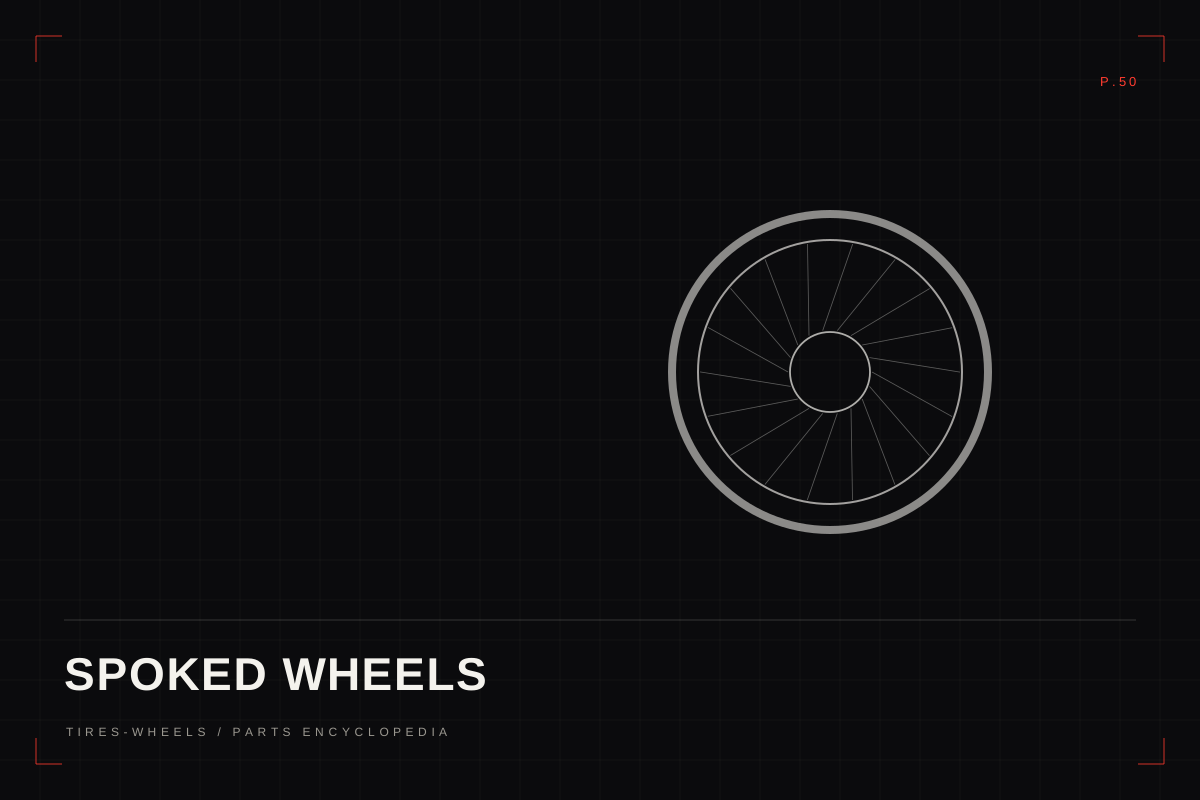
A wheel has two or three bearings in the hub and often a seal on each side. They carry radial and side loads and must survive water, dust and pressure washing. A bearing that is rough or loose makes the wheel feel vague and can damage the axle or hub.
What it does
The bearings support the wheel on the axle so it can rotate freely. On a motorcycle they also take side load from cornering and braking. The seals keep water and grit out and grease in.
A wheel bearing is a press fit in the hub. The axle and spacers clamp the inner races so the bearing runs with the correct preload. Missing or wrong spacers load the bearing and shorten its life.
How it is built
Balls or rollers run between an inner and outer race. Grease separates the surfaces. When the grease is washed out or contaminated, metal contacts metal, and the bearing becomes rough and noisy.
Play is felt by rocking the wheel at the rim while holding the axle. Roughness is felt by spinning the wheel or turning the spacer by hand. A seal that is damaged lets water in, which is the most common cause of early failure.
Types and markings
- Ball bearings. Common in motorcycle wheels. Good for radial loads.
- Tapered roller bearings. Take more side load. Common on older bikes and some rear wheels.
- Sealed bearings. Rubber or metal shields. The usual motorcycle type.
- Open bearings. Need regular greasing. Rare in modern wheels.
- Needle roller bearings. Used in some linkages and hubs. Different load characteristics.
Wear and failure signs
- Play when the wheel is rocked side to side.
- A rough or grinding feel when the wheel is spun.
- A whine or rumble that changes with speed.
- Rust or water in the bearing when the seal is removed.
- A damaged seal or a missing spacer.
- A vibration that does not come from tire balance.
Choosing a replacement
- Match the bearing dimensions and type to the wheel.
- Use sealed bearings of a reputable brand. Cheap bearings fail early.
- Replace both bearings in a wheel at the same time.
- Replace the seals with the bearings.
- Check the axle and spacers for wear before fitting new bearings.
Fit and compatibility
- Remove the old bearing with a proper drift or press, not by hammering the hub.
- Clean the hub bore and check for burrs.
- Press the new bearing squarely on the outer race.
- Fit the spacer and the second bearing so the inner races clamp correctly.
- Fit new seals and grease the lips lightly.
Inspection and care
- Avoid pressure washing directly at the wheel seals.
- Check for play at every tire change.
- Replace seals when they crack or stop sealing.
- Keep the axle and spacers clean.
- Do not ignore a rumble that appears after a wet ride.
Safety and limits
A failed wheel bearing can lock or wobble the wheel. Replace rough or loose bearings.
A missing spacer can destroy a new bearing and damage the hub.
Wheel bearing work needs a press and the correct drivers. Use a workshop if unsure.
Questions
How do I know if a wheel bearing is bad?
Rock the wheel for play and spin it for roughness. A rumble that changes with speed is another sign.
Can I replace wheel bearings myself?
Yes with a bearing puller, a press and the correct drivers. Hammering them in damages the races.
Why do wheel bearings fail early?
Water ingress, pressure washing, a damaged seal or a missing spacer. Check the seal and spacer.
Should I replace both wheel bearings?
Yes. If one is worn, the other has seen the same conditions.