Tyre pressure is the cheapest handling improvement and the easiest thing to neglect. A tyre that is a few psi low feels vague, wears unevenly and overheats. A tyre that is over-inflated feels harsh and offers less grip. The correct figure depends on the bike, the load and the conditions.
At a glance
| Check | How | Why |
|---|---|---|
| Pressure | Cold, with a reliable gauge | Handling, wear and heat |
| Load setting | Manual figure for solo or two-up | A soft rear tyre overheats |
| Tread | Cuts, stones, wear bars | Grip and puncture risk |
| Sidewall | Bulges, cracks, date code | Carcass damage is not repairable |
| Valves | Caps and stems | Slow leaks and cracks |
Find the correct pressure
Use the owner's manual or the placard on the swingarm or under the seat. The number on the tyre sidewall is the maximum load and pressure for the tyre, not the recommended setting for your bike. Do not inflate to the sidewall figure.
The manual may give separate figures for solo and two-up riding. Use the loaded figure when you carry a passenger or luggage. If the manual gives a range, start at the lower figure for solo riding and adjust for load.
Check cold, adjust cold
Measure pressure when the tyres are cold, before a ride or after the bike has stood for a few hours. Riding heats the air and raises the pressure. A hot reading is useful for comparison, but it is not the setting figure.
Use a reliable gauge. Forecourt gauges are often inaccurate. A small digital gauge kept under the seat is more consistent. Check both tyres, including the rear, which is easy to neglect.
Load, heat and rain
Increase the rear pressure for a passenger or luggage, following the manual. A soft rear tyre with a passenger can overheat and damage the carcass. Do not exceed the maximum on the sidewall.
In sustained heat, a correctly inflated tyre will gain pressure as it warms. That is normal. Do not bleed air from a hot tyre; you will end up under-inflated when it cools. In rain, a slightly lower pressure can improve feel, but stay within the manual's range.
Inspect the tyre, not just the gauge
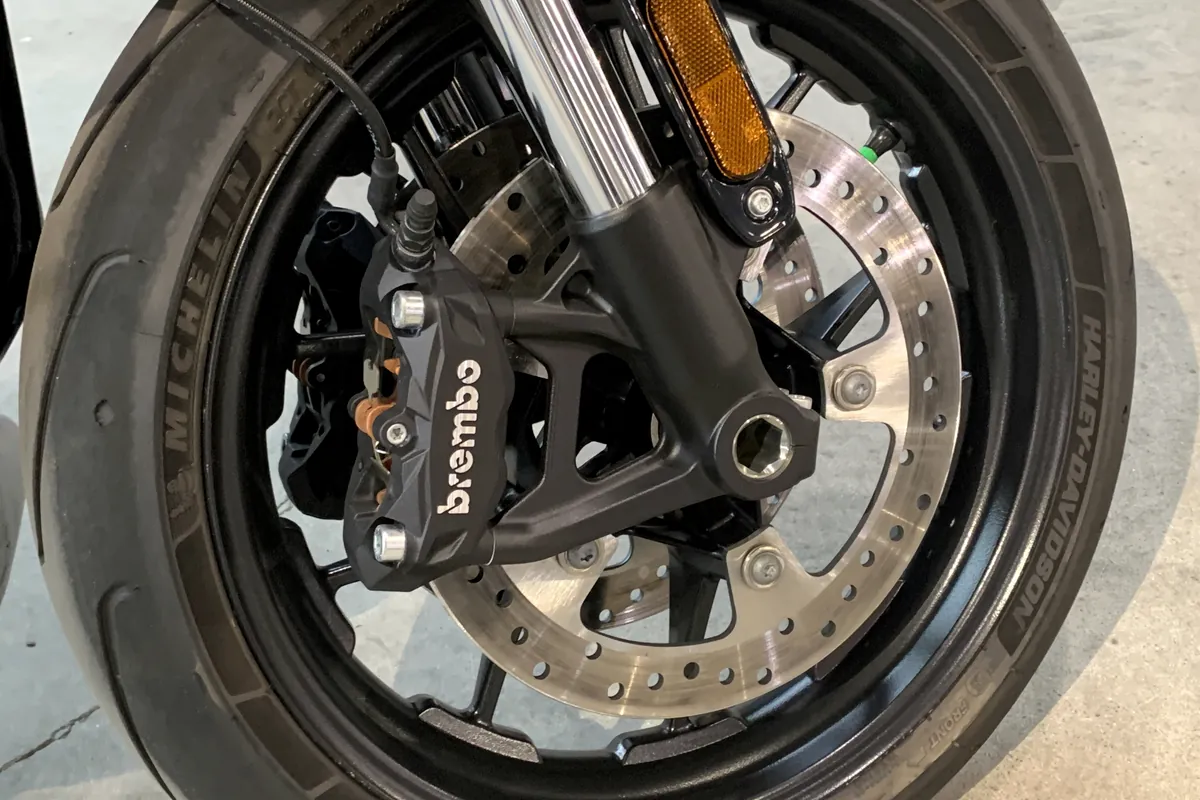
Check the tread for cuts, stones, bulges and uneven wear. A bulge in the sidewall means the carcass is damaged; replace the tyre. Check the tread depth and the wear indicators. A squared-off rear tyre from commuting is normal but affects handling.
Look at the date code on the sidewall. A tyre that is old and cracked may need replacement even if the tread looks good. Check the valve caps and the valve stems for cracks.
Pressure and handling
Low pressure makes steering heavy, increases fuel use and can cause the tyre to overheat. High pressure makes the ride harsh and reduces the contact patch. A sudden change in handling may be a puncture, not a suspension problem.
If a tyre loses pressure repeatedly, find the cause: a nail, a leaking valve, a cracked rim or a porous repair. Do not keep inflating it. A puncture repair must be done correctly, and a sidewall damage cannot be repaired safely.
When to book the workshop
Book a workshop for a sidewall bulge, a puncture in the sidewall, a cracked rim, a valve leak or a tyre that will not hold pressure. Also book if the wear is uneven across the tread, which can indicate alignment or suspension problems.
A tyre failure at speed is dangerous. If you are unsure about a damage or a repair, replace the tyre. The cost is small compared with a crash.
The bottom line
Use the manual figure, check cold, adjust for load and inspect the tyre as well as the gauge. A tyre that keeps losing pressure has a cause. A sidewall bulge or a crack means replacement, not more air.IndoBikes workshop
Checklist
- Find the recommended pressure in the manual or on the bike.
- Check both tyres cold with a reliable gauge.
- Adjust for a passenger or luggage per the manual.
- Inspect the tread for cuts, stones and bulges.
- Check the sidewall and valve stems.
- Do not bleed air from a hot tyre.
- Investigate a tyre that keeps losing pressure.
- Replace a damaged or old tyre.
Questions
Should I use the pressure on the tyre sidewall?
No. That is the maximum for the tyre, not the recommended pressure for your bike. Use the owner's manual or the placard.
Why does my tyre pressure rise after riding?
Heat from riding raises the air pressure. That is normal. Set the pressure cold and do not bleed a hot tyre.
How often should I check tyre pressure?
At least weekly and before every long trip. Check cold, and check both tyres.