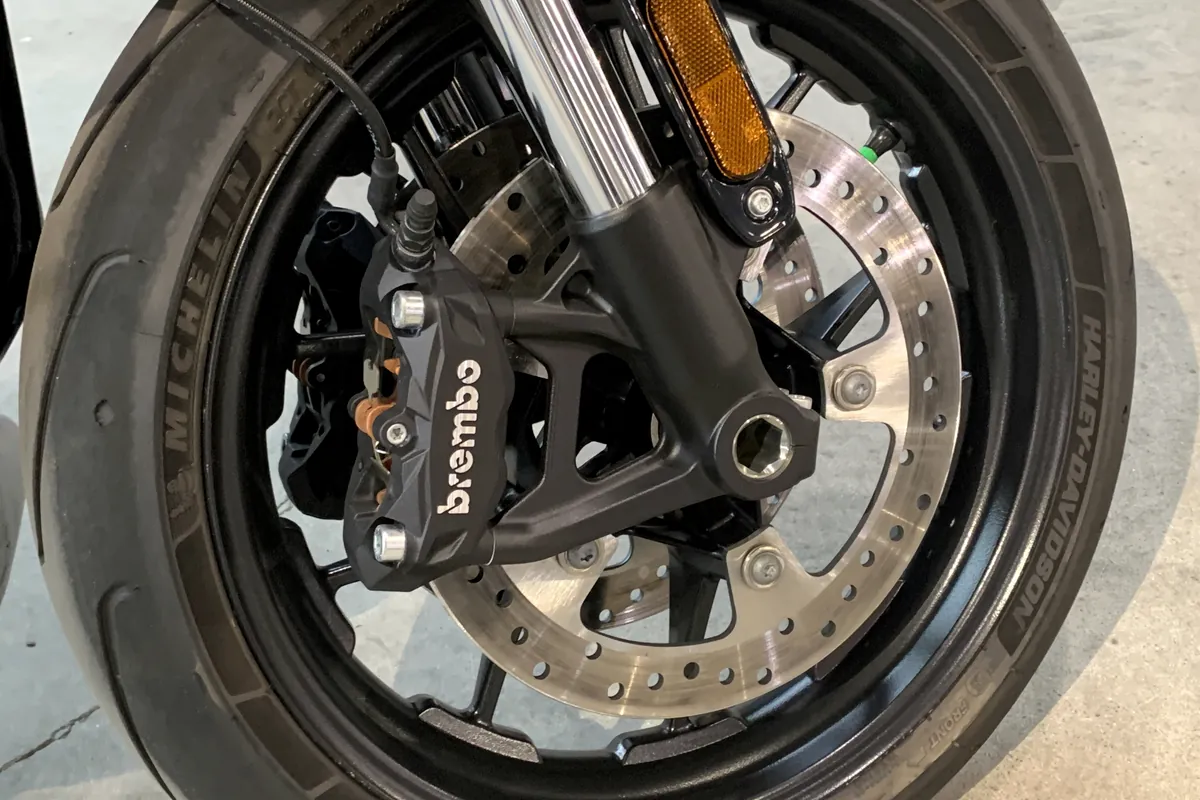
Tires are a compromise: grip, wear, wet performance, comfort and price. The right choice depends on the bike, the load and the surfaces the rider actually uses. A tire that is brilliant on a track day can be miserable in the rain or worn square by a commute.
Read the sidewall first
The sidewall gives the size, the load index, the speed rating and the construction. Match the size to the rim and the bike's requirements. A wider tire is not automatically better: it can change steering, clearance and gearing, and it may not fit the rim correctly.
Check the date code. A tire that has been sitting for years can be hard and cracked even if the tread looks new. Store tires away from sunlight, heat and ozone sources. Replace cracked or aged tires regardless of tread depth.
Tire types and intended use
Sport tires prioritize dry grip and steering; touring tires prioritize wear and wet stability; dual-sport tires trade some road refinement for loose-surface traction. Scooter tires are designed for smaller wheels and different loads. Choose the category that matches most of your riding.
A dual-sport tire with an aggressive tread is noisy and vague on wet asphalt. A pure road tire is helpless in mud. If most riding is city commuting with occasional broken roads, a road-biased tire with a little tread is usually the best compromise.
Compound, tread and Indonesian conditions
Soft compounds grip well and wear quickly; hard compounds last longer and can feel less secure in the wet. Heat and rain are constants in many parts of Indonesia, so wet grip and resistance to overheating matter. A tire that is designed for a cooler climate may not perform the same in tropical heat.
Tread patterns clear water and dirt. A worn tire with shallow grooves is more likely to aquaplane. Check the wear indicators and replace before the tread is gone. Uneven wear can indicate pressure, suspension or alignment problems; fix the cause before fitting a new tire.
Pressure, load and maintenance
Check pressure cold and adjust for the load according to the manual. A passenger or luggage may require a higher rear pressure. A tire that is underinflated flexes too much, heats up and wears quickly; an overinflated tire has a smaller contact patch and a harsher ride.
Inspect for cuts, nails, bulges and embedded objects. A plug is a temporary repair; a sidewall damage or a large puncture needs a new tire. Balance the wheel after fitting and check the valve and the rim for corrosion.
Replacement and pairing
Replace tires in pairs when possible, or match the new tire to the remaining one in construction and intended use. A mismatched pair can upset the handling. If only one tire is worn, choose the same model or a compatible replacement.
Bed in new tires gently for the first few kilometres. The release agent and the mold texture reduce grip until scrubbed off. Check the pressures after the first ride and retorque the axle and brake caliper bolts if they were removed.
Checklist
- Read the sidewall size, load index and speed rating.
- Check the date code and inspect for cracks or bulges.
- Choose the tire category for the majority of your riding.
- Match the front and rear in construction and intent.
- Check pressure cold and adjust for load.
- Inspect for cuts, nails and uneven wear.
- Balance the wheel and check the valve and rim.
- Bed in new tires and recheck pressures after the first ride.
Questions
Can I fit a wider tire?
Sometimes, but the rim width, clearance and handling may not suit it. A wider tire can slow steering and change the profile. Stay within the manufacturer's recommended sizes unless you have a specific reason and have checked the fit.
How often should I replace tires?
Replace when the tread is worn, the tire is cracked or aged, or the damage is not repairable. Follow the wear indicators and inspect regularly, especially in hot and wet conditions.
Do I need to replace both tires at once?
Not always, but matching the pair is safer. If one tire is worn and the other is old or a different model, replacing both gives more predictable handling.