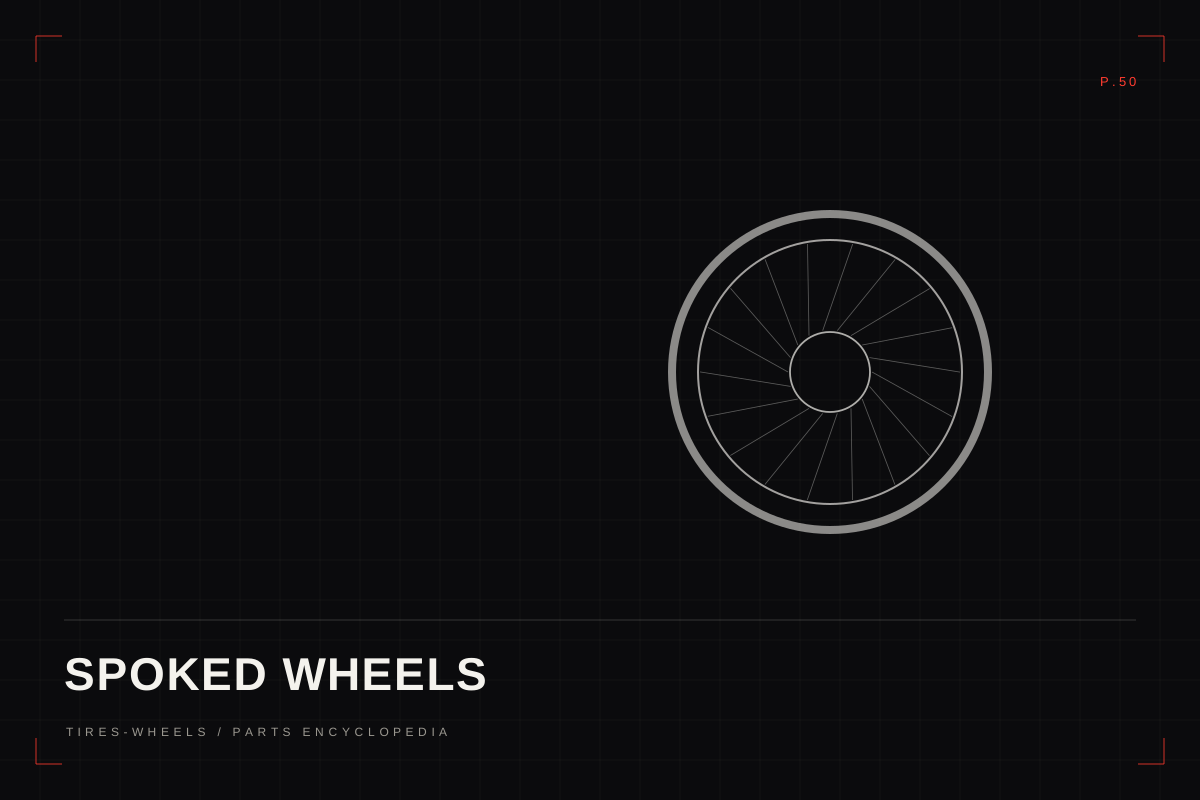
A spoked wheel is a rim pulled into shape by tensioned spokes. It is lighter and more forgiving than a cast wheel, which is why off-road and adventure bikes use it. The trade-off is maintenance: spokes loosen, rims go out of true and rim tape fails.
What it does
The spokes connect the hub to the rim and carry load in tension. The rim distributes the load around the wheel. A spoked wheel can flex slightly on impact, which helps it survive rocks and potholes.
On a tubeless spoked wheel, the rim is sealed so air does not escape through the spoke holes. On a tube-type wheel, the rim tape protects the tube from the nipple ends.
How it is built
Each spoke pulls the rim toward the hub. Tightening one spoke pulls that section of rim inward; loosening lets it move outward. Truing is the process of balancing those pulls so the rim runs straight and round.
Lateral runout is side-to-side movement. Radial runout is up-and-down. A wheel can be true in one plane and out in the other. A dial gauge and a stand make the job measurable.
Types and markings
- Tube-type spoked. Needs rim tape and a tube. Common on older and off-road bikes.
- Tubeless spoked. Sealed rim well or sealed spoke nipples. Common on adventure bikes.
- Laced with a radial pattern. Spokes run straight from hub to rim. Stiffer, less common.
- Cross-laced. Spokes cross each other. The usual pattern, with 2, 3 or 4 cross.
- Heavy-duty expedition. Thicker spokes and a stronger rim for loaded travel.
Wear and failure signs
- Loose spokes that pluck with a dull sound instead of a ring.
- A wheel that is out of true after an impact.
- Rim tape that is cracked, displaced or missing.
- Corrosion at the nipples or around the rim eyelets.
- A cracked rim around a spoke hole.
- Bearing play or a bent axle.
Choosing a replacement
- Match rim width, spoke count, hub and axle to the bike.
- For a replacement rim, check the spoke length and lacing pattern.
- Use stainless spokes in wet climates.
- For tubeless use, choose a sealed rim or a proper conversion kit.
- Do not fit a wider rim without checking frame and fork clearance.
Fit and compatibility
- Check the rim tape covers every nipple end.
- Tension spokes evenly, working around the wheel in small steps.
- True laterally first, then radially.
- Check the spoke tension by sound and with a tensiometer where possible.
- Seat the tire and check the bead line before inflating fully.
Inspection and care
- Check spoke tension at every service.
- Inspect the rim tape when the tire is off.
- Clean corrosion from the nipples and apply a protective spray.
- Have the wheel trued after a heavy impact.
- Check the bearings at every tire change.
Safety and limits
A wheel that is badly out of true can fail or lose the bead. Repair it before riding.
Loose spokes can break and puncture the tube or damage the rim.
Wheel building needs patience and the right tools. If unsure, use a specialist.
Questions
How often should spokes be checked?
At every service or tire change. A quick pluck test can reveal a loose spoke before it causes a problem.
Can I true a wheel myself?
Yes with a stand, a spoke wrench and patience. Work in small steps and check both lateral and radial runout.
Why do spoked wheels need rim tape?
The tape covers the nipple ends and protects the tube from chafing or punctures.
Can I convert a spoked wheel to tubeless?
Only with a kit designed for the rim and only if the rim maker supports it. A poor conversion can leak or fail.