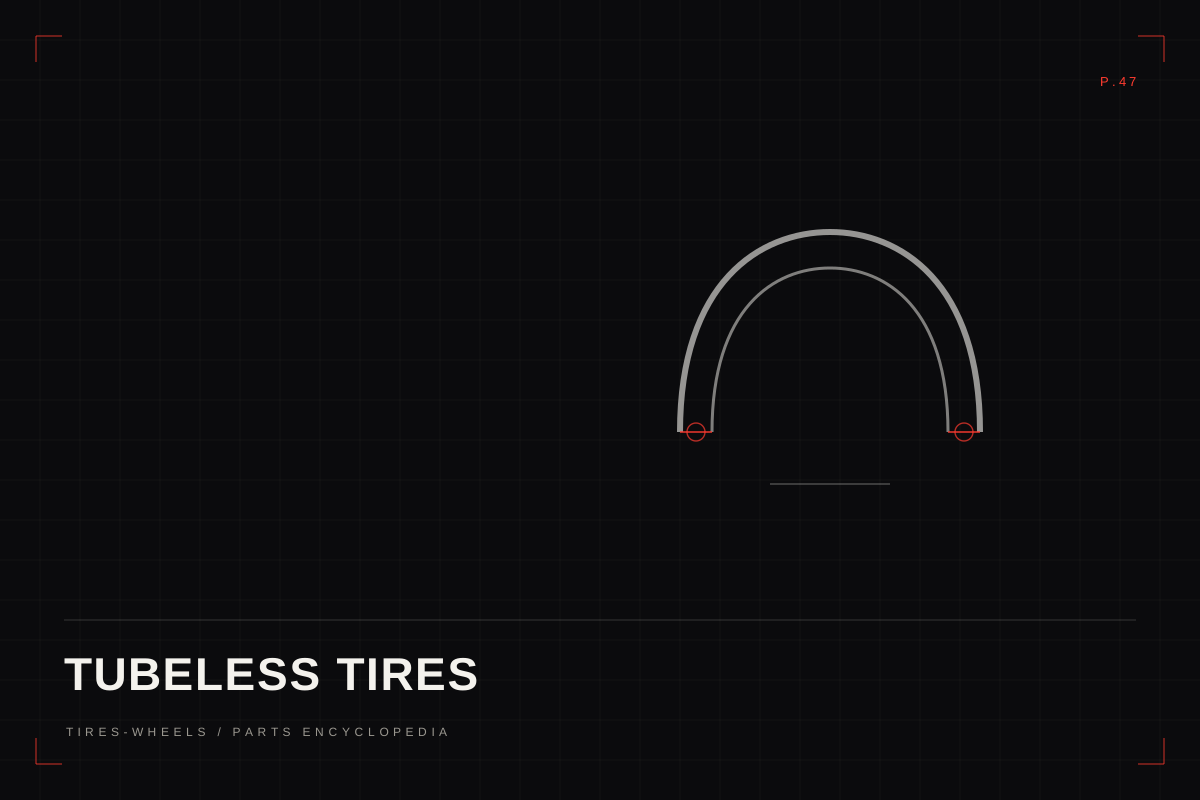
A tubeless tire has a butyl liner and a bead that seals against a specially shaped rim. There is no tube to pinch or chafe, and a small puncture often loses air slowly instead of instantly. The system only works if the rim is sealed and the bead is seated correctly.
What it does
The tire and rim together form the pressure vessel. The bead holds the tire on the rim and the liner keeps air from escaping through the carcass. The valve is part of the seal.
Tubeless tires run cooler than tube-type tires because there is no tube rubbing inside. They also allow a plug repair in many cases, though a proper patch is better.
How it is built
Air pressure pushes the bead against the rim flange. The rim has a sealing surface and often a raised hump to keep the bead in place if pressure drops. The valve seals through the rim with a rubber grommet or a threaded nut and seal.
A puncture that does not damage the bead or sidewall can often be plugged. A cut or a sidewall damage cannot be repaired safely. A rim that is bent or corroded will not seal, no matter how good the tire is.
Types and markings
- Tubeless radial. The common modern road tire. Needs a sealed rim.
- Tubeless bias-ply. Found on some cruisers and older designs.
- Tube-type. Needs a tube. Cannot be run tubeless on a standard rim.
- Tubeless conversion. Sealing a spoked rim for tubeless use. Only with the correct kit and rim.
- Run-flat and self-sealing. Specialised designs. Follow the maker's repair rules.
Wear and failure signs
- Pressure loss without a visible puncture, often a leaking valve or rim seal.
- A bead that is not seated evenly, visible as an uneven line around the rim.
- Corrosion or damage on the rim sealing surface.
- A cracked or perished valve.
- A puncture in the sidewall or shoulder, which cannot be repaired safely.
- A tire that goes flat after a plug repair.
Choosing a replacement
- Use a tubeless tire only on a rim rated for tubeless use.
- Match the size, load and speed rating to the bike.
- Replace the valve with the tire. Old rubber valves leak.
- For a spoked rim, use the specified tubeless conversion only if the rim maker supports it.
- Choose a reputable plug kit for emergencies, but have the tire properly repaired afterwards.
Fit and compatibility
- Clean the rim sealing surface and remove corrosion.
- Fit a new valve and tighten it correctly.
- Lubricate the bead with mounting paste and seat it with enough air pressure.
- Check the bead line around both sides of the rim.
- Balance the wheel and set the pressure.
Inspection and care
- Check pressure weekly. Tubeless tires can lose a little air over time.
- Inspect the tread for embedded objects.
- Replace the valve at every tire change.
- Keep the rim clean and free of corrosion.
- Do not use a high-pressure washer directly at the bead or valve.
Safety and limits
A tire that loses pressure quickly at speed can cause a crash. Check for leaks if pressure drops.
Do not repair a sidewall puncture. Replace the tire.
A bent rim will not seal. Repair or replace it.
Questions
Can I put a tube in a tubeless tire?
In an emergency, yes, if the tube is the right size. It is not a permanent solution and can reduce the tire's speed rating.
Can a tubeless tire be repaired?
A small tread puncture can be plugged or patched. Sidewall damage and large cuts cannot be repaired safely.
Why does my tubeless tire lose pressure?
A leaking valve, a corroded rim, a poorly seated bead or a small puncture. Use soapy water to find the leak.
Do tubeless tires need special rims?
Yes. The rim must have the correct bead profile and sealing surface. A tube-type rim is not safe for tubeless use.