A valve looks trivial until a tire goes flat overnight. It has to seal against pressure, survive centrifugal force and allow air in without leaking out. Rubber valves age, metal valves loosen and cores fail. Replacing the valve with the tire is cheap insurance.
What it does
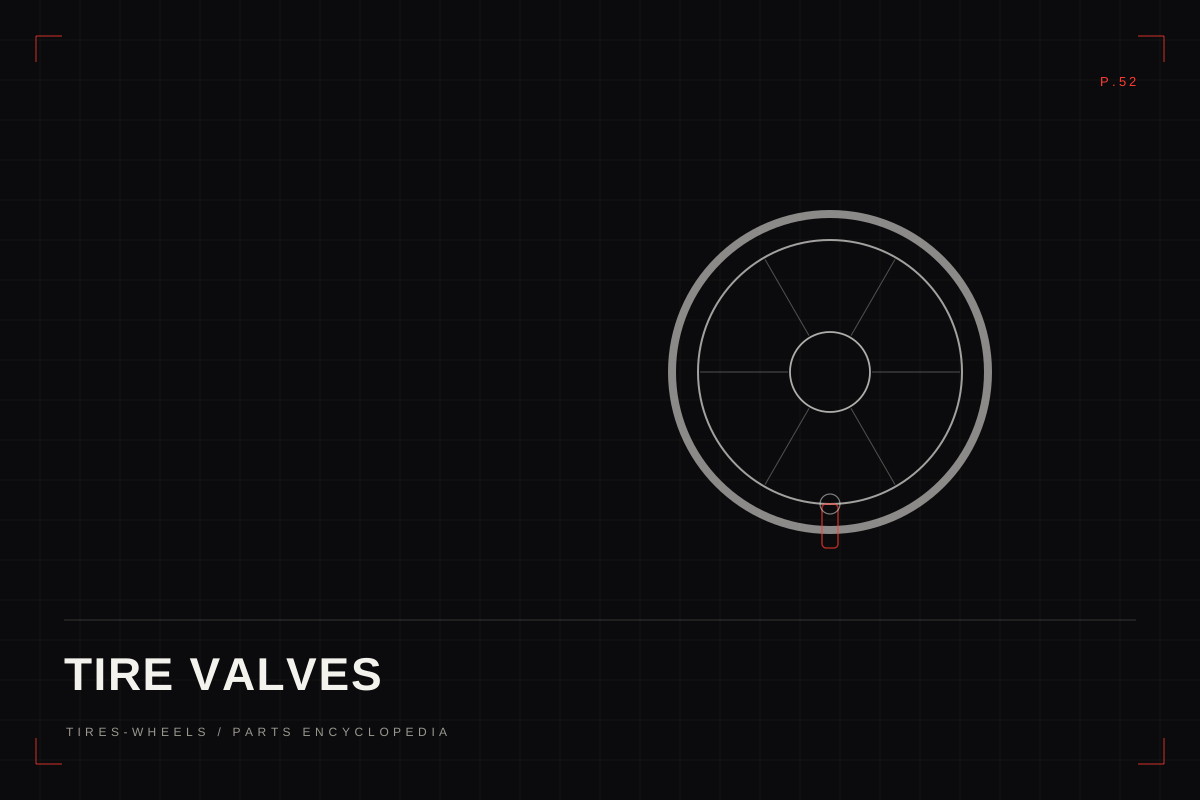
The valve lets air into the tire and stops it escaping. The core is a small spring-loaded seal. The stem seals against the rim. The cap keeps dirt out and gives a second seal.
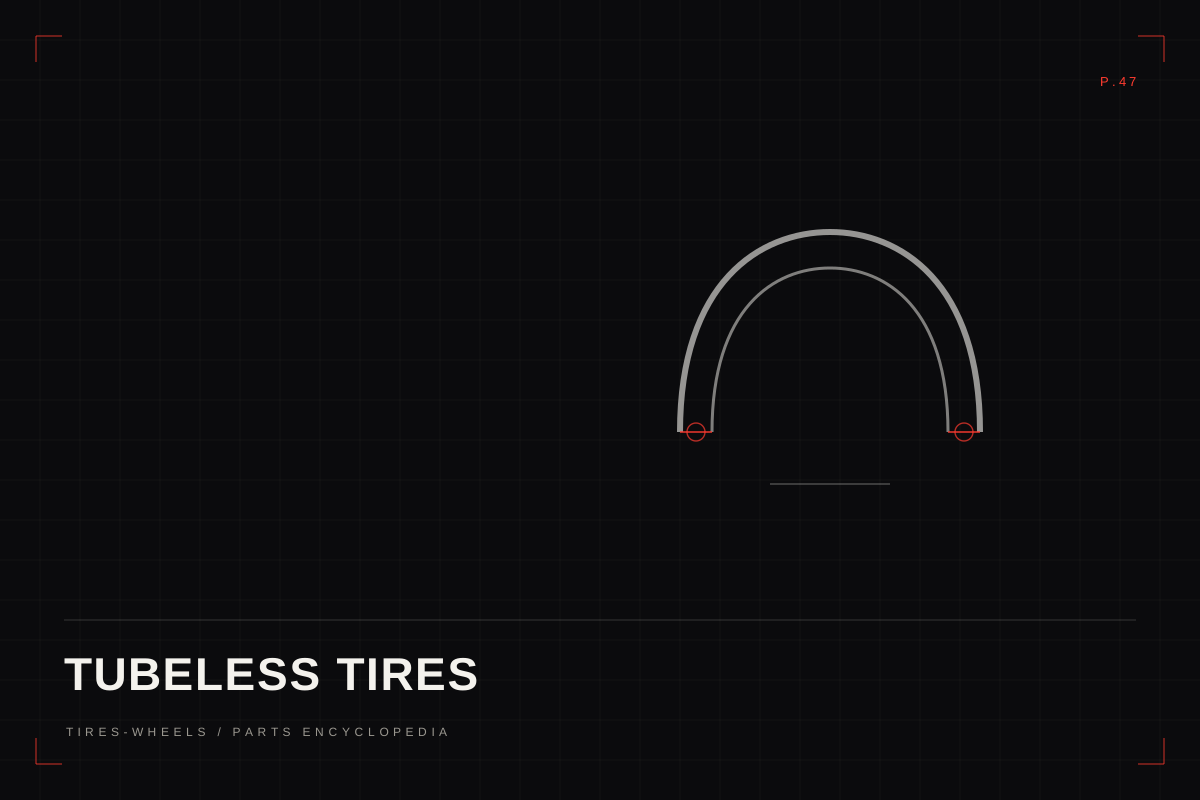
On a tubeless tire the valve is part of the pressure vessel. On a tube-type tire the valve is part of the tube. A leak at the valve base is a common cause of slow pressure loss.
How it is built
Air pressure pushes the core closed. When a pump or gauge is connected, the pin is depressed and air flows. The core spring closes it again when the connection is removed.
Centrifugal force at speed pushes the core outward. A weak spring or a damaged core can leak at high speed even if it holds at rest. A missing cap lets grit into the core, which causes a slow leak.
Types and markings
- Rubber snap-in valve. Common on tubeless rims. Cheap and easy to fit.
- Metal clamp-in valve. A threaded stem with nuts and seals. Common on motorcycles and high-pressure applications.
- Angled valve. A bent stem for easier access on cast wheels.
- Tubeless conversion valve. A valve designed for a sealed spoked rim.
- Valve core and cap. Service parts. Replace the core if it leaks.
Wear and failure signs
- A slow pressure loss with no puncture.
- Cracks at the base of a rubber valve.
- A valve core that is loose or does not seal.
- Corrosion on a metal valve or a missing cap.
- A valve stem that is torn or bent.
- Soap bubbles at the valve when the tire is inflated.
Choosing a replacement
- Match the valve type and angle to the rim.
- Replace the valve at every tire change.
- Use a metal valve for high-speed or high-pressure use where specified.
- Fit a cap. It keeps dirt out and gives a second seal.
- Do not use a tubeless valve in a tube-type rim without the correct seal.
Fit and compatibility
- Clean the rim hole and remove corrosion.
- Lubricate a rubber valve base with tire mounting paste.
- Pull the valve through squarely with a proper tool.
- Tighten a metal valve to the maker's torque, not by feel.
- Check for leaks with soapy water after inflating.
Inspection and care
- Check the valve and cap at every pressure check.
- Replace a cracked or leaking valve immediately.
- Keep the cap on.
- Do not overtighten a metal valve.
- Replace the valve when the tire is replaced.
Safety and limits
A valve that leaks at speed can cause a sudden loss of pressure. Replace damaged valves.
A missing cap lets grit into the core, which can cause a slow leak.
Do not bend a valve stem to make a pump fit. Use an angled adapter.
Questions
How often should tire valves be replaced?
With every tire change, or sooner if cracked or leaking.
Why does my tire lose pressure slowly?
A leaking valve, a corroded rim, a poorly seated bead or a small puncture. Use soapy water to find it.
Can I replace a valve core myself?
Yes with a valve core tool. Check for leaks afterwards.
Do I need metal valve caps?
Not usually. A plastic cap keeps dirt out. Metal caps can seize on the thread.