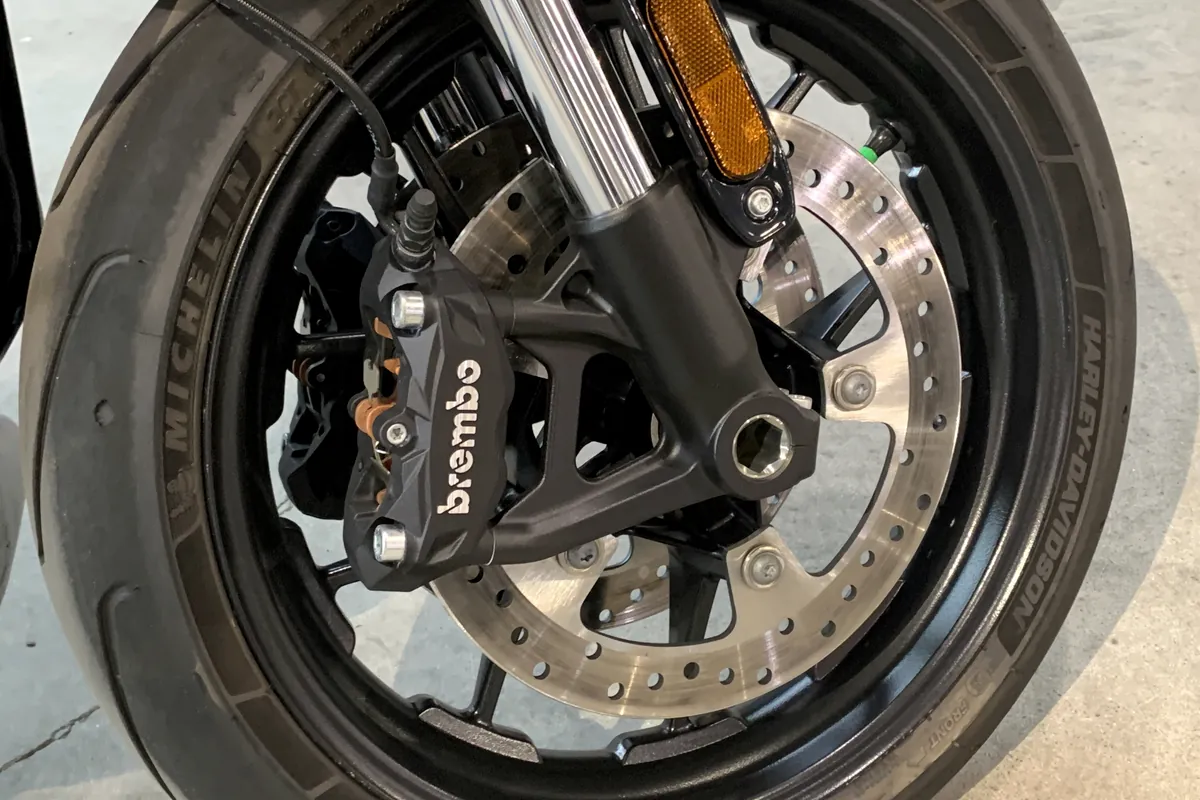
A caliper is a housing with one or more pistons. Fluid pushes the pistons out, the pistons push the pads, and the pads grip the disc. It sounds simple until corrosion gets into the seal grooves. Most caliper problems start there, not with the piston itself.
What it does
The caliper converts hydraulic pressure into mechanical clamping force. On a floating caliper, the body slides on pins so a single piston can press both pads. On an opposed caliper, pistons on both sides push directly.
The seals do two jobs. They keep fluid in and dirt out, and their square section twists as the piston moves, then pulls it back a fraction when pressure drops. That small retraction is what stops the pads dragging.
How it works
Pressure enters the caliper through a banjo or flare fitting. The pistons move out and take up the gap to the pads. When the lever is released, the seal twist and the slight disc runout push the pads back.
Heat is the constant enemy. A piston that cannot return keeps the pad against the disc, which adds heat, which expands the fluid, which can apply the brake further. A dragging caliper can overheat a disc and boil fluid on a long ride.
Types and variations
- Floating caliper. One or two pistons on one side, body slides on pins. Common on commuters and scooters.
- Opposed caliper. Two, four or six pistons facing each other. Stiffer and more common on performance bikes.
- Radial mount. Bolts to the fork leg from the side. Stiffer under heavy braking.
- Axial mount. Bolts through the fork lug. The traditional arrangement.
- Combined and linked systems. Some bikes apply a front piston with the rear pedal. Bleeding and setup follow the maker's sequence.
Wear and failure signs
- A wheel that is hard to turn with the brake released, or a disc that is hot after a short ride with little braking.
- Uneven pad wear, especially the inner pad wearing faster.
- Brake fluid weeping around a piston or the bleed nipple.
- Corrosion lifting the dust seal or seizing a piston.
- A caliper that will not slide freely on its pins.
- A spongy lever that does not improve after bleeding, suggesting a seal is bypassing.
Choosing a replacement
- Match the caliper to the fork mount, disc diameter, disc offset and master cylinder. A bigger caliper with the original master can feel wooden.
- Check piston material and seal type. Aluminium pistons in a road caliper need regular fluid changes to resist corrosion.
- For a rebuild, use a seal kit and pistons specified for the caliper, not a generic O-ring.
- Consider a stainless piston set for a high-mileage caliper used in wet conditions.
- Do not fit a racing caliper to a road bike without matching the master cylinder, lines and pads.
Fit and setup
- Clean the caliper body and seal grooves before fitting new seals. Trapped corrosion pushes the seal against the piston.
- Lubricate seals and pistons with brake fluid or the maker's assembly grease, not mineral oil.
- Check that the bleed nipple passes air freely and is not blocked.
- Mount the caliper squarely and torque the bolts. Check pad clearance and disc centring.
- Bleed the system properly, then check for leaks at full lever pressure and tie the lever back overnight to help trapped air rise.
Inspection and care
- Change brake fluid at the recommended interval. Old fluid absorbs water and corrodes pistons.
- Clean around the pistons before pushing them back during a pad change.
- Inspect the dust seals at every pad change. A torn dust seal lets water in.
- Avoid pressure washing directly at the caliper seals.
- After winter or a wet season, work the pistons out slightly and clean them.
Safety and limits
Brake work is safety-critical. If a piston is seized or a seal leaks, rebuild or replace the caliper before riding.
Do not use compressed air to blow a piston out without restraining it and protecting your eyes.
A caliper that drags can overheat the brake and cause fade with no warning.
Questions
How often should calipers be rebuilt?
There is no fixed interval. Rebuild when a piston is stiff, a seal leaks or the fluid is heavily contaminated. In a wet climate, inspect more often.
Can I just clean a sticky piston?
Cleaning can help if corrosion has not reached the seal groove. If the piston is pitted or the dust seal is torn, it needs a rebuild.
Why does one pad wear faster?
A sticking piston, a caliper that does not float or a blocked fluid passage. Find the cause before fitting new pads.
Do I need a special tool to bleed the brakes?
A bleed bottle and the correct spanner are enough on most systems. Some ABS units need a diagnostic tool to cycle the pump.