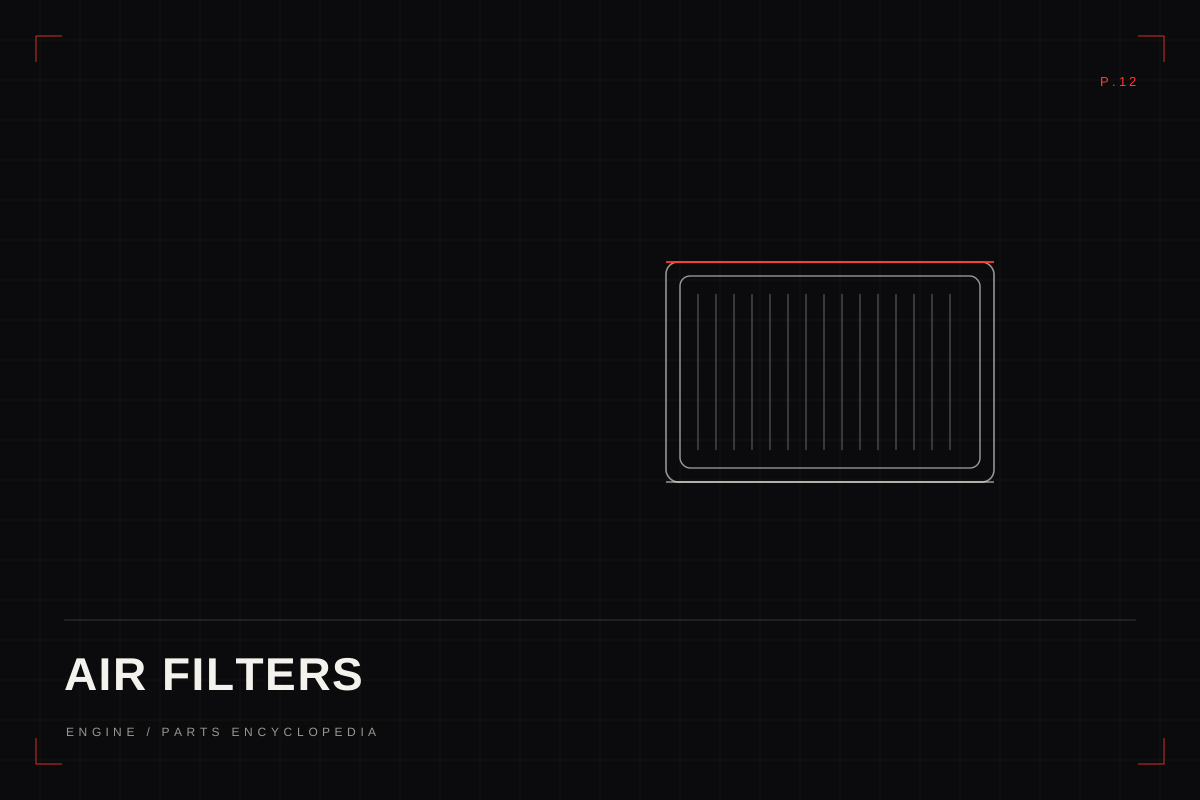
An engine pulls a large volume of air. Dust, grit and insects come with it. The filter's job is to stop the abrasive part while allowing enough flow for the engine's state of tune. A filter that flows well but seals badly is worse than a restrictive one that seals.
What it does
The filter sits in the airbox or on the intake. It traps particles that would otherwise wear the rings, valves and bearings. It also reduces noise and can smooth airflow into the engine.
A filter has a pressure drop. More flow usually means less filtration or a larger surface area. A dirty filter increases the drop, richens the mixture on a carburetted engine and reduces power.
How it works
Air passes through the filter medium. Paper traps particles in the fibres. Foam uses open cells and oil to hold dust. Oiled cotton uses oiled gauze to catch particles while allowing flow. The dirt is held on the surface or in the medium until cleaning.
The seal is as important as the medium. Air will take the easiest path, which is often around a distorted or poorly seated filter. Check the sealing lip and the airbox mating surface.
Types and variations
- Paper panel filter. Good filtration and low cost. Usually replaced, not cleaned. Common original equipment.
- Foam filter. Washable and reusable. Needs the correct foam oil. Common in off-road use.
- Oiled cotton gauze. Washable and free-flowing. Easy to over-oil, which can coat sensors.
- Pod filter. Replaces the airbox. Changes intake noise and airflow. Needs rejetting or mapping.
- Airbox and snorkel. The housing and intake path. Removing or modifying it changes the tune.
Wear and failure signs
- A visibly dirty or clogged filter, especially after dusty riding.
- Torn paper, crumbling foam or a stretched gauze.
- Oil on the filter's clean side or in the intake. over-oiling.
- Dust in the intake tract. a poor seal or a damaged filter.
- A whistling or hissing intake noise from a leak.
- Rough running after fitting a high-flow filter without tuning.
Choosing a replacement
- Decide whether you need stock filtration or more flow. For road use, stock filtration is usually the better trade.
- Match the filter to the airbox. A poor-fitting filter seals badly.
- For a washable filter, use the maker's cleaning and oiling products. Do not substitute engine oil.
- If you fit a high-flow filter, plan the jetting or ECU mapping change.
- Buy from a seller who can confirm the part fits your exact model and year.
Fit and compatibility
- Clean the airbox before fitting a new filter. Dirt left inside will be pulled through.
- Seat the filter fully on its lip. Check for gaps at the corners.
- Do not overtighten the cover or distort the filter.
- Oil a foam or cotton filter lightly and evenly. Blot excess oil.
- After fitting, check that the intake tract is sealed and the sensor is connected.
Inspection and care
- Inspect the filter at every oil change. Clean or replace it more often in dusty conditions.
- Tap paper filters gently to remove loose dust. Do not wash them.
- Wash foam and cotton filters with the correct cleaner, dry them fully, then oil.
- Never run without a filter. Even a short ride in dust wears the engine.
- Check the airbox drain and the intake boot for cracks.
Safety and limits
Dust ingestion wears rings and bores quickly. A torn filter is not a small problem.
Over-oiled cotton filters can contaminate a mass airflow sensor. Use the correct oil and avoid excess.
Do not use compressed air at high pressure on a paper filter. It can tear the medium.
Questions
Is a high-flow air filter worth it?
On a standard engine, the gain is small and often comes with more intake noise. On a tuned engine, it can help if the fueling is adjusted. Filtration and sealing matter more on a road bike.
How often should I clean a foam filter?
Check it after every ride in dust. Clean it when the foam is dirty, not on a fixed calendar. A clogged filter costs power and fuel.
Can I use engine oil on a foam filter?
No. Engine oil is too heavy and can be pulled into the intake. Use the filter maker's oil.
Why does my bike run worse after fitting a pod filter?
The airflow changed and the mixture is now wrong. Carburetted engines need jetting changes; injected engines need mapping.