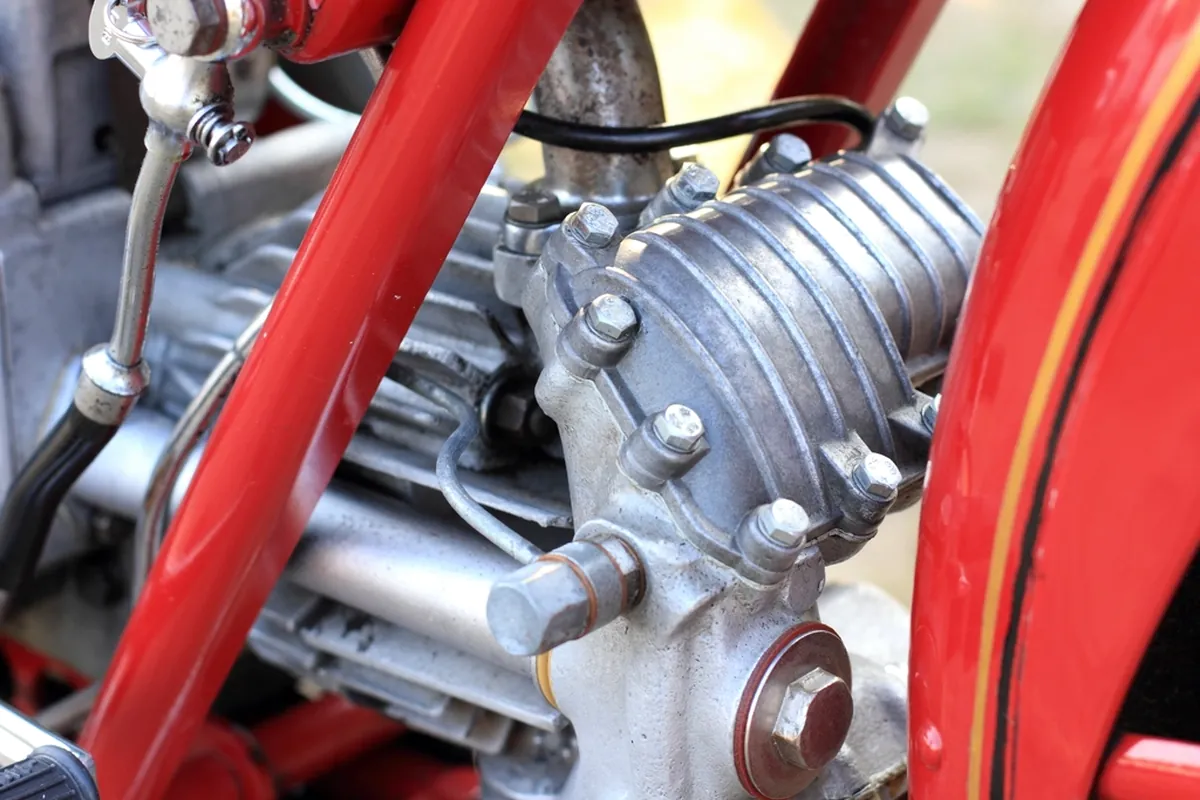
A piston ring is a split spring that presses against the cylinder wall while sitting in a groove in the piston. The top rings hold combustion pressure, the oil ring scrapes excess oil back down the bore. They are cheap parts with an outsized effect on starting, power, emissions and oil use.
What it does
The rings form the sliding seal between the piston and the cylinder. Without them, combustion pressure would escape past the piston into the crankcase and oil would be pumped into the combustion chamber. They also conduct heat from the piston crown into the cylinder wall, which is why a broken ring can overheat a piston.
Each ring in a set has a job. The top compression ring sees the most pressure and heat. The second ring adds sealing and helps control oil. The oil control ring has a spring and rails that scrape the bore and return oil through the piston's drain holes.
How it works
Combustion pressure gets behind the top ring through the groove clearance and pushes the ring outward against the bore. That pressure-assisted seal is why ring condition matters most under load. The ring also twists slightly in its groove as the piston changes direction, which helps it scrape and release oil at the right moment.
The oil ring works mechanically rather than by pressure. Its rails press on the bore and the expander spring keeps tension. If the drain holes behind the ring are blocked with carbon or sealant, oil has nowhere to go and the engine smokes.
Types and variations
- Chrome-faced compression rings. Hard, durable and common in utility engines. Good wear resistance, but chrome does not seat as quickly as some other faces.
- Molybdenum or plasma-faced rings. A porous face that holds oil and beds in well. Common in modern engines and performance sets.
- Taper and barrel-faced rings. The face profile helps the ring scrape oil and seal during break-in. Orientation matters; fitting them upside down causes oil use.
- Keystone rings. A trapezoidal cross-section that keeps the ring moving freely in its groove and reduces sticking.
- Three-piece oil rings. Two rails and an expander. The usual design in modern engines. Easy to damage during fitting.
Wear and failure signs
- Blue smoke from the exhaust, especially after idling or on the overrun. oil is getting past the rings or valve guides.
- Oil consumption that rises without an external leak.
- Low compression on a dry test that improves when a little oil is added. rings or bore, rather than valves.
- Blow-by. pressure in the crankcase, oil pushed out of breathers or dipstick tube.
- A broken ring can score the bore and make a metallic rattle. Stop the engine.
- Stuck rings from carbon. the ring no longer moves in its groove, so sealing and oil control both suffer.
Choosing a replacement
- Order rings by bore size, ring width and the piston's groove dimensions. The engine model and year are not always enough.
- Use the ring set specified for the piston, especially with forged or oversize pistons. Ring widths differ between designs.
- Check whether the set is standard or oversize, and whether it includes the oil ring expander and rails.
- Do not assume a cheap set is a bargain. Ring face material and tension affect oil use and bore wear.
- If the bore is worn or scored, rings alone will not fix it. Measure the bore before ordering.
Fit and compatibility
- Measure end gap with the ring square in the bore. Use a piston crown or a ring squaring tool to push it down to the correct height.
- Check side clearance between the ring and its groove. A worn groove lets the ring flutter even with a new ring.
- Fit rings with any mark or dot facing up. Follow the manufacturer's order for the top, second and oil rings.
- Use a ring compressor and lubricate the bore lightly. Broken rings usually break during installation, not in service.
- Check the oil ring drain holes and the expander's butt joint. The joint must not overlap.
- After assembly, turn the engine by hand and confirm it turns freely before using the starter.
Inspection and care
- Change oil and filter at the stated interval. Dirty oil and short trips are hard on rings.
- Avoid lugging the engine at low rpm in a high gear during break-in. Vary the load and let the rings seat.
- Do not use sealant or thick oil additives to mask oil use. They can block the oil ring drains.
- If the engine has been overheated, inspect the rings and bore. Heat can remove ring tension.
- A leak-down test gives a better picture of ring sealing than a compression test alone.
Safety and limits
A broken ring can score the bore and break a piston. A sudden metallic noise with smoke is a reason to stop, not to ride home.
Ring work needs clean hands and clean parts. Grit trapped under a ring will score the bore.
If compression is low and the cause is not clear, do a leak-down test before pulling the top end apart.
Questions
Can I just add a thicker oil to reduce oil burning?
No. A thicker oil may hide the symptom for a while, but it does not restore ring seal and can make cold starting and oil flow worse. Fix the cause.
How do I know whether the rings or the valve guides are burning oil?
A leak-down test and inspection of the intake and exhaust ports help. Oil in the intake port often points to valve guides; oil in the exhaust port can come from either. A dry and wet compression test adds another clue.
Do new rings need a special break-in?
Yes. Avoid constant speed and full throttle for the first few hundred kilometres. Vary load and let the engine warm up before asking for power. Follow the piston or ring maker's instructions.
Can I reuse the old rings with a new piston?
No. Rings take a set to the bore and are easily broken during removal. Fit new rings with a new piston.